

Bodha Anveshi | Sacred Hindu Temple Journeys and Kshetra Tours
Sacred journeys to unexplored kshetras of India.
Where, every outer journey becomes an inner journey.
Man is born to search: for truth; for beauty and meaning in life; for Anveshana.
The word anveshana means discovery, and the one who searches is called – anveshi – the discoverer. Kashmira Shaiva darshana tells us that, vimarsha - Shiva reflecting upon himself – is one of the highest goals of existence itself. According to another school of thought, nature nudged evolution to a point where a species would emerge capable of reflecting upon itself and the mysteries of the cosmos, life and existence.
We are born anveshi — seekers by nature.
current chapter
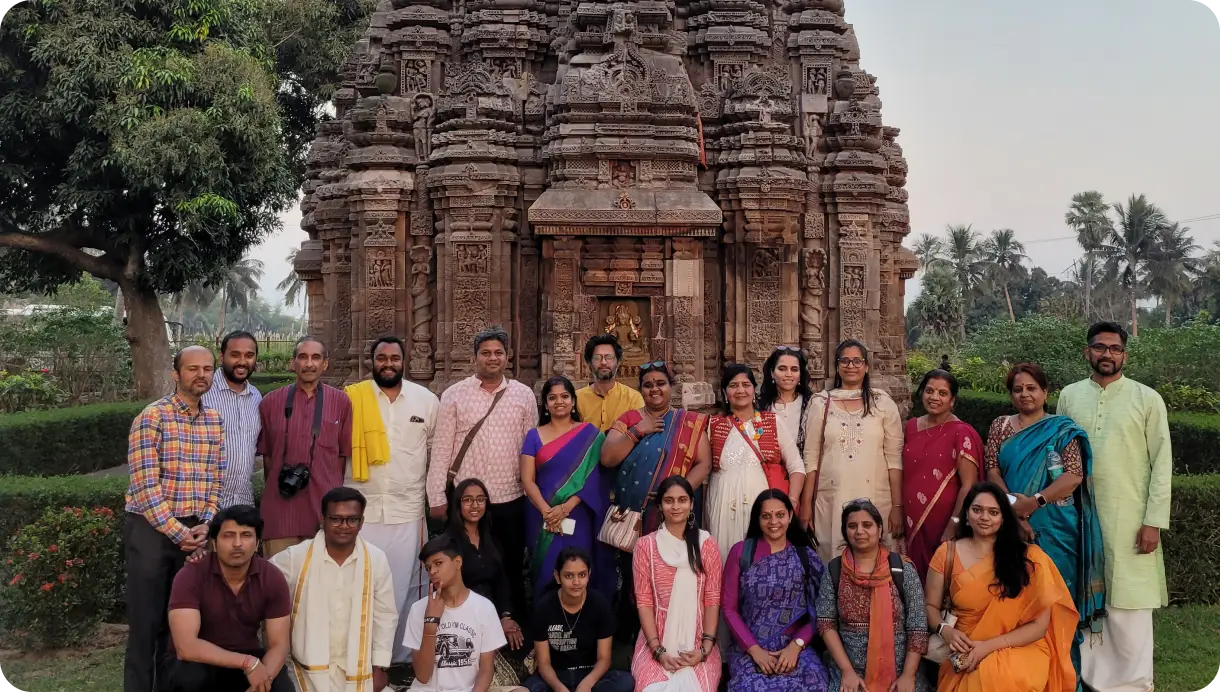
OPEN NOW
25 - 28 Oct 2026
Odisha Chapter
→
testimonials
Thank you all for this memorable trip. Thank you Pankaj ji and team for organizing this. Hope to join you'll again some time 🙏
Ravindra Naik | Karnataka Chapter
Thanks to team Anveshi for this wonderful tour. Thanking Pankaj Sir here will not be enough..it will require a blog post. Yet Many many Pranams to him for deciding to take People like us to beautiful Ancient treasure and unravel the secrets of its magnificent and unbelievable architecture.
Vinay | Karnataka Chapter
Mein dil se dhanyawad karna chahunga pure team ka❤️ I learnt a lot in a brief span of 5 days... I was able to meet many new people and connect with them.. looking forward for such future trip ❤️
Manish Nagavi | Karnataka Chapter
Many many thanks to team for all their amazing work - building awesome content, creating great experience of this trip, and sharing thoughtful souvenirs.
Saurabh Gupta | Karnataka Chapter
Thanks Pankaj Saxena and the entire Anvesi team for organising this chapter. I had a great time for the last 4 days experiencing our great temples with a culturally inclined group and also to learn about the intricacies of the architecture. I am sure, I will be sharing these with my friends and families.
Guruprsasad Jakka | Odisha Chapter
Excellent trip. Superbly orchestrated. Special call out to Akshay who was always on top of things and being extremely accommodating. Even though all the temples were of top notch, Shri Jagannath has completely mesmerized. Grateful for Pankaj ji's insightful commentary and thoughts.
Srividhya Jayakumar | Odisha Chapter
Here I take back a bit of you all with me to be more kind, humble, loving, caring and the list goes on. Thank you all for the positive and energetic environment. I wish you all lots of happiness. Last but not the least thanks to the Pankaj ji and team for conceptualizing this yatra.
Priya Naik | Odisha Chapter
This yatra has been a really enriching experience. It felt like we were a family that had lived together for ever. The sheer fun, laughter, and above all, sharing in everything was pure joy. The Devataas and Devis have truly showered their blessings upon us.
Jay Jina | Odisha Chapter
I must say this Anvesi has been more than just a trip! Its been a marvellous experience of Dharma, history, architecture and bonding with fellow Sanatanis. This trip exceeded my expectations by leaps. A few of my friends dropped out because they thought this would be an “aging aunty experience”!
Deepa Karthik | Odisha Chapter
My heartfelt and grateful thanks to the team and Sawani ji for everything they do for Dharma at the cost of time from family. People like me are able to have a family life and also enjoy yatras only because of people and organisations like you/yours.
Parvathi Subramaniam | Goa Chapter
Such gatherings are really helpful for me to make my children realise true sense of dharma.... How people have preserved it with lot of efforts.
Smriti Pateria | Goa Chapter
Lovely memories for me and my children, already seeing so much change in them, and their approach to life. Thanks to the team for curating this experience. Jai shree Ram!!!!!!
Sanjay Chawla | Gwalior Chapter
Thank you for yet another wonderful chapter. Our only regret is that we are not able to join all of them as much as we would love to. Thank you all so much. Anupama ji your performance was so divine and the interactions with you too. Hope to see more of you and your insights in future chapters.
Radhika Chandramohan | Gwalior Chapter
Thanks for such an experience which otherwise we would not have even imagined. Another unique feature of travelling with Bodha Anveshi is all of us mingle seamlessly like one family. Kudos to the organisers and the cohorts for this experience and looking forward to many such experiences in future.
Chandramohan S | Gwalior Chapter
Thank you for this wonderful chapter and thanks to the entire cohort for being wonderful companions on the yatra, I learnt many things from you. Having darshan of Shri Ramraja and Ma Pitambara along with Kshetra pal Shanishwar was truly divine.
Ravindra Naik | Gwalior Chapter
Going by the principles of Bodha, it is unquestionable that this yatra infused in all of us both Swayam Bodha as well as Shatru Bodha and we all came back with the importance of having Dharma on the Kings Sceptre (Sengol) - Dharmo Rakshati Rakshitah.
Manikandan Venkatraman | Gwalior Chapter
Namaste team and all sahachari anveshis. I have a strong feeling we all have done this kind of yatras together in one or several previous lifetimes. There's no other way to explain the seamless alignment in the intent, the unfolding, the joy and and the natural, spontaneous comradery.
Sujata Ameya | Gwalior Chapter
Thank you Pankaj ji and the whole team for a very enlightening and a blessed Yatra. We had a wonderful time and enjoyed the company of all of you. Jai Shri Ram
Shailesh Tailor | Chamba Chapter
Thank you all, for another inspiring and spiritually fulfilling Yaatra.
Jay Jina | Chamba Chapter
What a blessed trip it was. So glad to have met you all. Good travel companions make a trip extra special. I’m super lucky to have been able to be in the company of such interesting and caring people . Hope more such trips happen for me soon.
Anuradha De | Andhra Chapter
A big thank you to Pankaj Ji, and obviously, the whole team for making this possible and to all my fellow Anveshaks for making this a truly unforgettable experience! Looking forward to seeing more of you all on future Anveshis!
Sattva | Gwalior Chapter
Thank you all for this memorable trip. Thank you Pankaj ji and team for organizing this. Hope to join you'll again some time 🙏
Ravindra Naik | Karnataka Chapter
Thanks to team Anveshi for this wonderful tour. Thanking Pankaj Sir here will not be enough..it will require a blog post. Yet Many many Pranams to him for deciding to take People like us to beautiful Ancient treasure and unravel the secrets of its magnificent and unbelievable architecture.
Vinay | Karnataka Chapter
Mein dil se dhanyawad karna chahunga pure team ka❤️ I learnt a lot in a brief span of 5 days... I was able to meet many new people and connect with them.. looking forward for such future trip ❤️
Manish Nagavi | Karnataka Chapter
Many many thanks to team for all their amazing work - building awesome content, creating great experience of this trip, and sharing thoughtful souvenirs.
Saurabh Gupta | Karnataka Chapter
Thanks Pankaj Saxena and the entire Anvesi team for organising this chapter. I had a great time for the last 4 days experiencing our great temples with a culturally inclined group and also to learn about the intricacies of the architecture. I am sure, I will be sharing these with my friends and families.
Guruprsasad Jakka | Odisha Chapter
Excellent trip. Superbly orchestrated. Special call out to Akshay who was always on top of things and being extremely accommodating. Even though all the temples were of top notch, Shri Jagannath has completely mesmerized. Grateful for Pankaj ji's insightful commentary and thoughts.
Srividhya Jayakumar | Odisha Chapter
Here I take back a bit of you all with me to be more kind, humble, loving, caring and the list goes on. Thank you all for the positive and energetic environment. I wish you all lots of happiness. Last but not the least thanks to the Pankaj ji and team for conceptualizing this yatra.
Priya Naik | Odisha Chapter
This yatra has been a really enriching experience. It felt like we were a family that had lived together for ever. The sheer fun, laughter, and above all, sharing in everything was pure joy. The Devataas and Devis have truly showered their blessings upon us.
Jay Jina | Odisha Chapter
I must say this Anvesi has been more than just a trip! Its been a marvellous experience of Dharma, history, architecture and bonding with fellow Sanatanis. This trip exceeded my expectations by leaps. A few of my friends dropped out because they thought this would be an “aging aunty experience”!
Deepa Karthik | Odisha Chapter
My heartfelt and grateful thanks to the team and Sawani ji for everything they do for Dharma at the cost of time from family. People like me are able to have a family life and also enjoy yatras only because of people and organisations like you/yours.
Parvathi Subramaniam | Goa Chapter
Such gatherings are really helpful for me to make my children realise true sense of dharma.... How people have preserved it with lot of efforts.
Smriti Pateria | Goa Chapter
Lovely memories for me and my children, already seeing so much change in them, and their approach to life. Thanks to the team for curating this experience. Jai shree Ram!!!!!!
Sanjay Chawla | Gwalior Chapter
Thank you for yet another wonderful chapter. Our only regret is that we are not able to join all of them as much as we would love to. Thank you all so much. Anupama ji your performance was so divine and the interactions with you too. Hope to see more of you and your insights in future chapters.
Radhika Chandramohan | Gwalior Chapter
Thanks for such an experience which otherwise we would not have even imagined. Another unique feature of travelling with Bodha Anveshi is all of us mingle seamlessly like one family. Kudos to the organisers and the cohorts for this experience and looking forward to many such experiences in future.
Chandramohan S | Gwalior Chapter
Thank you for this wonderful chapter and thanks to the entire cohort for being wonderful companions on the yatra, I learnt many things from you. Having darshan of Shri Ramraja and Ma Pitambara along with Kshetra pal Shanishwar was truly divine.
Ravindra Naik | Gwalior Chapter
Going by the principles of Bodha, it is unquestionable that this yatra infused in all of us both Swayam Bodha as well as Shatru Bodha and we all came back with the importance of having Dharma on the Kings Sceptre (Sengol) - Dharmo Rakshati Rakshitah.
Manikandan Venkatraman | Gwalior Chapter
Namaste team and all sahachari anveshis. I have a strong feeling we all have done this kind of yatras together in one or several previous lifetimes. There's no other way to explain the seamless alignment in the intent, the unfolding, the joy and and the natural, spontaneous comradery.
Sujata Ameya | Gwalior Chapter
Thank you Pankaj ji and the whole team for a very enlightening and a blessed Yatra. We had a wonderful time and enjoyed the company of all of you. Jai Shri Ram
Shailesh Tailor | Chamba Chapter
Thank you all, for another inspiring and spiritually fulfilling Yaatra.
Jay Jina | Chamba Chapter
What a blessed trip it was. So glad to have met you all. Good travel companions make a trip extra special. I’m super lucky to have been able to be in the company of such interesting and caring people . Hope more such trips happen for me soon.
Anuradha De | Andhra Chapter
A big thank you to Pankaj Ji, and obviously, the whole team for making this possible and to all my fellow Anveshaks for making this a truly unforgettable experience! Looking forward to seeing more of you all on future Anveshis!
Sattva | Gwalior Chapter
Thank you all for this memorable trip. Thank you Pankaj ji and team for organizing this. Hope to join you'll again some time 🙏
Ravindra Naik | Karnataka Chapter
Thanks to team Anveshi for this wonderful tour. Thanking Pankaj Sir here will not be enough..it will require a blog post. Yet Many many Pranams to him for deciding to take People like us to beautiful Ancient treasure and unravel the secrets of its magnificent and unbelievable architecture.
Vinay | Karnataka Chapter
Mein dil se dhanyawad karna chahunga pure team ka❤️ I learnt a lot in a brief span of 5 days... I was able to meet many new people and connect with them.. looking forward for such future trip ❤️
Manish Nagavi | Karnataka Chapter
Many many thanks to team for all their amazing work - building awesome content, creating great experience of this trip, and sharing thoughtful souvenirs.
Saurabh Gupta | Karnataka Chapter
Thanks Pankaj Saxena and the entire Anvesi team for organising this chapter. I had a great time for the last 4 days experiencing our great temples with a culturally inclined group and also to learn about the intricacies of the architecture. I am sure, I will be sharing these with my friends and families.
Guruprsasad Jakka | Odisha Chapter
Excellent trip. Superbly orchestrated. Special call out to Akshay who was always on top of things and being extremely accommodating. Even though all the temples were of top notch, Shri Jagannath has completely mesmerized. Grateful for Pankaj ji's insightful commentary and thoughts.
Srividhya Jayakumar | Odisha Chapter
Here I take back a bit of you all with me to be more kind, humble, loving, caring and the list goes on. Thank you all for the positive and energetic environment. I wish you all lots of happiness. Last but not the least thanks to the Pankaj ji and team for conceptualizing this yatra.
Priya Naik | Odisha Chapter
This yatra has been a really enriching experience. It felt like we were a family that had lived together for ever. The sheer fun, laughter, and above all, sharing in everything was pure joy. The Devataas and Devis have truly showered their blessings upon us.
Jay Jina | Odisha Chapter
I must say this Anvesi has been more than just a trip! Its been a marvellous experience of Dharma, history, architecture and bonding with fellow Sanatanis. This trip exceeded my expectations by leaps. A few of my friends dropped out because they thought this would be an “aging aunty experience”!
Deepa Karthik | Odisha Chapter
My heartfelt and grateful thanks to the team and Sawani ji for everything they do for Dharma at the cost of time from family. People like me are able to have a family life and also enjoy yatras only because of people and organisations like you/yours.
Parvathi Subramaniam | Goa Chapter
Such gatherings are really helpful for me to make my children realise true sense of dharma.... How people have preserved it with lot of efforts.
Smriti Pateria | Goa Chapter
Lovely memories for me and my children, already seeing so much change in them, and their approach to life. Thanks to the team for curating this experience. Jai shree Ram!!!!!!
Sanjay Chawla | Gwalior Chapter
Thank you for yet another wonderful chapter. Our only regret is that we are not able to join all of them as much as we would love to. Thank you all so much. Anupama ji your performance was so divine and the interactions with you too. Hope to see more of you and your insights in future chapters.
Radhika Chandramohan | Gwalior Chapter
Thanks for such an experience which otherwise we would not have even imagined. Another unique feature of travelling with Bodha Anveshi is all of us mingle seamlessly like one family. Kudos to the organisers and the cohorts for this experience and looking forward to many such experiences in future.
Chandramohan S | Gwalior Chapter
Thank you for this wonderful chapter and thanks to the entire cohort for being wonderful companions on the yatra, I learnt many things from you. Having darshan of Shri Ramraja and Ma Pitambara along with Kshetra pal Shanishwar was truly divine.
Ravindra Naik | Gwalior Chapter
Going by the principles of Bodha, it is unquestionable that this yatra infused in all of us both Swayam Bodha as well as Shatru Bodha and we all came back with the importance of having Dharma on the Kings Sceptre (Sengol) - Dharmo Rakshati Rakshitah.
Manikandan Venkatraman | Gwalior Chapter
Namaste team and all sahachari anveshis. I have a strong feeling we all have done this kind of yatras together in one or several previous lifetimes. There's no other way to explain the seamless alignment in the intent, the unfolding, the joy and and the natural, spontaneous comradery.
Sujata Ameya | Gwalior Chapter
Thank you Pankaj ji and the whole team for a very enlightening and a blessed Yatra. We had a wonderful time and enjoyed the company of all of you. Jai Shri Ram
Shailesh Tailor | Chamba Chapter
Thank you all, for another inspiring and spiritually fulfilling Yaatra.
Jay Jina | Chamba Chapter
What a blessed trip it was. So glad to have met you all. Good travel companions make a trip extra special. I’m super lucky to have been able to be in the company of such interesting and caring people . Hope more such trips happen for me soon.
Anuradha De | Andhra Chapter
A big thank you to Pankaj Ji, and obviously, the whole team for making this possible and to all my fellow Anveshaks for making this a truly unforgettable experience! Looking forward to seeing more of you all on future Anveshis!
Sattva | Gwalior Chapter
Thank you all for this memorable trip. Thank you Pankaj ji and team for organizing this. Hope to join you'll again some time 🙏
Ravindra Naik | Karnataka Chapter
Thanks to team Anveshi for this wonderful tour. Thanking Pankaj Sir here will not be enough..it will require a blog post. Yet Many many Pranams to him for deciding to take People like us to beautiful Ancient treasure and unravel the secrets of its magnificent and unbelievable architecture.
Vinay | Karnataka Chapter
Mein dil se dhanyawad karna chahunga pure team ka❤️ I learnt a lot in a brief span of 5 days... I was able to meet many new people and connect with them.. looking forward for such future trip ❤️
Manish Nagavi | Karnataka Chapter
Many many thanks to team for all their amazing work - building awesome content, creating great experience of this trip, and sharing thoughtful souvenirs.
Saurabh Gupta | Karnataka Chapter
Thanks Pankaj Saxena and the entire Anvesi team for organising this chapter. I had a great time for the last 4 days experiencing our great temples with a culturally inclined group and also to learn about the intricacies of the architecture. I am sure, I will be sharing these with my friends and families.
Guruprsasad Jakka | Odisha Chapter
Excellent trip. Superbly orchestrated. Special call out to Akshay who was always on top of things and being extremely accommodating. Even though all the temples were of top notch, Shri Jagannath has completely mesmerized. Grateful for Pankaj ji's insightful commentary and thoughts.
Srividhya Jayakumar | Odisha Chapter
Here I take back a bit of you all with me to be more kind, humble, loving, caring and the list goes on. Thank you all for the positive and energetic environment. I wish you all lots of happiness. Last but not the least thanks to the Pankaj ji and team for conceptualizing this yatra.
Priya Naik | Odisha Chapter
This yatra has been a really enriching experience. It felt like we were a family that had lived together for ever. The sheer fun, laughter, and above all, sharing in everything was pure joy. The Devataas and Devis have truly showered their blessings upon us.
Jay Jina | Odisha Chapter
I must say this Anvesi has been more than just a trip! Its been a marvellous experience of Dharma, history, architecture and bonding with fellow Sanatanis. This trip exceeded my expectations by leaps. A few of my friends dropped out because they thought this would be an “aging aunty experience”!
Deepa Karthik | Odisha Chapter
My heartfelt and grateful thanks to the team and Sawani ji for everything they do for Dharma at the cost of time from family. People like me are able to have a family life and also enjoy yatras only because of people and organisations like you/yours.
Parvathi Subramaniam | Goa Chapter
Such gatherings are really helpful for me to make my children realise true sense of dharma.... How people have preserved it with lot of efforts.
Smriti Pateria | Goa Chapter
Lovely memories for me and my children, already seeing so much change in them, and their approach to life. Thanks to the team for curating this experience. Jai shree Ram!!!!!!
Sanjay Chawla | Gwalior Chapter
Thank you for yet another wonderful chapter. Our only regret is that we are not able to join all of them as much as we would love to. Thank you all so much. Anupama ji your performance was so divine and the interactions with you too. Hope to see more of you and your insights in future chapters.
Radhika Chandramohan | Gwalior Chapter
Thanks for such an experience which otherwise we would not have even imagined. Another unique feature of travelling with Bodha Anveshi is all of us mingle seamlessly like one family. Kudos to the organisers and the cohorts for this experience and looking forward to many such experiences in future.
Chandramohan S | Gwalior Chapter
Thank you for this wonderful chapter and thanks to the entire cohort for being wonderful companions on the yatra, I learnt many things from you. Having darshan of Shri Ramraja and Ma Pitambara along with Kshetra pal Shanishwar was truly divine.
Ravindra Naik | Gwalior Chapter
Going by the principles of Bodha, it is unquestionable that this yatra infused in all of us both Swayam Bodha as well as Shatru Bodha and we all came back with the importance of having Dharma on the Kings Sceptre (Sengol) - Dharmo Rakshati Rakshitah.
Manikandan Venkatraman | Gwalior Chapter
Namaste team and all sahachari anveshis. I have a strong feeling we all have done this kind of yatras together in one or several previous lifetimes. There's no other way to explain the seamless alignment in the intent, the unfolding, the joy and and the natural, spontaneous comradery.
Sujata Ameya | Gwalior Chapter
Thank you Pankaj ji and the whole team for a very enlightening and a blessed Yatra. We had a wonderful time and enjoyed the company of all of you. Jai Shri Ram
Shailesh Tailor | Chamba Chapter
Thank you all, for another inspiring and spiritually fulfilling Yaatra.
Jay Jina | Chamba Chapter
What a blessed trip it was. So glad to have met you all. Good travel companions make a trip extra special. I’m super lucky to have been able to be in the company of such interesting and caring people . Hope more such trips happen for me soon.
Anuradha De | Andhra Chapter
A big thank you to Pankaj Ji, and obviously, the whole team for making this possible and to all my fellow Anveshaks for making this a truly unforgettable experience! Looking forward to seeing more of you all on future Anveshis!
Sattva | Gwalior Chapter
Thanks Pankaj Saxena and the entire Anvesi team for organising this chapter. I had a great time for the last 4 days experiencing our great temples with a culturally inclined group and also to learn about the intricacies of the architecture. I am sure, I will be sharing these with my friends and families.
Guruprsasad Jakka | Odisha Chapter
Excellent trip. Superbly orchestrated. Special call out to Akshay who was always on top of things and being extremely accommodating. Even though all the temples were of top notch, Shri Jagannath has completely mesmerized. Grateful for Pankaj ji's insightful commentary and thoughts.
Srividhya Jayakumar | Odisha Chapter
Here I take back a bit of you all with me to be more kind, humble, loving, caring and the list goes on. Thank you all for the positive and energetic environment. I wish you all lots of happiness. Last but not the least thanks to the Pankaj ji and team for conceptualizing this yatra.
Priya Naik | Odisha Chapter
This yatra has been a really enriching experience. It felt like we were a family that had lived together for ever. The sheer fun, laughter, and above all, sharing in everything was pure joy. The Devataas and Devis have truly showered their blessings upon us.
Jay Jina | Odisha Chapter
I must say this Anvesi has been more than just a trip! Its been a marvellous experience of Dharma, history, architecture and bonding with fellow Sanatanis. This trip exceeded my expectations by leaps. A few of my friends dropped out because they thought this would be an “aging aunty experience”!
Deepa Karthik | Odisha Chapter
My heartfelt and grateful thanks to the team and Sawani ji for everything they do for Dharma at the cost of time from family. People like me are able to have a family life and also enjoy yatras only because of people and organisations like you/yours.
Parvathi Subramaniam | Goa Chapter
Such gatherings are really helpful for me to make my children realise true sense of dharma.... How people have preserved it with lot of efforts.
Smriti Pateria | Goa Chapter
Lovely memories for me and my children, already seeing so much change in them, and their approach to life. Thanks to the team for curating this experience. Jai shree Ram!!!!!!
Sanjay Chawla | Gwalior Chapter
Thank you for yet another wonderful chapter. Our only regret is that we are not able to join all of them as much as we would love to. Thank you all so much. Anupama ji your performance was so divine and the interactions with you too. Hope to see more of you and your insights in future chapters.
Radhika Chandramohan | Gwalior Chapter
Thanks for such an experience which otherwise we would not have even imagined. Another unique feature of travelling with Bodha Anveshi is all of us mingle seamlessly like one family. Kudos to the organisers and the cohorts for this experience and looking forward to many such experiences in future.
Chandramohan S | Gwalior Chapter
Thank you for this wonderful chapter and thanks to the entire cohort for being wonderful companions on the yatra, I learnt many things from you. Having darshan of Shri Ramraja and Ma Pitambara along with Kshetra pal Shanishwar was truly divine.
Ravindra Naik | Gwalior Chapter
Going by the principles of Bodha, it is unquestionable that this yatra infused in all of us both Swayam Bodha as well as Shatru Bodha and we all came back with the importance of having Dharma on the Kings Sceptre (Sengol) - Dharmo Rakshati Rakshitah.
Manikandan Venkatraman | Gwalior Chapter
Namaste team and all sahachari anveshis. I have a strong feeling we all have done this kind of yatras together in one or several previous lifetimes. There's no other way to explain the seamless alignment in the intent, the unfolding, the joy and and the natural, spontaneous comradery.
Sujata Ameya | Gwalior Chapter
Thank you Pankaj ji and the whole team for a very enlightening and a blessed Yatra. We had a wonderful time and enjoyed the company of all of you. Jai Shri Ram
Shailesh Tailor | Chamba Chapter
Thank you all, for another inspiring and spiritually fulfilling Yaatra.
Jay Jina | Chamba Chapter
What a blessed trip it was. So glad to have met you all. Good travel companions make a trip extra special. I’m super lucky to have been able to be in the company of such interesting and caring people . Hope more such trips happen for me soon.
Anuradha De | Andhra Chapter
A big thank you to Pankaj Ji, and obviously, the whole team for making this possible and to all my fellow Anveshaks for making this a truly unforgettable experience! Looking forward to seeing more of you all on future Anveshis!
Sattva | Gwalior Chapter
Thanks Pankaj Saxena and the entire Anvesi team for organising this chapter. I had a great time for the last 4 days experiencing our great temples with a culturally inclined group and also to learn about the intricacies of the architecture. I am sure, I will be sharing these with my friends and families.
Guruprsasad Jakka | Odisha Chapter
Excellent trip. Superbly orchestrated. Special call out to Akshay who was always on top of things and being extremely accommodating. Even though all the temples were of top notch, Shri Jagannath has completely mesmerized. Grateful for Pankaj ji's insightful commentary and thoughts.
Srividhya Jayakumar | Odisha Chapter
Here I take back a bit of you all with me to be more kind, humble, loving, caring and the list goes on. Thank you all for the positive and energetic environment. I wish you all lots of happiness. Last but not the least thanks to the Pankaj ji and team for conceptualizing this yatra.
Priya Naik | Odisha Chapter
This yatra has been a really enriching experience. It felt like we were a family that had lived together for ever. The sheer fun, laughter, and above all, sharing in everything was pure joy. The Devataas and Devis have truly showered their blessings upon us.
Jay Jina | Odisha Chapter
I must say this Anvesi has been more than just a trip! Its been a marvellous experience of Dharma, history, architecture and bonding with fellow Sanatanis. This trip exceeded my expectations by leaps. A few of my friends dropped out because they thought this would be an “aging aunty experience”!
Deepa Karthik | Odisha Chapter
My heartfelt and grateful thanks to the team and Sawani ji for everything they do for Dharma at the cost of time from family. People like me are able to have a family life and also enjoy yatras only because of people and organisations like you/yours.
Parvathi Subramaniam | Goa Chapter
Such gatherings are really helpful for me to make my children realise true sense of dharma.... How people have preserved it with lot of efforts.
Smriti Pateria | Goa Chapter
Lovely memories for me and my children, already seeing so much change in them, and their approach to life. Thanks to the team for curating this experience. Jai shree Ram!!!!!!
Sanjay Chawla | Gwalior Chapter
Thank you for yet another wonderful chapter. Our only regret is that we are not able to join all of them as much as we would love to. Thank you all so much. Anupama ji your performance was so divine and the interactions with you too. Hope to see more of you and your insights in future chapters.
Radhika Chandramohan | Gwalior Chapter
Thanks for such an experience which otherwise we would not have even imagined. Another unique feature of travelling with Bodha Anveshi is all of us mingle seamlessly like one family. Kudos to the organisers and the cohorts for this experience and looking forward to many such experiences in future.
Chandramohan S | Gwalior Chapter
Thank you for this wonderful chapter and thanks to the entire cohort for being wonderful companions on the yatra, I learnt many things from you. Having darshan of Shri Ramraja and Ma Pitambara along with Kshetra pal Shanishwar was truly divine.
Ravindra Naik | Gwalior Chapter
Going by the principles of Bodha, it is unquestionable that this yatra infused in all of us both Swayam Bodha as well as Shatru Bodha and we all came back with the importance of having Dharma on the Kings Sceptre (Sengol) - Dharmo Rakshati Rakshitah.
Manikandan Venkatraman | Gwalior Chapter
Namaste team and all sahachari anveshis. I have a strong feeling we all have done this kind of yatras together in one or several previous lifetimes. There's no other way to explain the seamless alignment in the intent, the unfolding, the joy and and the natural, spontaneous comradery.
Sujata Ameya | Gwalior Chapter
Thank you Pankaj ji and the whole team for a very enlightening and a blessed Yatra. We had a wonderful time and enjoyed the company of all of you. Jai Shri Ram
Shailesh Tailor | Chamba Chapter
Thank you all, for another inspiring and spiritually fulfilling Yaatra.
Jay Jina | Chamba Chapter
What a blessed trip it was. So glad to have met you all. Good travel companions make a trip extra special. I’m super lucky to have been able to be in the company of such interesting and caring people . Hope more such trips happen for me soon.
Anuradha De | Andhra Chapter
A big thank you to Pankaj Ji, and obviously, the whole team for making this possible and to all my fellow Anveshaks for making this a truly unforgettable experience! Looking forward to seeing more of you all on future Anveshis!
Sattva | Gwalior Chapter
Thanks Pankaj Saxena and the entire Anvesi team for organising this chapter. I had a great time for the last 4 days experiencing our great temples with a culturally inclined group and also to learn about the intricacies of the architecture. I am sure, I will be sharing these with my friends and families.
Guruprsasad Jakka | Odisha Chapter
Excellent trip. Superbly orchestrated. Special call out to Akshay who was always on top of things and being extremely accommodating. Even though all the temples were of top notch, Shri Jagannath has completely mesmerized. Grateful for Pankaj ji's insightful commentary and thoughts.
Srividhya Jayakumar | Odisha Chapter
Here I take back a bit of you all with me to be more kind, humble, loving, caring and the list goes on. Thank you all for the positive and energetic environment. I wish you all lots of happiness. Last but not the least thanks to the Pankaj ji and team for conceptualizing this yatra.
Priya Naik | Odisha Chapter
This yatra has been a really enriching experience. It felt like we were a family that had lived together for ever. The sheer fun, laughter, and above all, sharing in everything was pure joy. The Devataas and Devis have truly showered their blessings upon us.
Jay Jina | Odisha Chapter
I must say this Anvesi has been more than just a trip! Its been a marvellous experience of Dharma, history, architecture and bonding with fellow Sanatanis. This trip exceeded my expectations by leaps. A few of my friends dropped out because they thought this would be an “aging aunty experience”!
Deepa Karthik | Odisha Chapter
My heartfelt and grateful thanks to the team and Sawani ji for everything they do for Dharma at the cost of time from family. People like me are able to have a family life and also enjoy yatras only because of people and organisations like you/yours.
Parvathi Subramaniam | Goa Chapter
Such gatherings are really helpful for me to make my children realise true sense of dharma.... How people have preserved it with lot of efforts.
Smriti Pateria | Goa Chapter
Lovely memories for me and my children, already seeing so much change in them, and their approach to life. Thanks to the team for curating this experience. Jai shree Ram!!!!!!
Sanjay Chawla | Gwalior Chapter
Thank you for yet another wonderful chapter. Our only regret is that we are not able to join all of them as much as we would love to. Thank you all so much. Anupama ji your performance was so divine and the interactions with you too. Hope to see more of you and your insights in future chapters.
Radhika Chandramohan | Gwalior Chapter
Thanks for such an experience which otherwise we would not have even imagined. Another unique feature of travelling with Bodha Anveshi is all of us mingle seamlessly like one family. Kudos to the organisers and the cohorts for this experience and looking forward to many such experiences in future.
Chandramohan S | Gwalior Chapter
Thank you for this wonderful chapter and thanks to the entire cohort for being wonderful companions on the yatra, I learnt many things from you. Having darshan of Shri Ramraja and Ma Pitambara along with Kshetra pal Shanishwar was truly divine.
Ravindra Naik | Gwalior Chapter
Going by the principles of Bodha, it is unquestionable that this yatra infused in all of us both Swayam Bodha as well as Shatru Bodha and we all came back with the importance of having Dharma on the Kings Sceptre (Sengol) - Dharmo Rakshati Rakshitah.
Manikandan Venkatraman | Gwalior Chapter
Namaste team and all sahachari anveshis. I have a strong feeling we all have done this kind of yatras together in one or several previous lifetimes. There's no other way to explain the seamless alignment in the intent, the unfolding, the joy and and the natural, spontaneous comradery.
Sujata Ameya | Gwalior Chapter
Thank you Pankaj ji and the whole team for a very enlightening and a blessed Yatra. We had a wonderful time and enjoyed the company of all of you. Jai Shri Ram
Shailesh Tailor | Chamba Chapter
Thank you all, for another inspiring and spiritually fulfilling Yaatra.
Jay Jina | Chamba Chapter
What a blessed trip it was. So glad to have met you all. Good travel companions make a trip extra special. I’m super lucky to have been able to be in the company of such interesting and caring people . Hope more such trips happen for me soon.
Anuradha De | Andhra Chapter
A big thank you to Pankaj Ji, and obviously, the whole team for making this possible and to all my fellow Anveshaks for making this a truly unforgettable experience! Looking forward to seeing more of you all on future Anveshis!
Sattva | Gwalior Chapter
Thanks Pankaj Saxena and the entire Anvesi team for organising this chapter. I had a great time for the last 4 days experiencing our great temples with a culturally inclined group and also to learn about the intricacies of the architecture. I am sure, I will be sharing these with my friends and families.
Guruprsasad Jakka | Odisha Chapter
Excellent trip. Superbly orchestrated. Special call out to Akshay who was always on top of things and being extremely accommodating. Even though all the temples were of top notch, Shri Jagannath has completely mesmerized. Grateful for Pankaj ji's insightful commentary and thoughts.
Srividhya Jayakumar | Odisha Chapter
Here I take back a bit of you all with me to be more kind, humble, loving, caring and the list goes on. Thank you all for the positive and energetic environment. I wish you all lots of happiness. Last but not the least thanks to the Pankaj ji and team for conceptualizing this yatra.
Priya Naik | Odisha Chapter
This yatra has been a really enriching experience. It felt like we were a family that had lived together for ever. The sheer fun, laughter, and above all, sharing in everything was pure joy. The Devataas and Devis have truly showered their blessings upon us.
Jay Jina | Odisha Chapter
I must say this Anvesi has been more than just a trip! Its been a marvellous experience of Dharma, history, architecture and bonding with fellow Sanatanis. This trip exceeded my expectations by leaps. A few of my friends dropped out because they thought this would be an “aging aunty experience”!
Deepa Karthik | Odisha Chapter
My heartfelt and grateful thanks to the team and Sawani ji for everything they do for Dharma at the cost of time from family. People like me are able to have a family life and also enjoy yatras only because of people and organisations like you/yours.
Parvathi Subramaniam | Goa Chapter
Such gatherings are really helpful for me to make my children realise true sense of dharma.... How people have preserved it with lot of efforts.
Smriti Pateria | Goa Chapter
Lovely memories for me and my children, already seeing so much change in them, and their approach to life. Thanks to the team for curating this experience. Jai shree Ram!!!!!!
Sanjay Chawla | Gwalior Chapter
Thank you for yet another wonderful chapter. Our only regret is that we are not able to join all of them as much as we would love to. Thank you all so much. Anupama ji your performance was so divine and the interactions with you too. Hope to see more of you and your insights in future chapters.
Radhika Chandramohan | Gwalior Chapter
Thanks for such an experience which otherwise we would not have even imagined. Another unique feature of travelling with Bodha Anveshi is all of us mingle seamlessly like one family. Kudos to the organisers and the cohorts for this experience and looking forward to many such experiences in future.
Chandramohan S | Gwalior Chapter
Thank you for this wonderful chapter and thanks to the entire cohort for being wonderful companions on the yatra, I learnt many things from you. Having darshan of Shri Ramraja and Ma Pitambara along with Kshetra pal Shanishwar was truly divine.
Ravindra Naik | Gwalior Chapter
Going by the principles of Bodha, it is unquestionable that this yatra infused in all of us both Swayam Bodha as well as Shatru Bodha and we all came back with the importance of having Dharma on the Kings Sceptre (Sengol) - Dharmo Rakshati Rakshitah.
Manikandan Venkatraman | Gwalior Chapter
Namaste team and all sahachari anveshis. I have a strong feeling we all have done this kind of yatras together in one or several previous lifetimes. There's no other way to explain the seamless alignment in the intent, the unfolding, the joy and and the natural, spontaneous comradery.
Sujata Ameya | Gwalior Chapter
Thank you Pankaj ji and the whole team for a very enlightening and a blessed Yatra. We had a wonderful time and enjoyed the company of all of you. Jai Shri Ram
Shailesh Tailor | Chamba Chapter
Thank you all, for another inspiring and spiritually fulfilling Yaatra.
Jay Jina | Chamba Chapter
What a blessed trip it was. So glad to have met you all. Good travel companions make a trip extra special. I’m super lucky to have been able to be in the company of such interesting and caring people . Hope more such trips happen for me soon.
Anuradha De | Andhra Chapter
A big thank you to Pankaj Ji, and obviously, the whole team for making this possible and to all my fellow Anveshaks for making this a truly unforgettable experience! Looking forward to seeing more of you all on future Anveshis!
Sattva | Gwalior Chapter
future chapters
Use buttons to navigate, or swipe left/right.

kangra
From ancient temples like Baijnath to rock-cut Himalayan wonders like Masroor, to the circuit of Nav Durgas, Kangra with its beautiful hill stations of Dharmashala and Mcleodganj, visit a valley which used to be one of the most important centers of architecture, art and aesthetics.
himalayas
gadag
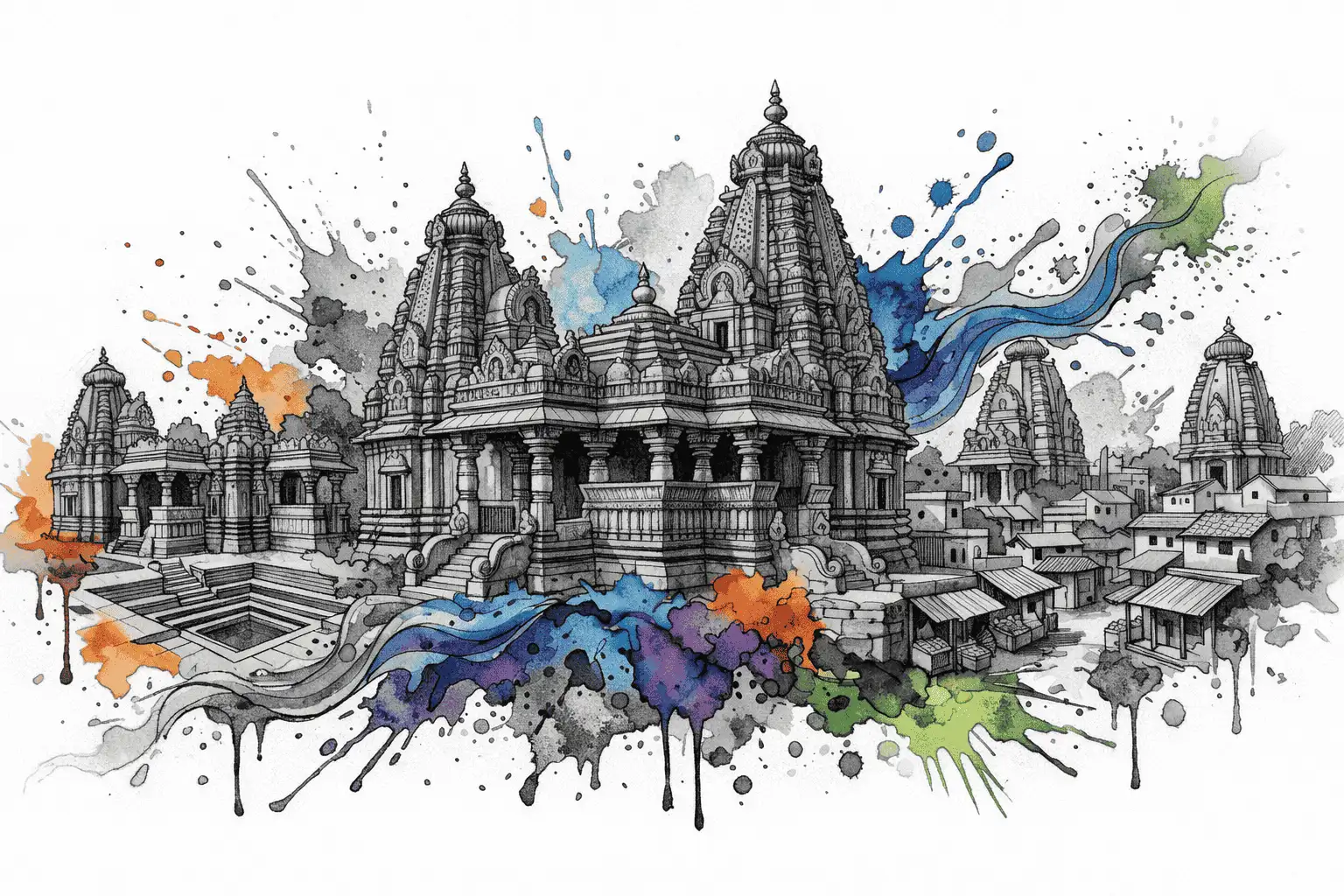
A town built on devotion to Saraswati, featuring temples to Shiva, Vishnu, Shakti and Ganpati in the signature Karnata Dravida tradition, from ancient Lakkundi to stand-alone stone wonders like Dambal.
southern india

hampi
Once one of the medieval world's richest cities, Hampi showcases the glory of Vijayanagara through marvelous granite Dravida temple architecture, living mathas and sampradayas, teaching in four days what books cannot in a decade.
southern india
vidisha
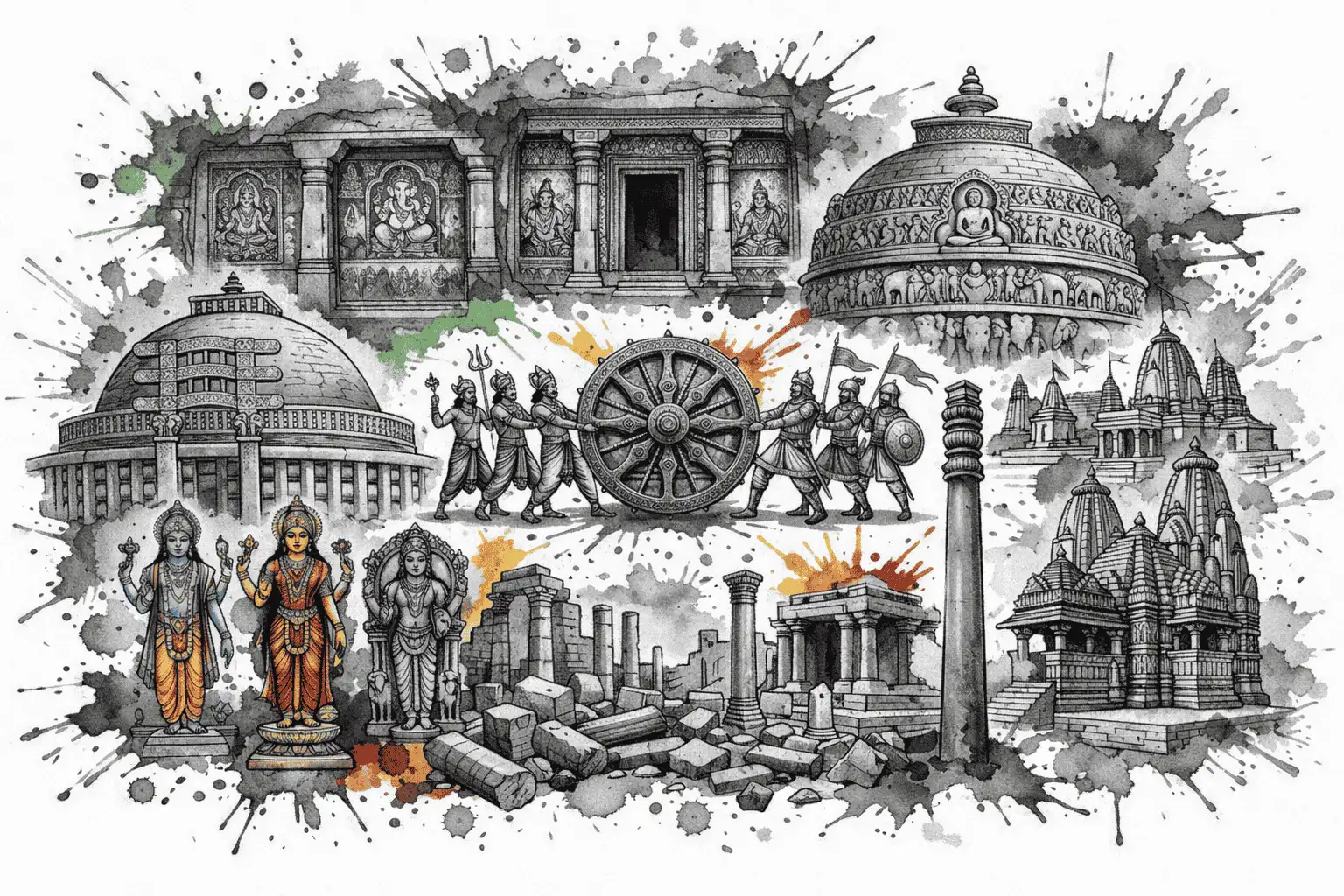
At the strategic centre of Madhya Pradesh, from the oldest rock-cut enamel paintings and ancient stupas to bhumija temple wonders and two-thousand-year-old iron pillars, Vidisha offers a brilliant lesson in history, architecture and art.
central india
manipur
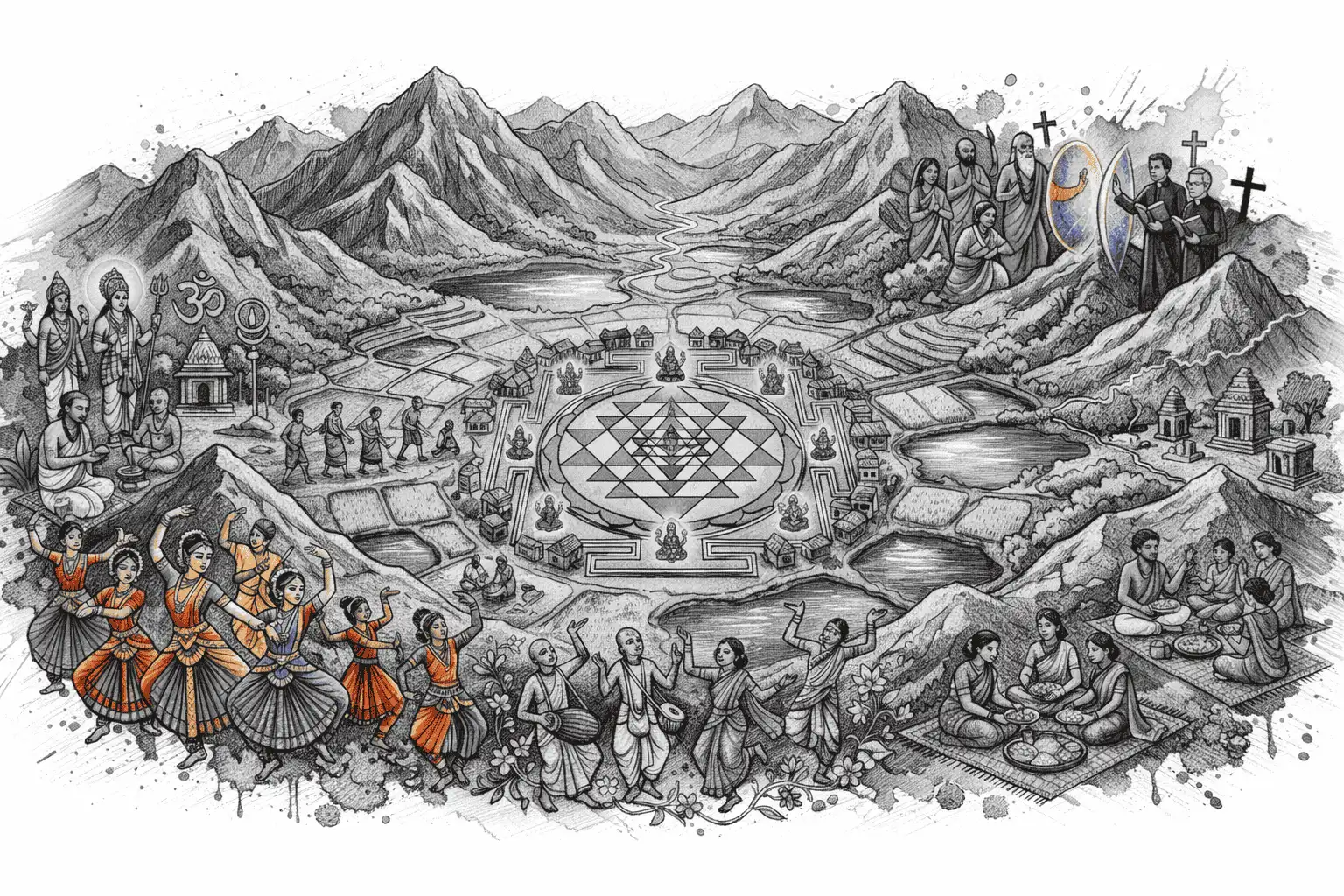
Lush green mountains surrounding lake-filled valleys where the margiya tradition of Hindu dharma meets the desiya tradition of Sanamahi, Gaudiya Vaishnavism flowered uniquely, and tribal cultures create a kaleidoscope at India's borders.
eastern india

meghalaya
Rolling green hills, pristine lakes, hidden waterfalls, Shakti Peethas in tribal Jaintia hills, ancient stalactite Shiva Lingas near the wettest place on earth, and sacred forests where every leaf is divine and every tree sacred.
eastern india
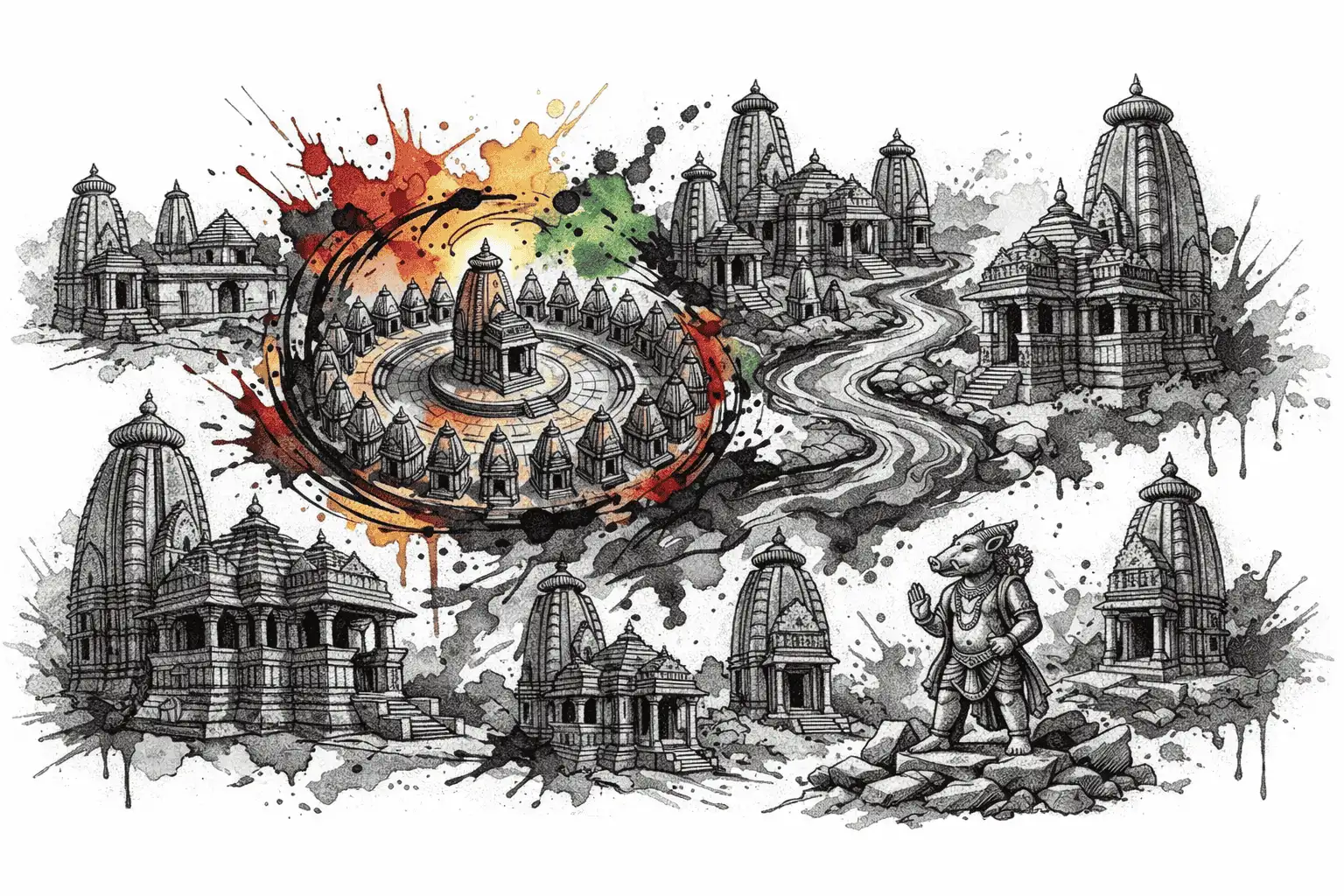
jabalpur
Circular temples with 81 garbha-grihas dedicated to Shri Vidya, ancient temples at the origin of Narmada, some of the oldest Hindu temple architecture, and breathtaking nagara shikharas amid exquisite rivers, ravines and waterfalls.
central india

nashik-pune
Nashik, host of Maha Kumbha Mela and home to a great Jyotirlinga at the origins of Godavari, joins Pune with its rock-cut Hindu temples and modern temple renaissance, connected by some of India's oldest cave temples.
western india
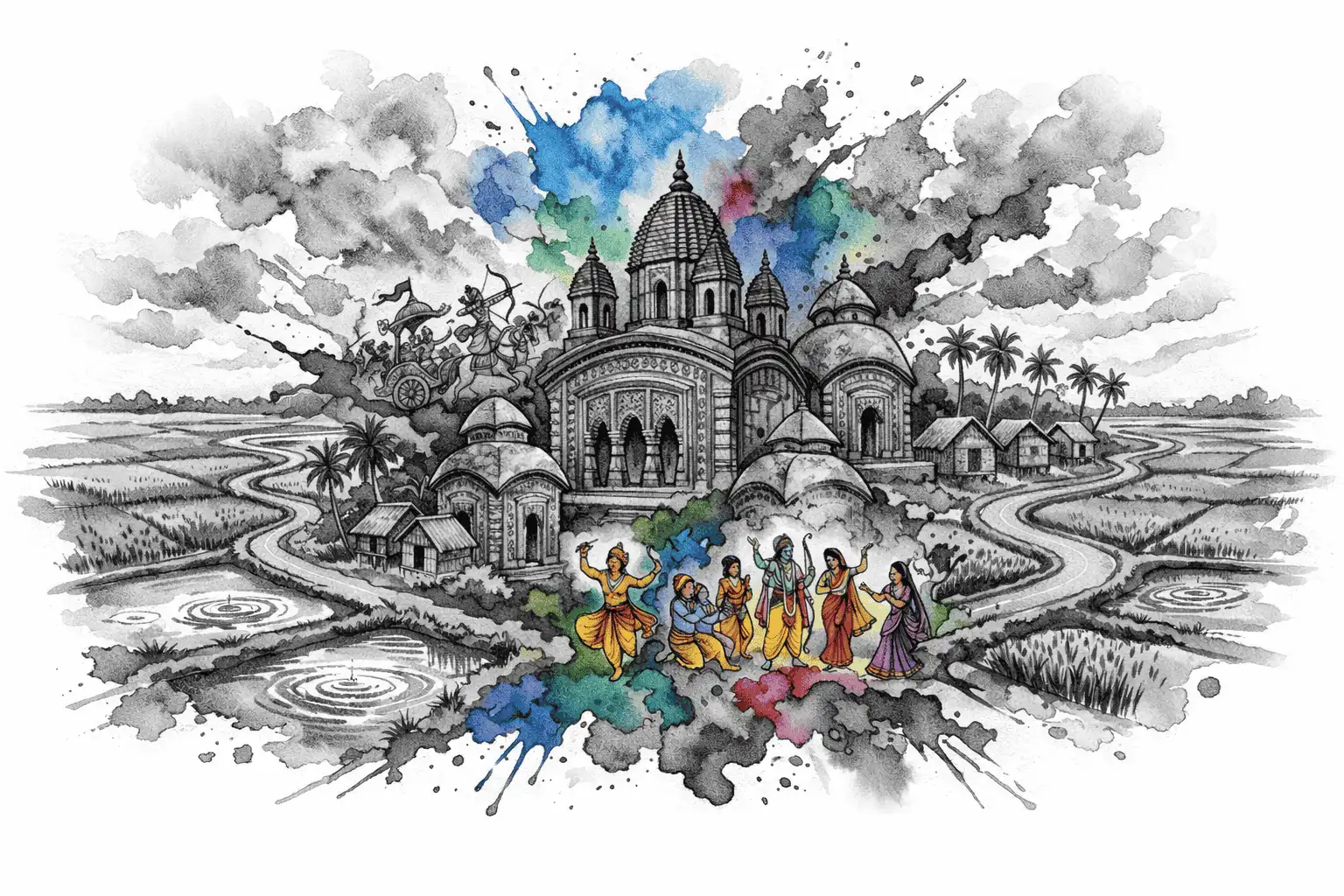
bishnupur
Blue skies, green fields and terracotta temples in West Bengal's prettiest corner, featuring unique architectural marvels etched with stories from the Puranas, Ramayana and Mahabharata, plus the famous Baluchari saree handloom cluster.
eastern india
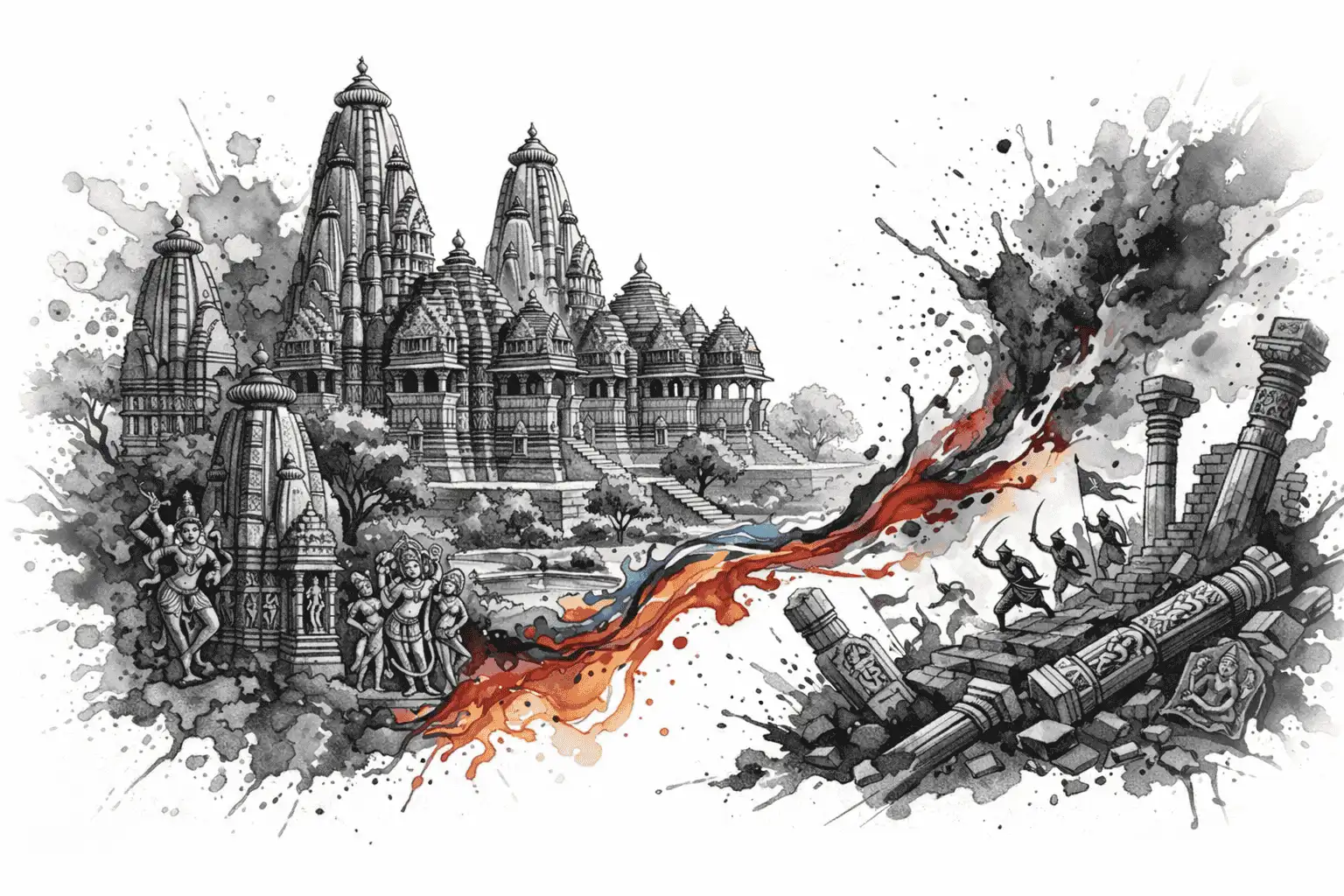
khajuraho
One of the world's greatest temple sites displaying nearly all varieties of nagara architecture where sculpture matches architectural heights, paired with the sobering ruins of nearby Mahoba destroyed by invaders.
central india
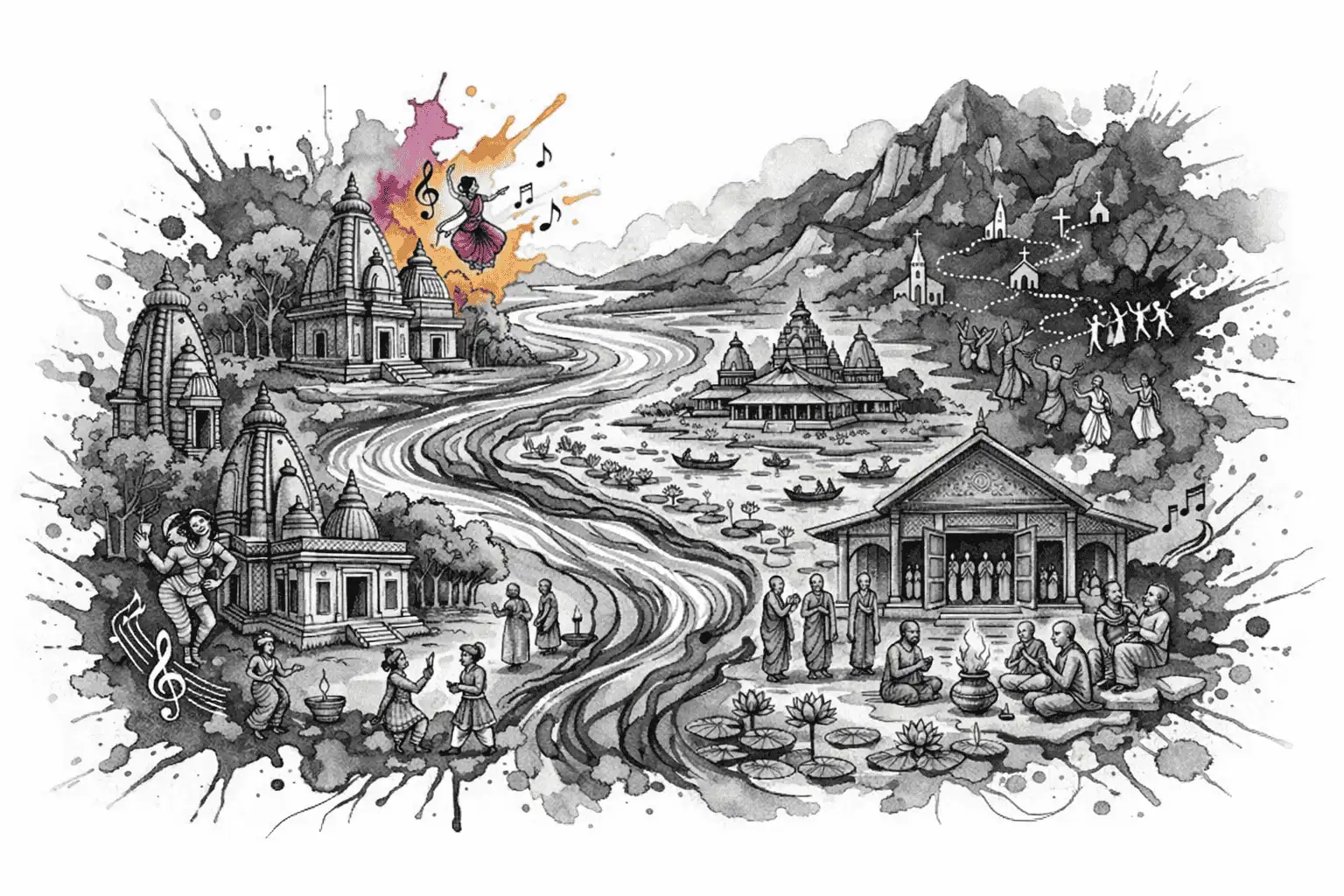
upper-assam
From Ahom-built Dols mimicking nagara architecture to Srimant Sankaradeva's Namghars becoming grand Satras on Majuli, the world's largest river island, where the nama japa of Shri Krishna continues incessantly.
eastern india
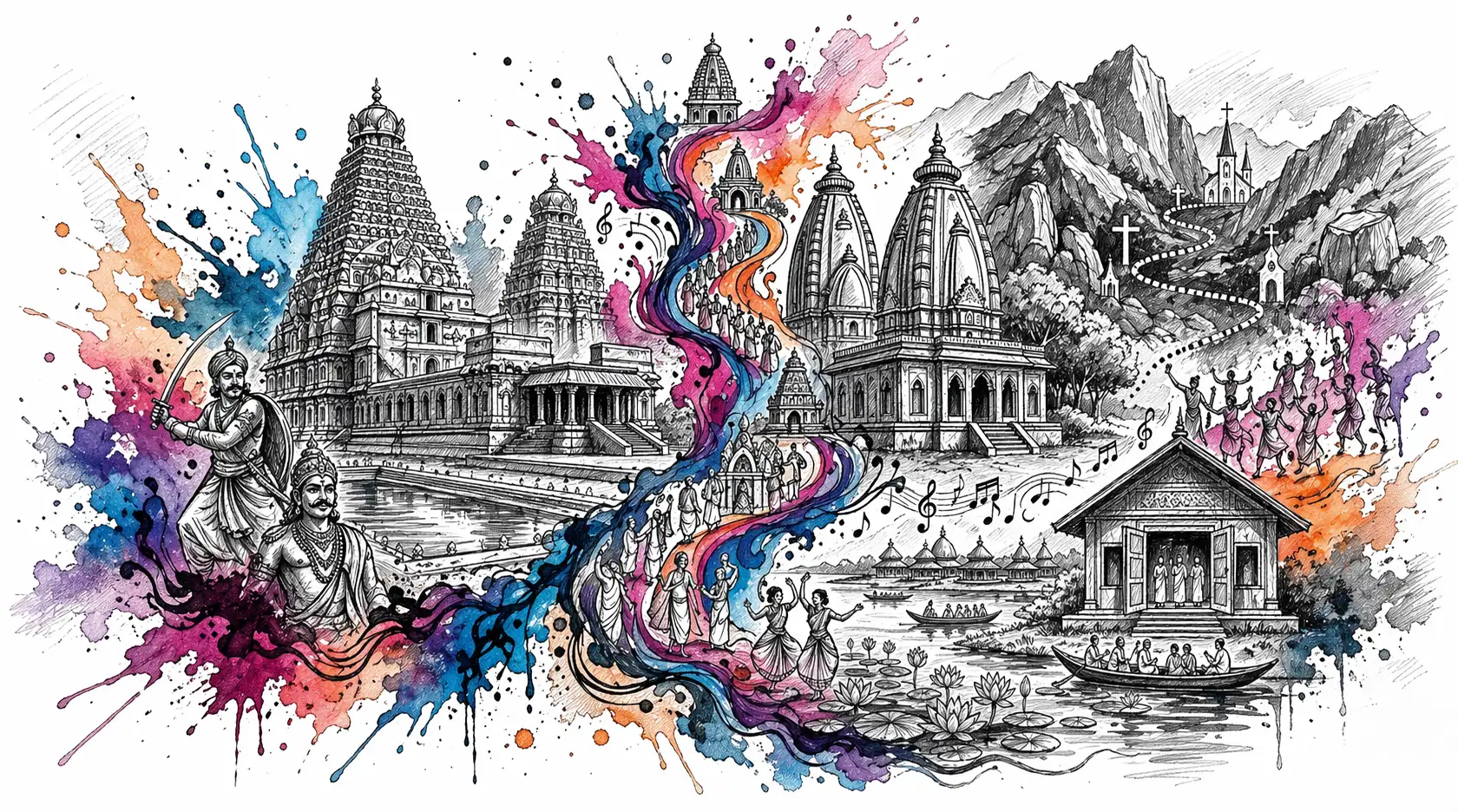
thanjavur
The great Chola capital boasting the magnificent Brihadeeswar Temple and many more Dravida masterpieces from Gangaikondacholapuram to Darasuram to Kumbakonam, sacred kshetras rich in antiquity, architecture, sculpture and living tradition.
southern india

kurnool
On the banks of sacred Tungabhadra, from Chalukya temples of Alampur and Shakti Peetha of Jogulamba to the great Jyotirlinga at Srisailam, amid breathtaking sandstone landscapes hiding svayambhu Shiva lingas.
southern india
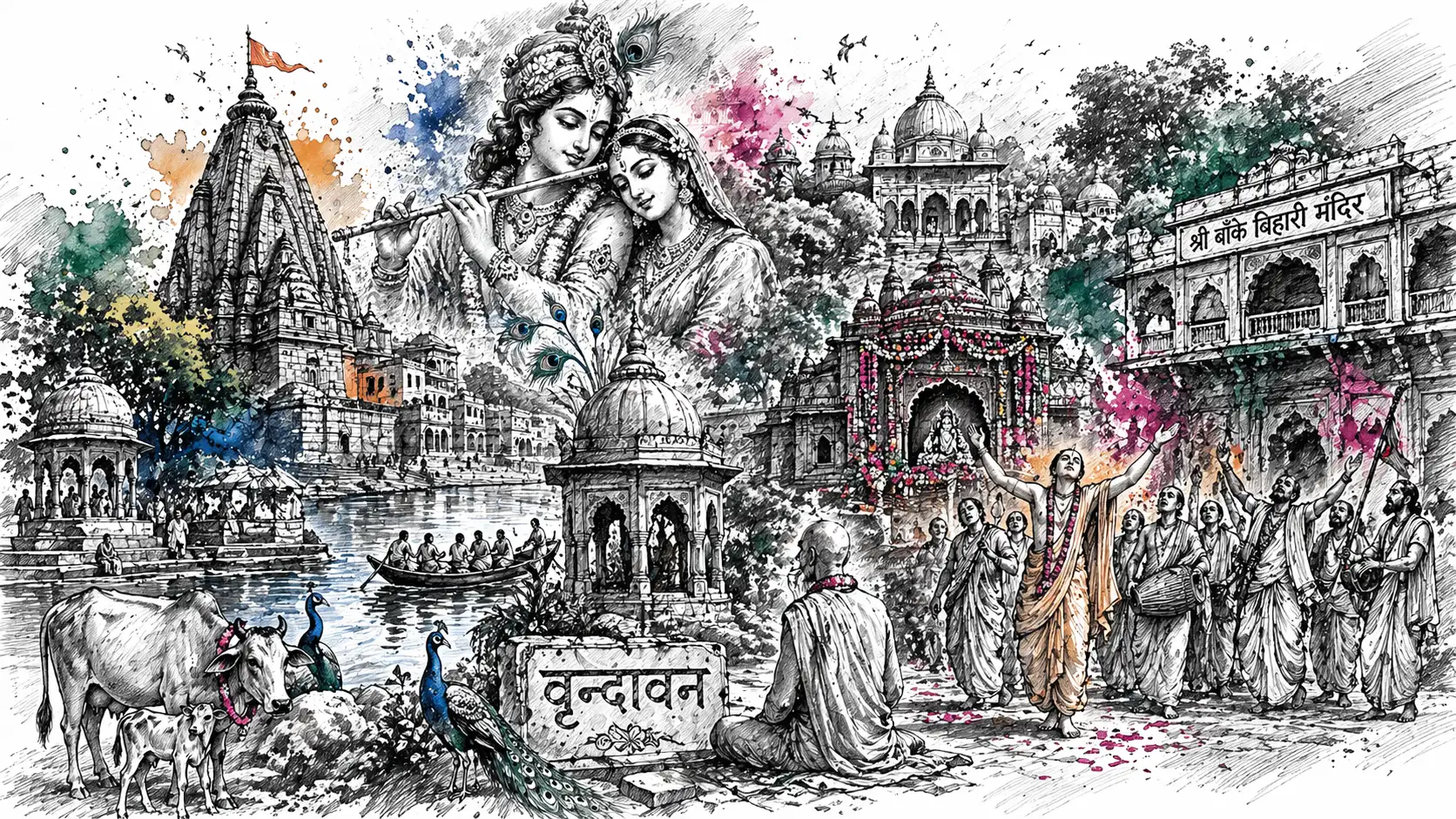
vrindavan-gokul
The sacred land of Krishna's childhood leelas, where devotion lives in every temple from Madan Mohan to Banke Bihari, and where the sands still echo the story of Radha, Krishna and Chaitanya Mahaprabhu.
northern india

kurukshetra
Where the Mahabharata war took place, a testament to Hindu civilizational memory where every destroyed temple and sacred spot has been remembered across generations of destruction and faithfully recreated.
northern india

hadoti
Beyond Kota's coaching fame lies a marvel of bhumija temple clusters, meteorite craters full of ancient temples, great waterfalls and hidden gems from Jhalwar to Rawatbhata amid some of the most breathtaking landscapes.
northern india
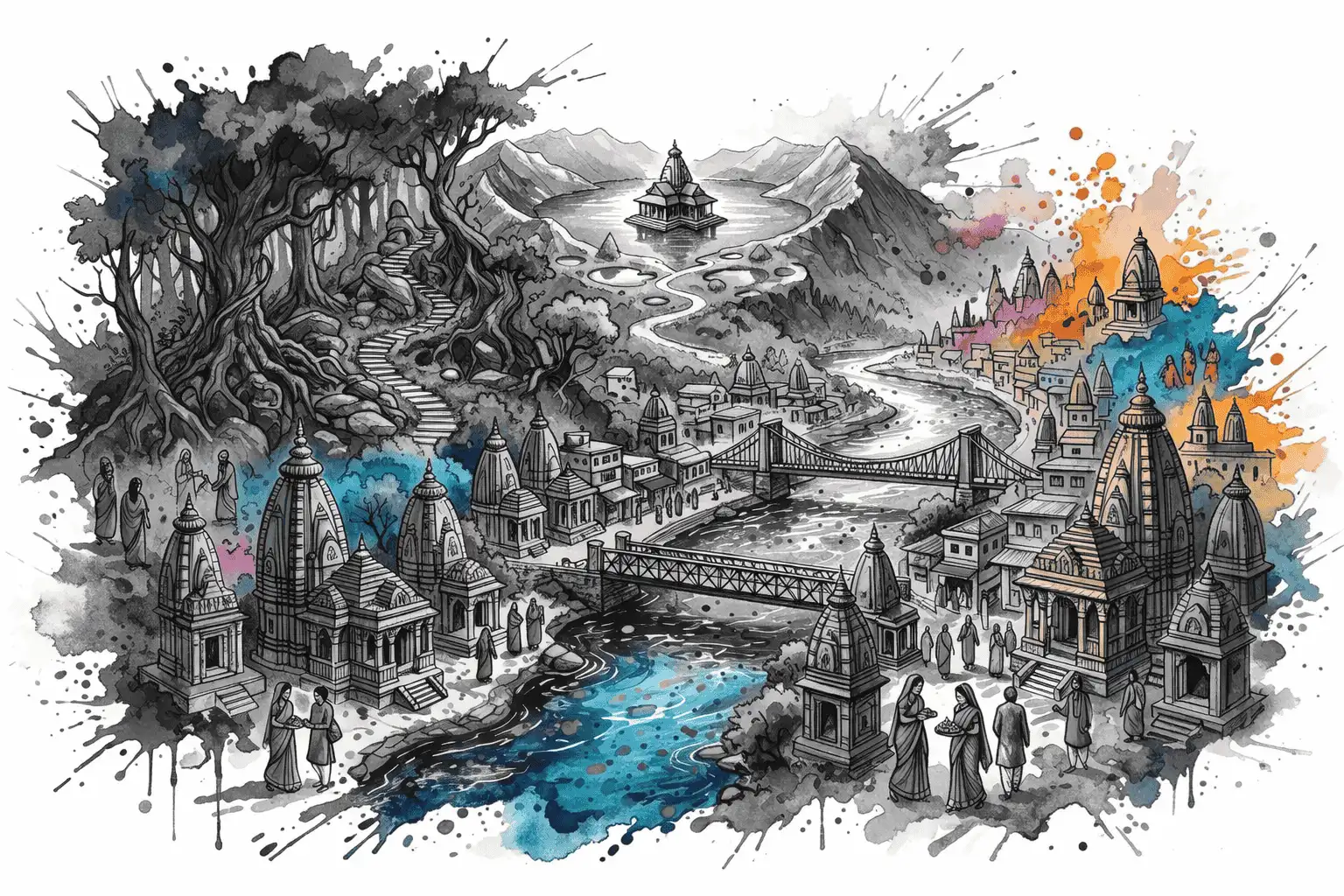
mandi
A pristine Hindu town on the river Beas where ancient living temples line every corner and gaze across sacred waters, with enchanted forests nearby leading to a mountain crater temple dedicated to a great rishi.
himalayas

jaunsar
Wooden temples with completely stoneless architecture in the remotest mountains between Uttarakhand and Himachal, where humans converse with devatas in rhythms more ancient than most human experience, bridging two great Devbhoomis.
himalayas

garhwal
Home to Char Dham, origin of both Ganga and Yamuna, multiple sacred Prayags, Panch Kedars and Panch Badris, and one of five Shankar Mathas, Garhwal is the ultimate sacred geography of Hindu dharma.
himalayas

kutch
India's largest district with one of the strangest geographies, from the westernmost temple to Dholavira's ancient Saraswati River city, temples dedicated to various deities, famous salt flats and quaint cultural heritage.
western india
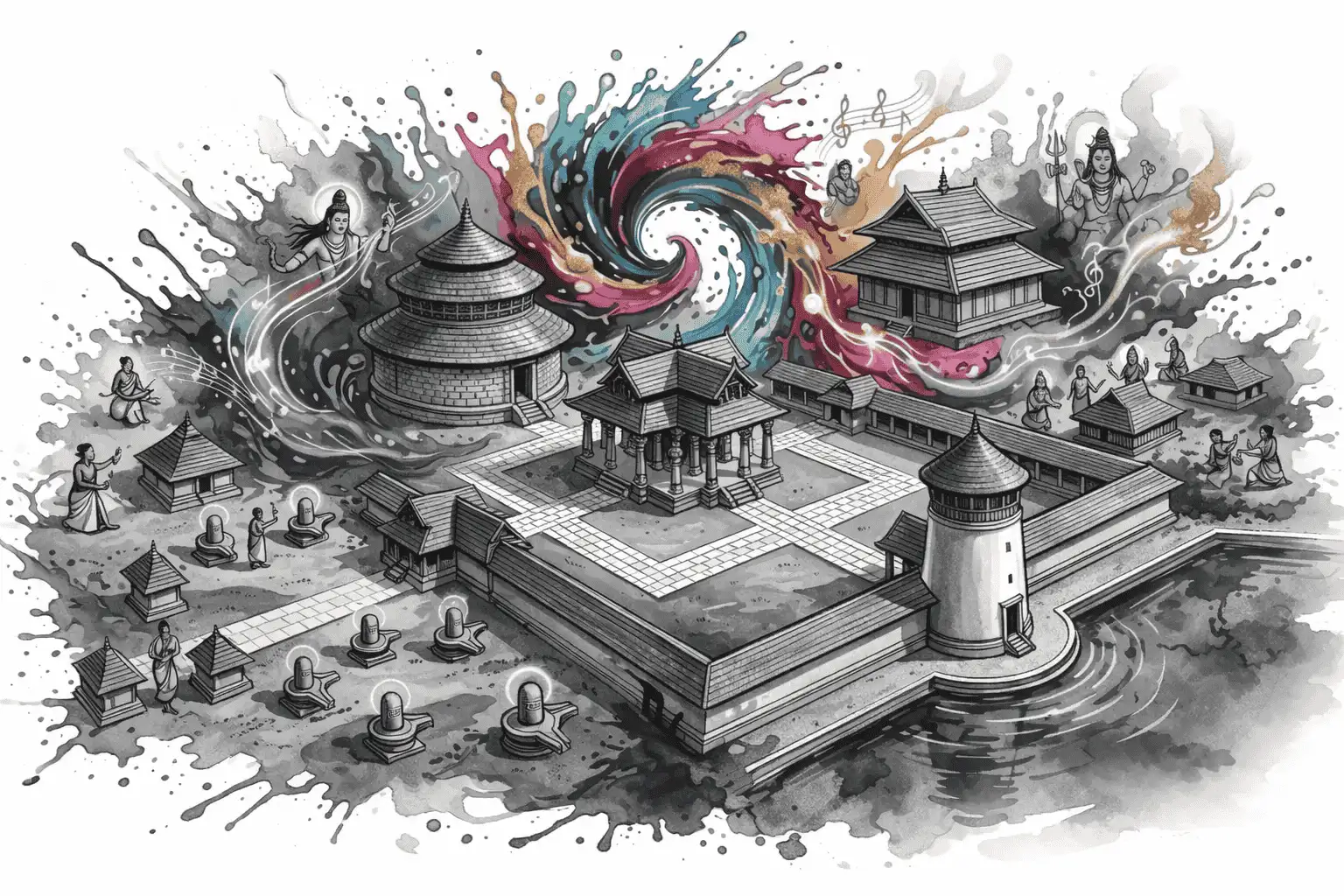
thrissur
Kerala's sacred centre with distinctive circular temple architecture, stone walls with wooden roofs, open courtyards, pristine kalyanis, from the great Vadakkunnathan temple to Peruvanam and Thriprayar.
southern india

kashmir
Ruins that tell the story of a once-great open Hindu society destroyed by ideological hostility, yet surviving at Martand, Avantipora, Kheer Bhawani and beyond, awaiting revival by future generations.
northern india
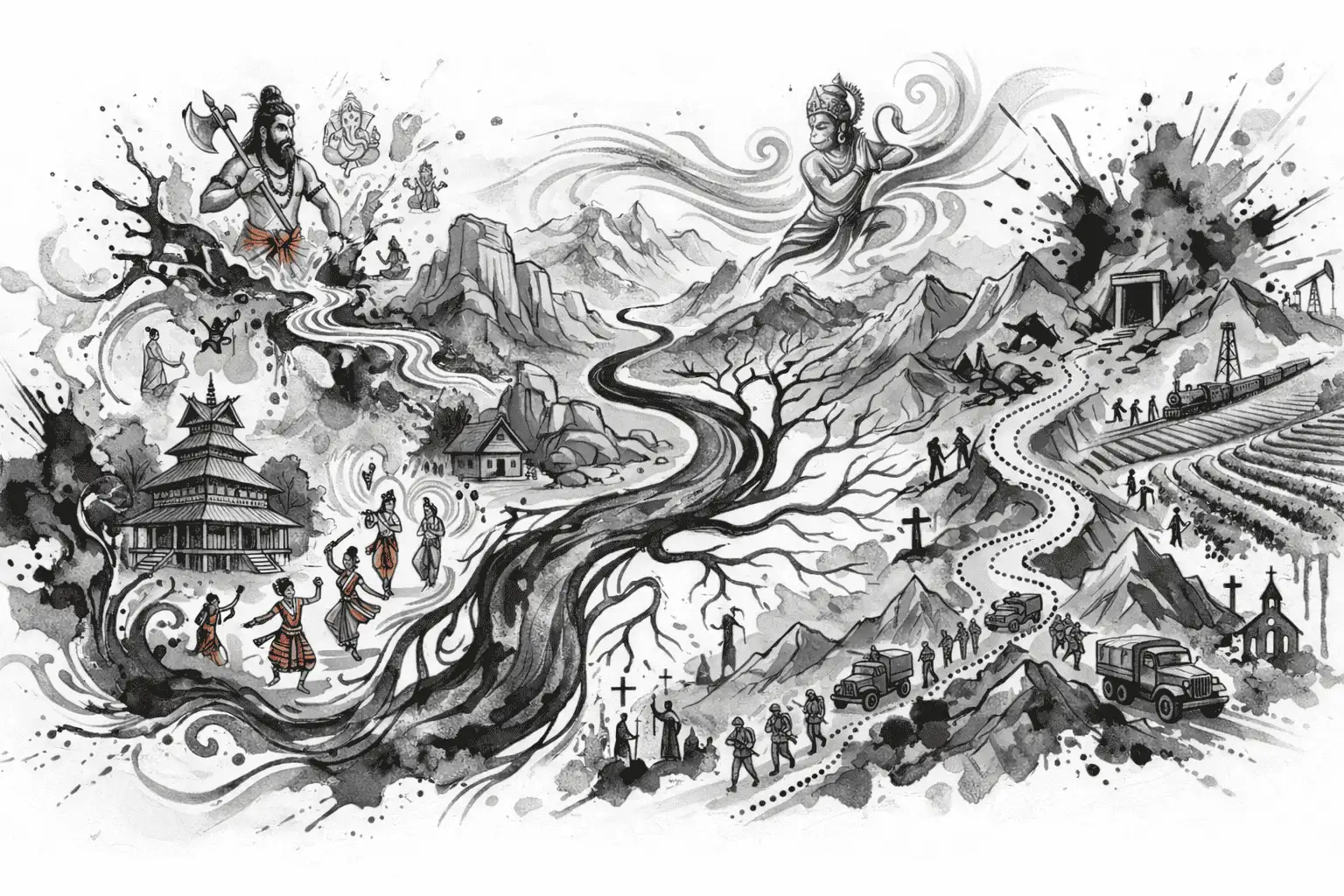
arunachal-east
Remote districts where the last Nocte Vaishnav Naga village lies, where mountain pass winds are called Shri Hanuman, Lord Parashuram cleansed his sins, and some of the world's last great indigenous traditions survive.
eastern india

arunachal-west
Land of the Tani people with living shamans, spirit animals, dense rainforests and hidden mountain valleys, home to one of the world's largest svayambhu Shiva-Shakti lingas and vibrant Donyi Polo traditions.
eastern india

vietnam
Far from India yet boasting one of the oldest Shri Rama temples on UNESCO's heritage list, where Hindu deities were worshipped and great temples built in breathtakingly beautiful places across this resilient land.
international

cambodia
Home to Angkor Wat, the world's largest Hindu temple complex built on a grand mandala, with hundreds of temples dedicated to Vishnu, Shiva and other deities, a testament to how Hindu dharma spread peacefully overseas.
international
past chapters
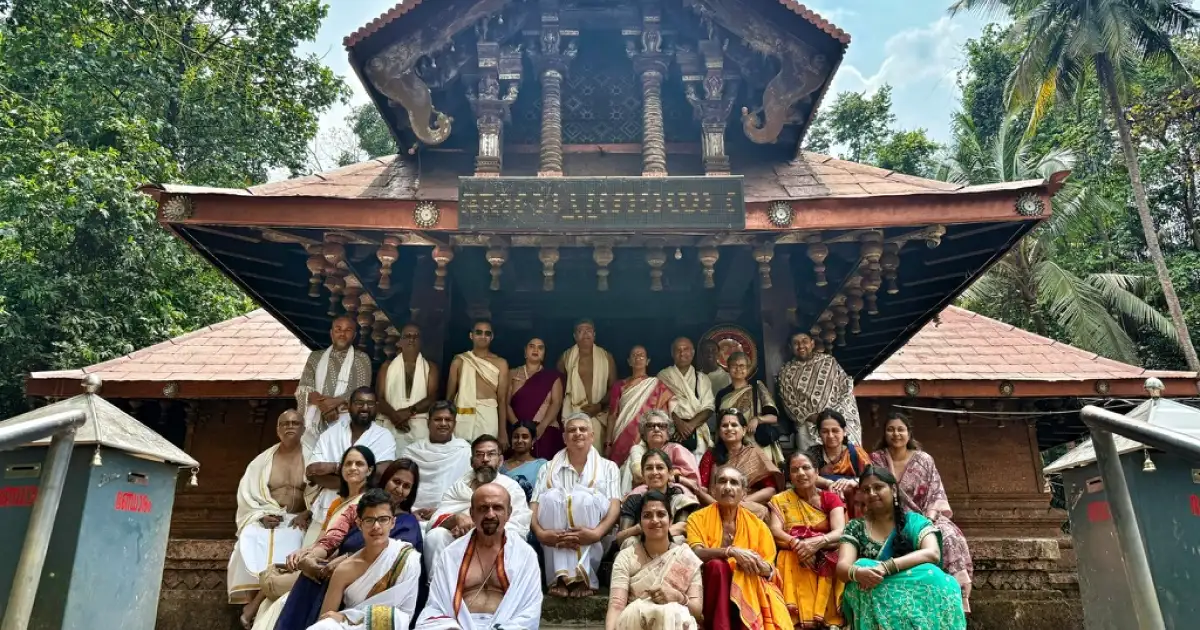
Kannur
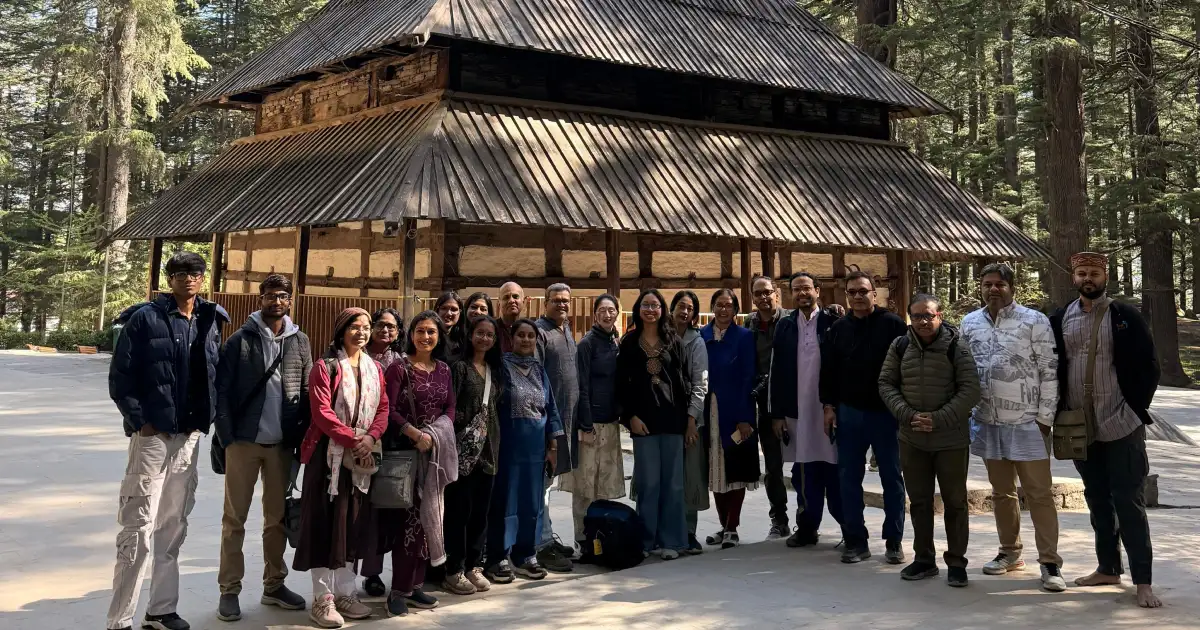
Kullu
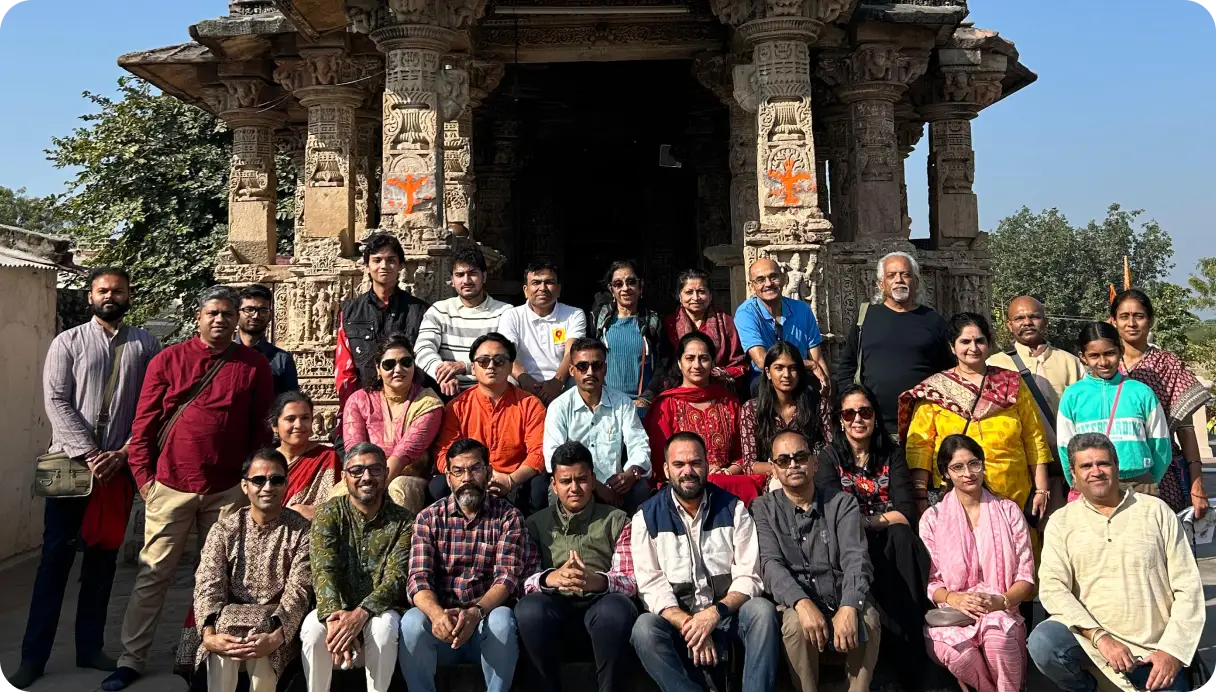
Gujarat
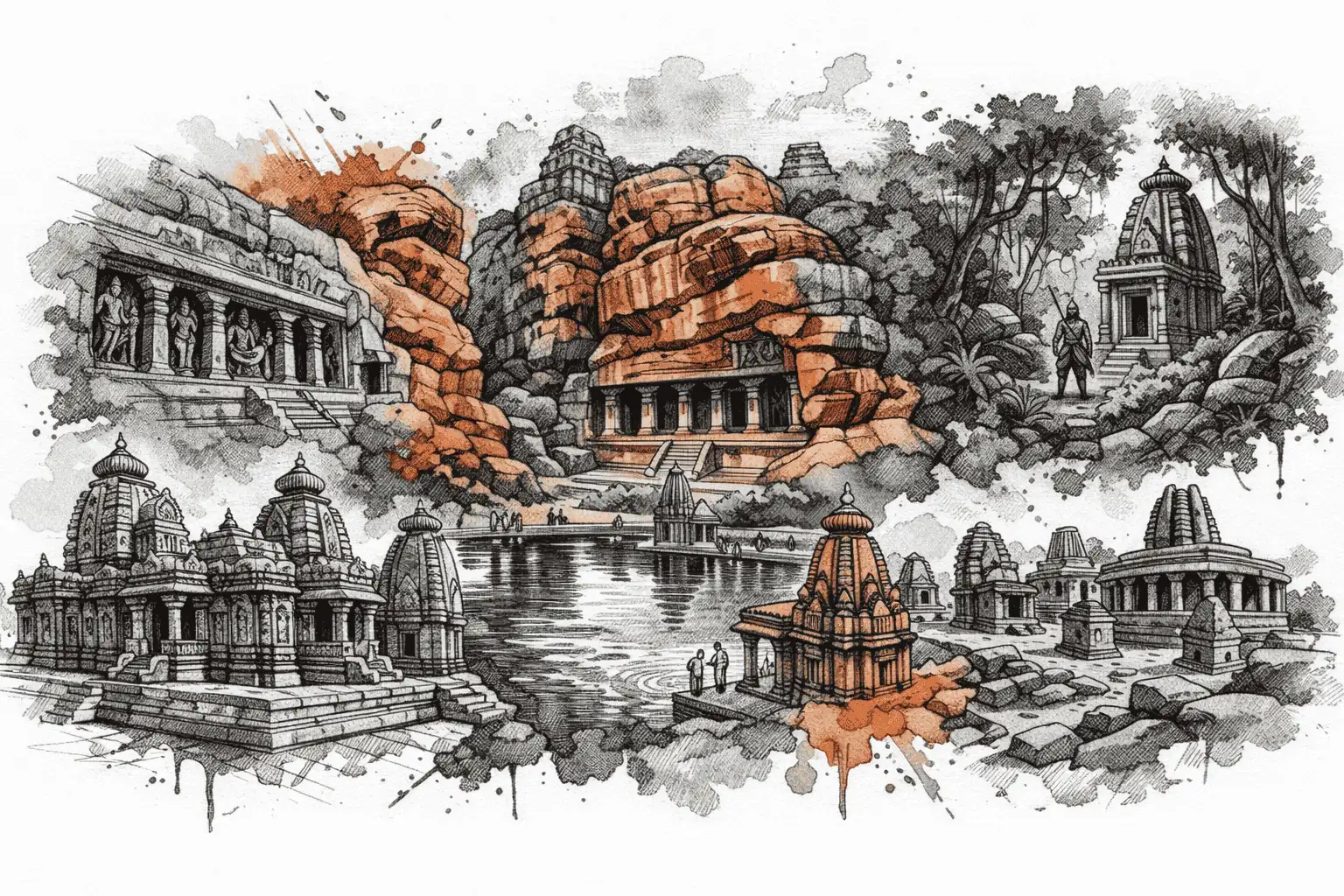
badami
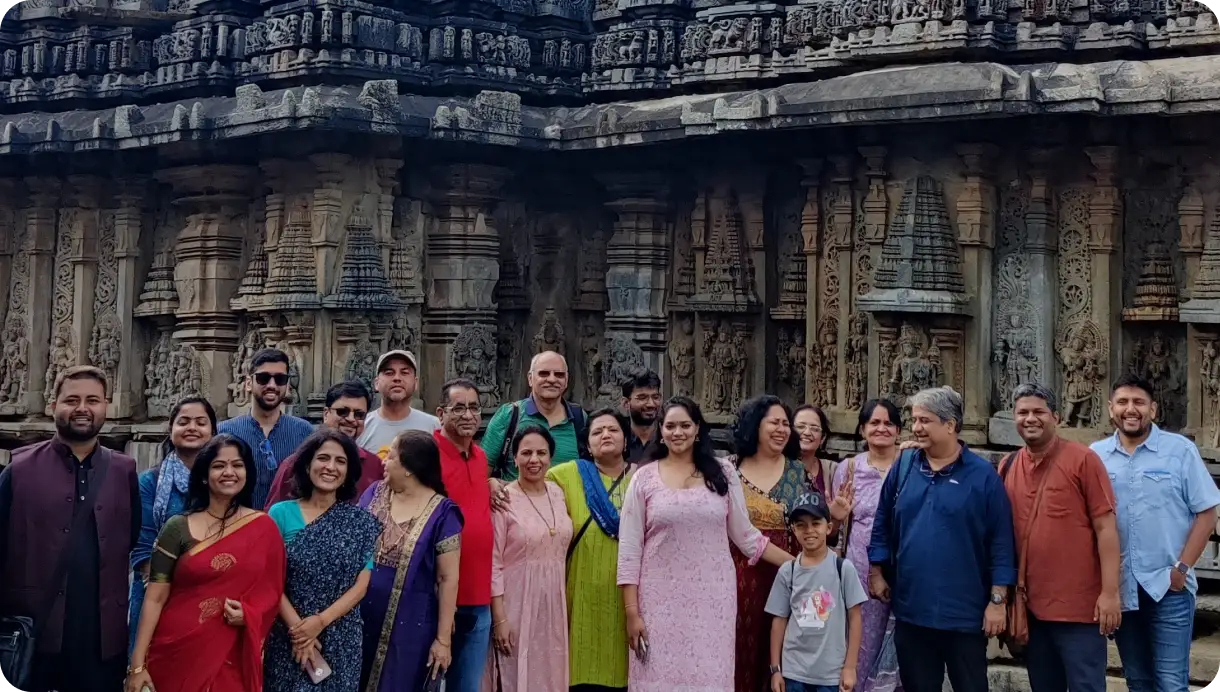
Karnataka 1
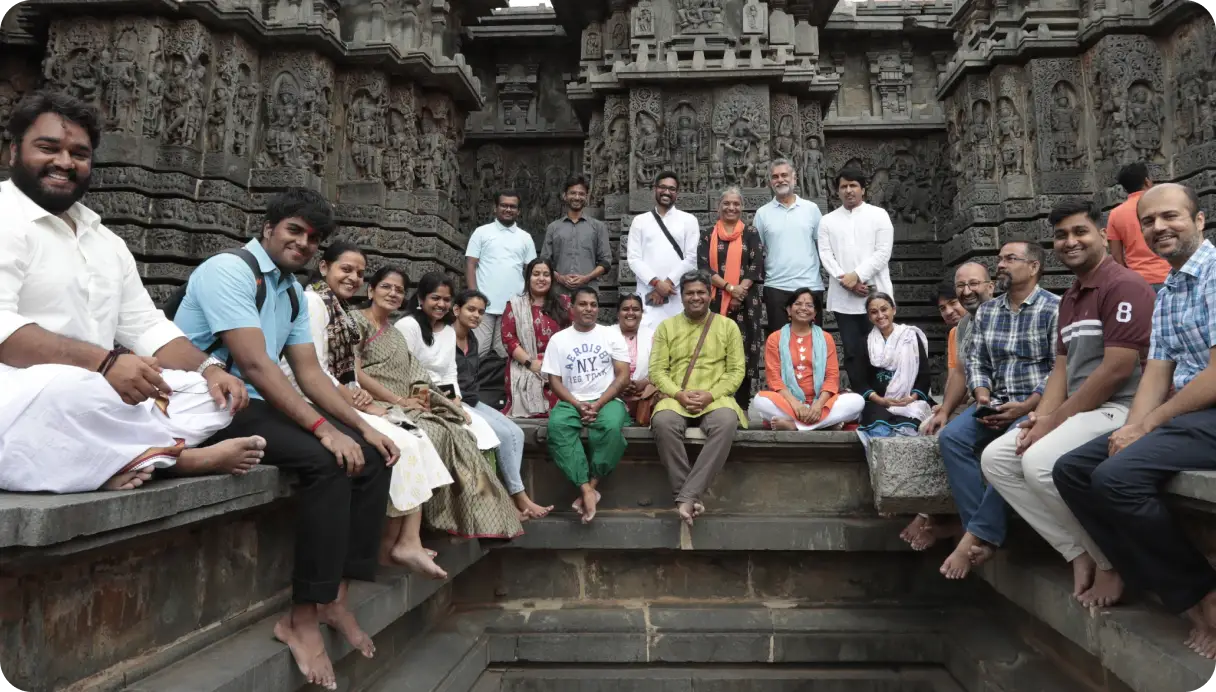
Karnataka 2
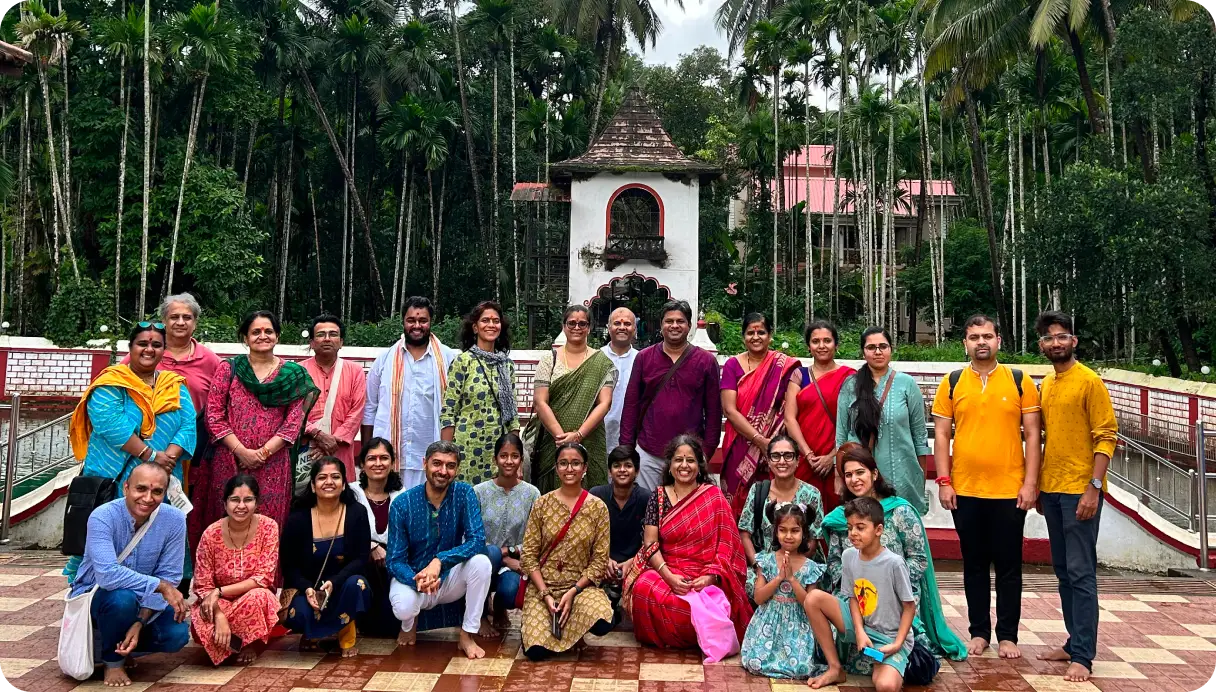
Goa
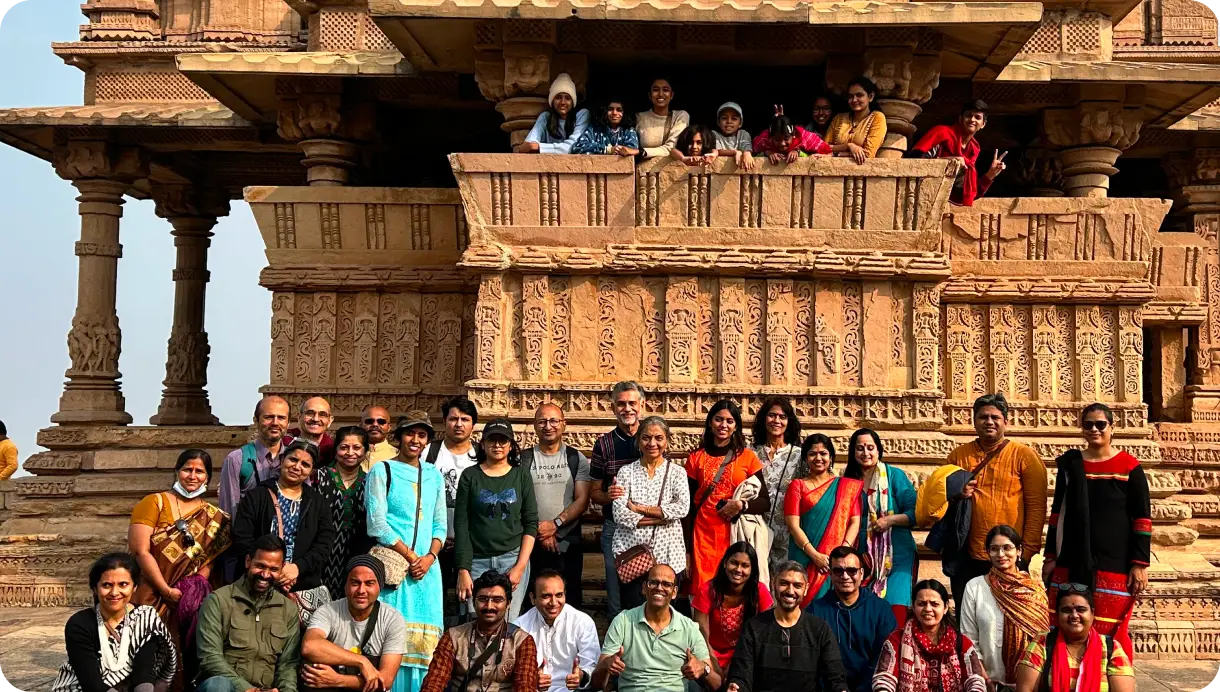
Gwalior
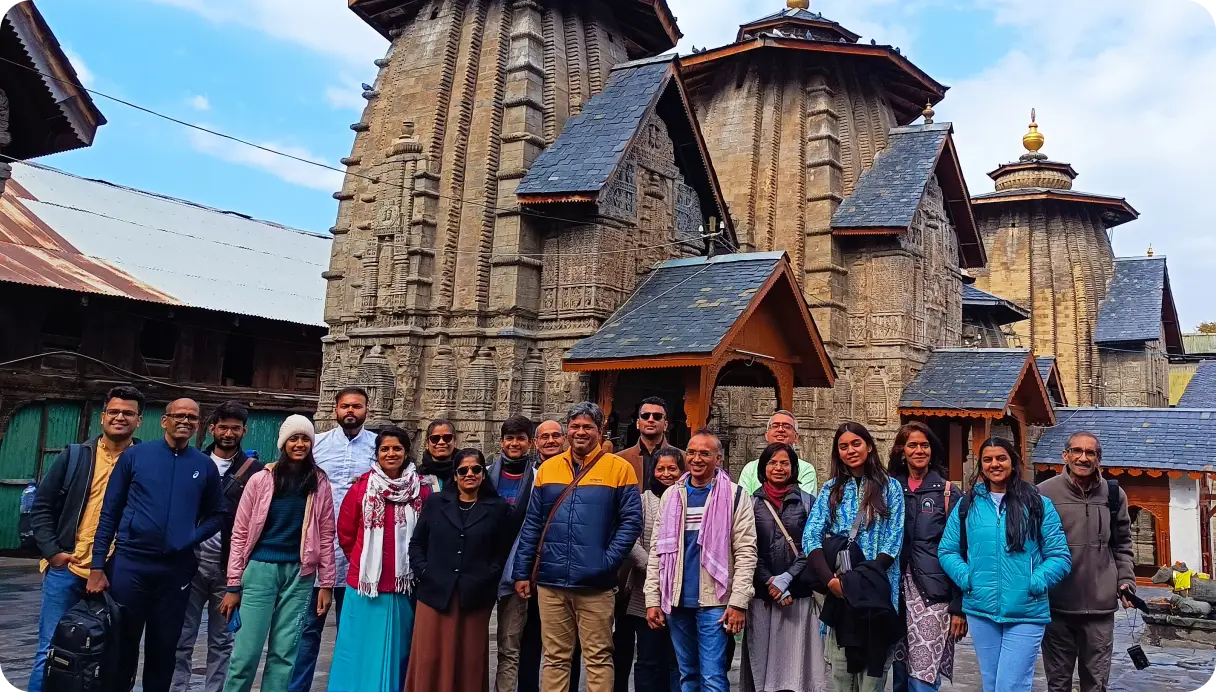
Chamba
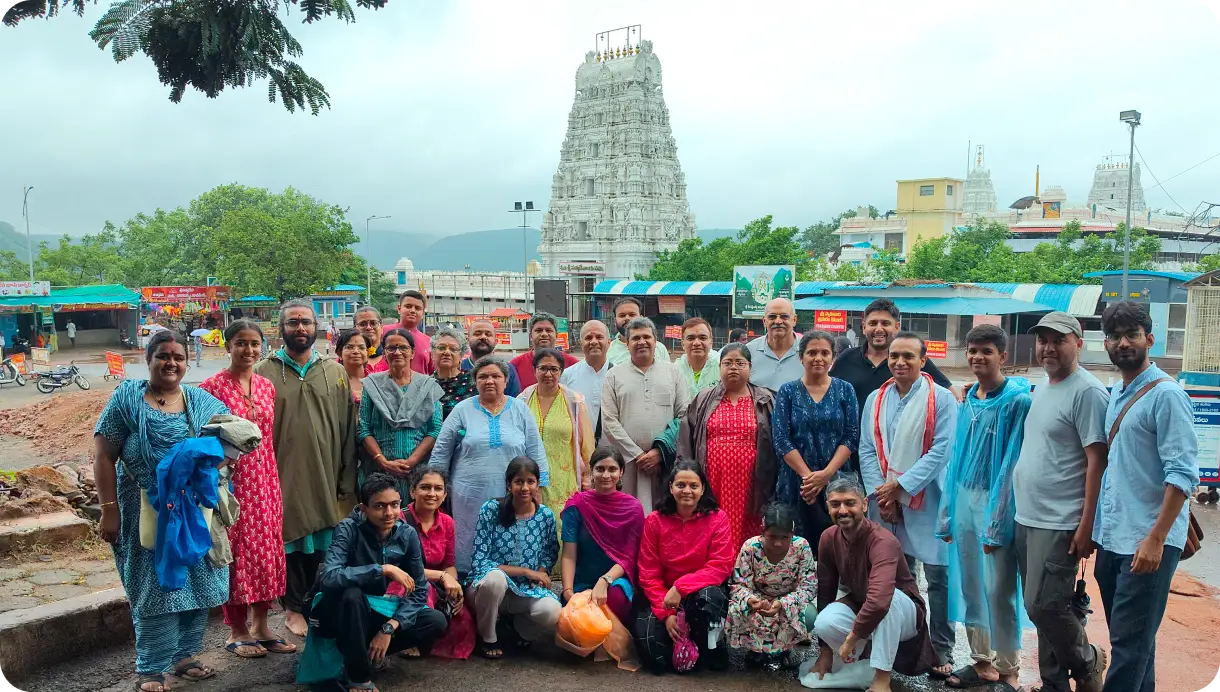
Andhra Pradesh
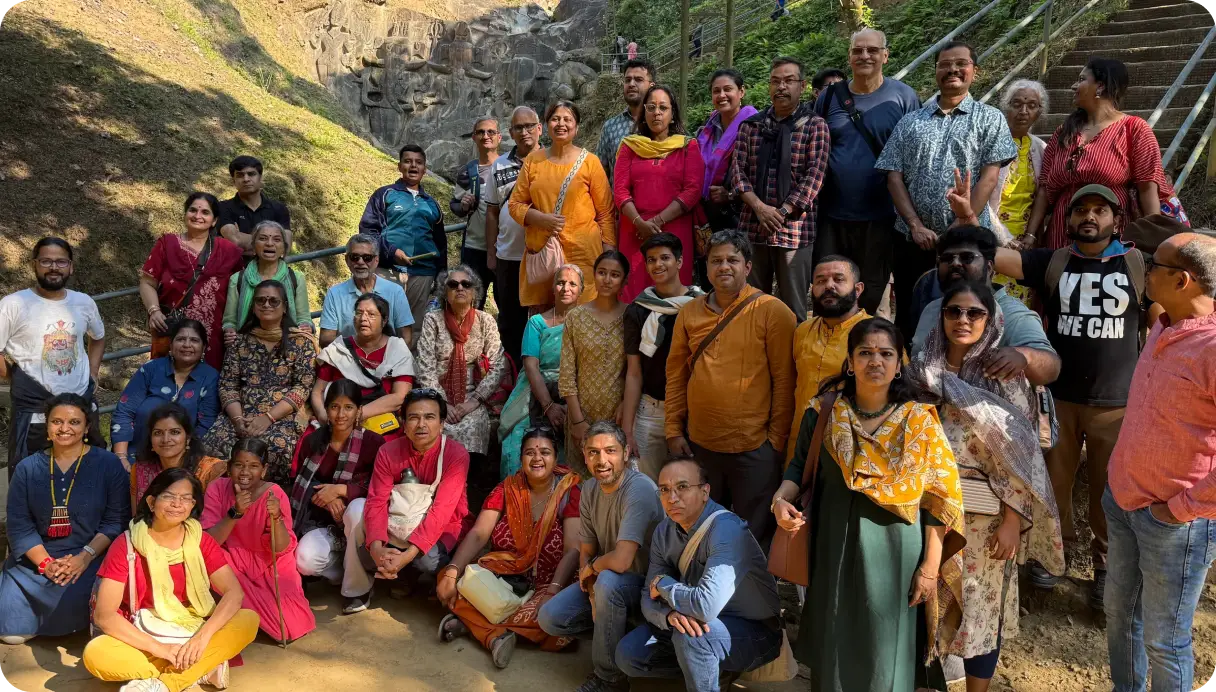
Tripura 1
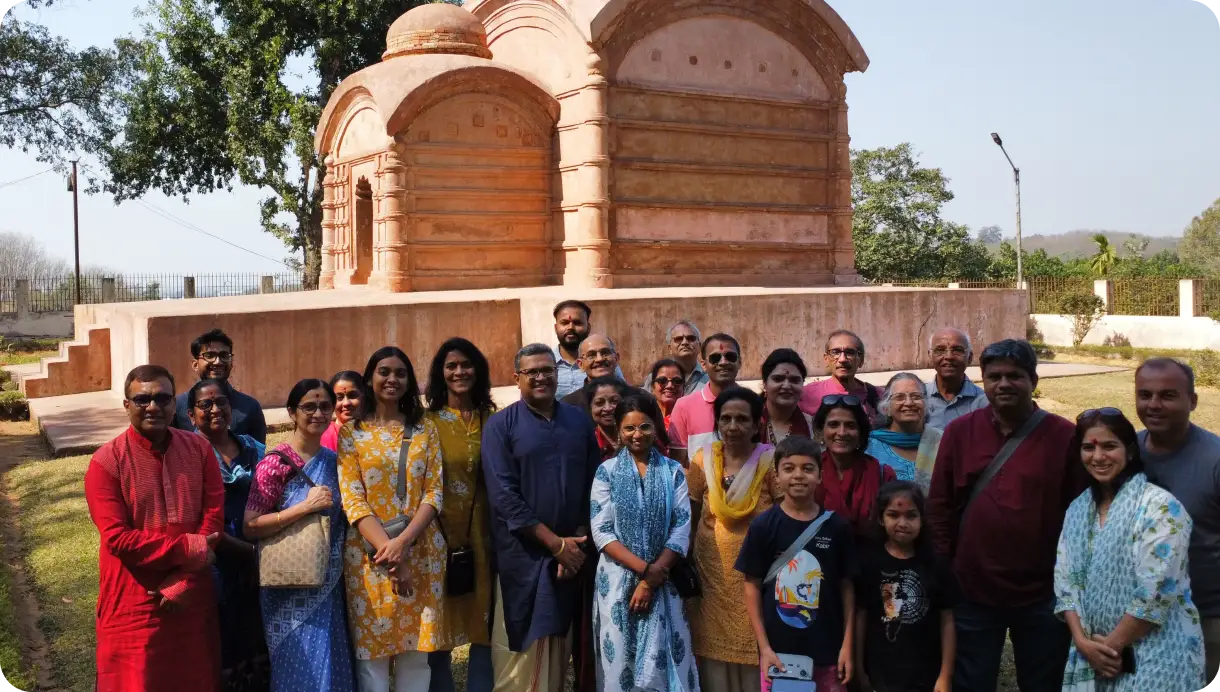
Tripura 2
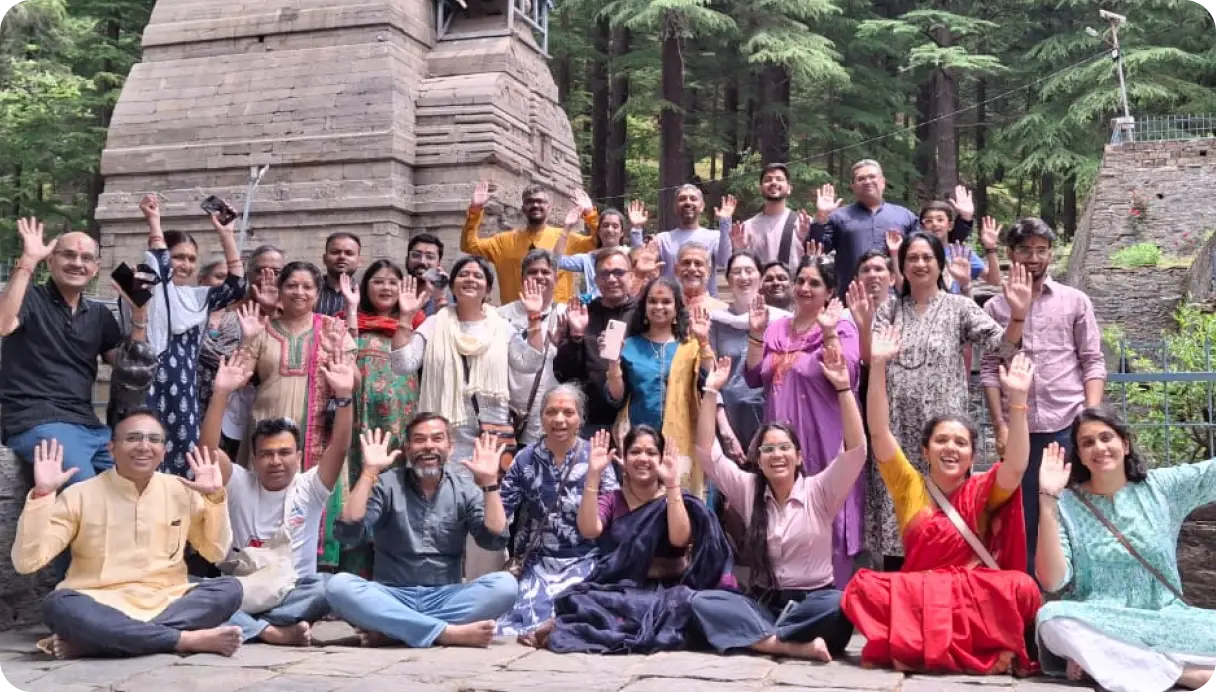
Kumaon
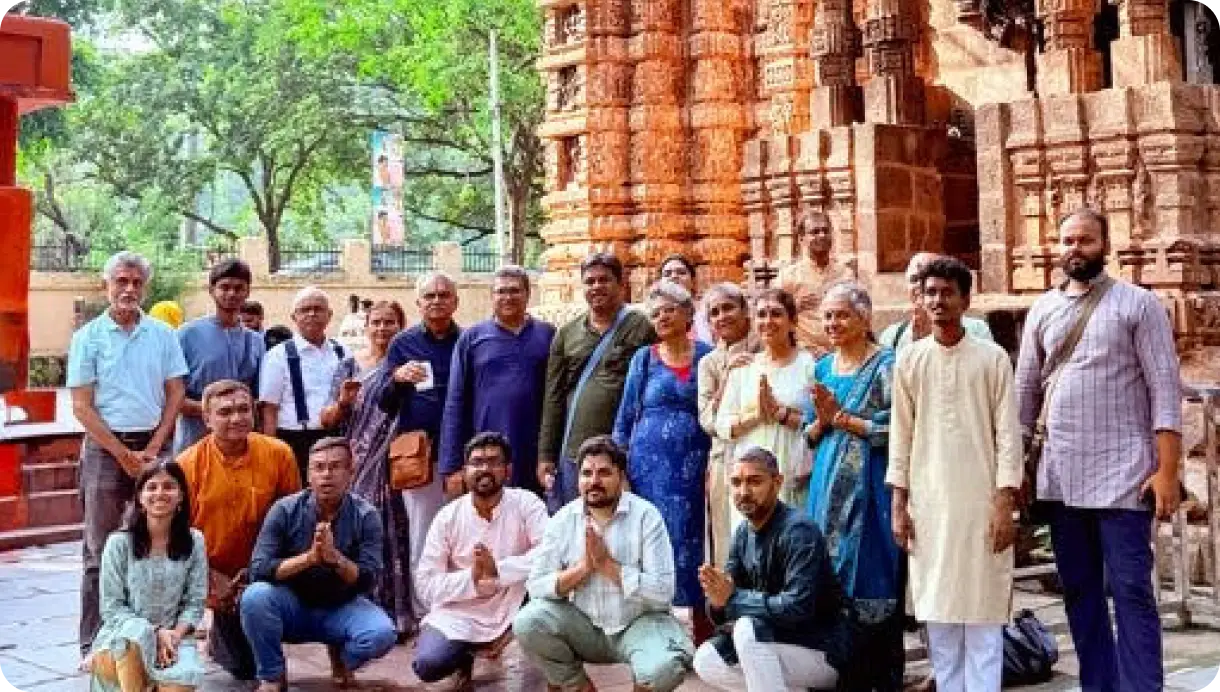
Chhatisgarh
Gujarat
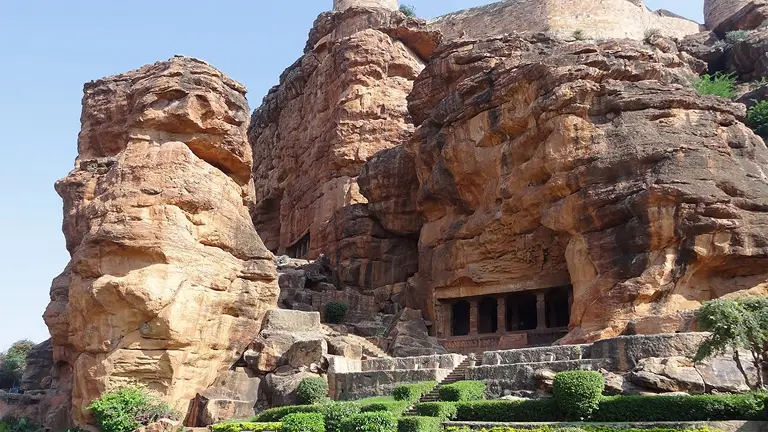
Badami