

gujarat Chapter
The land that was one of the first to be destroyed in the path of Islamic invaders, and yet somehow survived.
24 - 25 Dec 2025
Dates
₹37,999/-
Price
4N 4D
Duration
18
Temples
Day 0
24 Dec 2025
Everyone arrives at Toran Hotel, Vadnagar and settles for the night at Vadnagar - 1.5 hrs from Ahmedabad
Day 1
25 Dec 2025
Sunak
- Harsiddhi Mata Temple
- Nilkanth Mahadeva

Sander
- Ekandaka Vishnu Temple
- Shiva Temple/ Mata Temple

Patan - Rani Ki Vav
Modhera - Sun Temple
Palodar - Malai Mata
Sidhpur - Rudra Mahalaya
Dinner and Night Stay at Vadnagar
Day 2
26 Dec 2025
Ambaji Darshan (Special instant darshan)
Lunch - Ambaji temple
Taranga Group of Temples
Khedbrahma - Brahma Temple
Dinner and night stay at Vadnagar
Day 3
27 Dec 2025
Vadnagar - Kirti Toranas
Asoda - Jashmalnathji Temple
Abhapur - Polo Forest Group of Temples
Lunch - Polo Forest
Dinner and night stay at Vadnagar
Day 4
28 Dec 2025
Check out and depart for Viramgam
Viramgam Group of Temples
Lunch - Near Ahmedabad
Drop at Ahmedabad airport
Temples
Use buttons to navigate, or swipe left/right.
Rani ki Vav
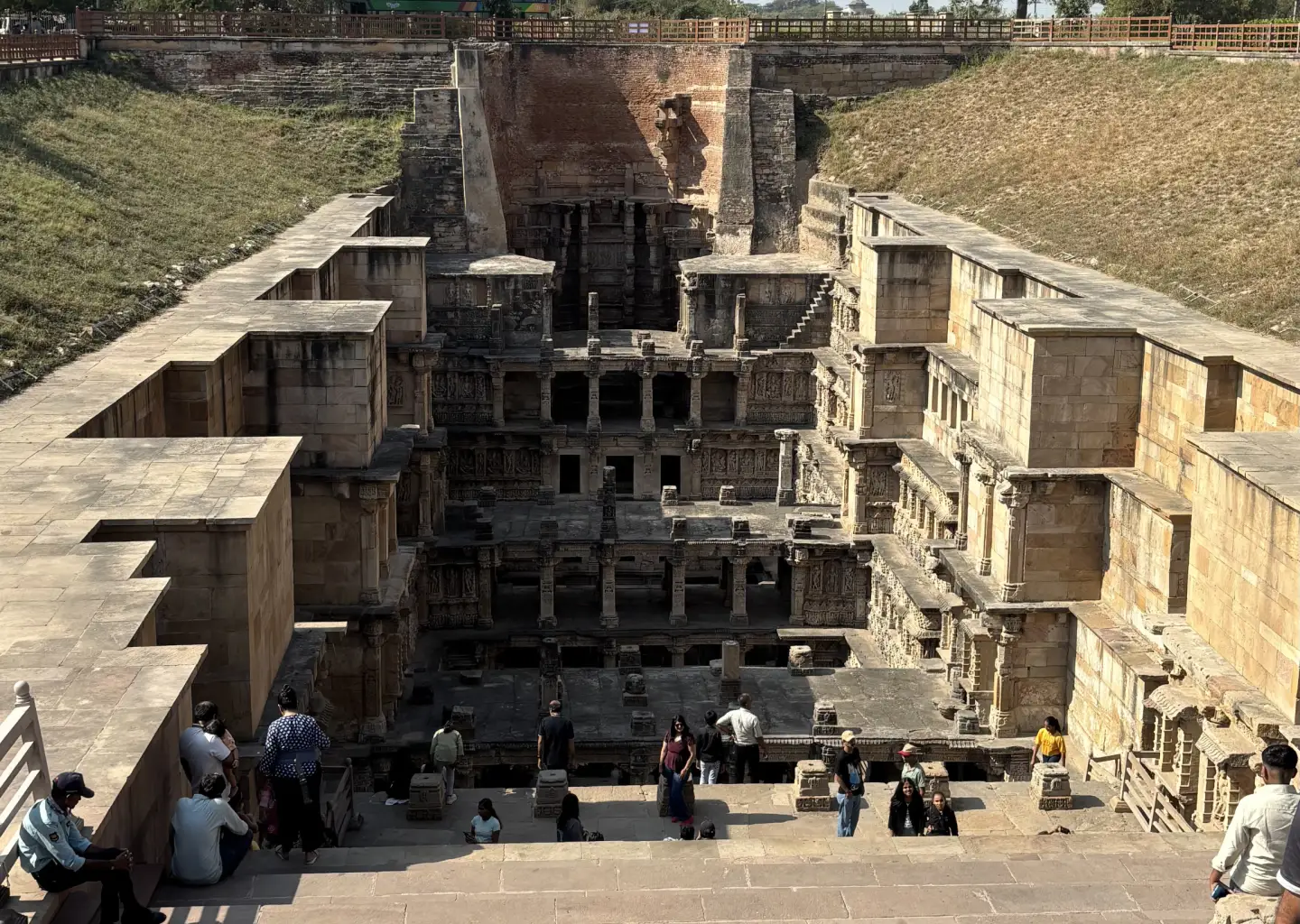
Rani ki Vav captures the quintessence of Gujarat. It is one of the largest step-wells in the semi-desert state of Gujarat. What nature cannot provide enough to Gujarat, is taken care of by its Hindu culture. The culture of creating step-wells to store water is paramount in Gujarat, and Rani ki Vav is the greatest example of it. And lest we forget the agency of Sanatana dharma, lest we mistakenly start thinking that there can be spaces on earth which are not divine, our ancestors turned even this step-well into a giant temple, a great celebration of Hindu darshana, iconography, sculpture and architecture. This chapter of Anveshi will explore Rani ki Vav and the deep Hindu design and wisdom that went into its creation.
Modhera Sun Temple
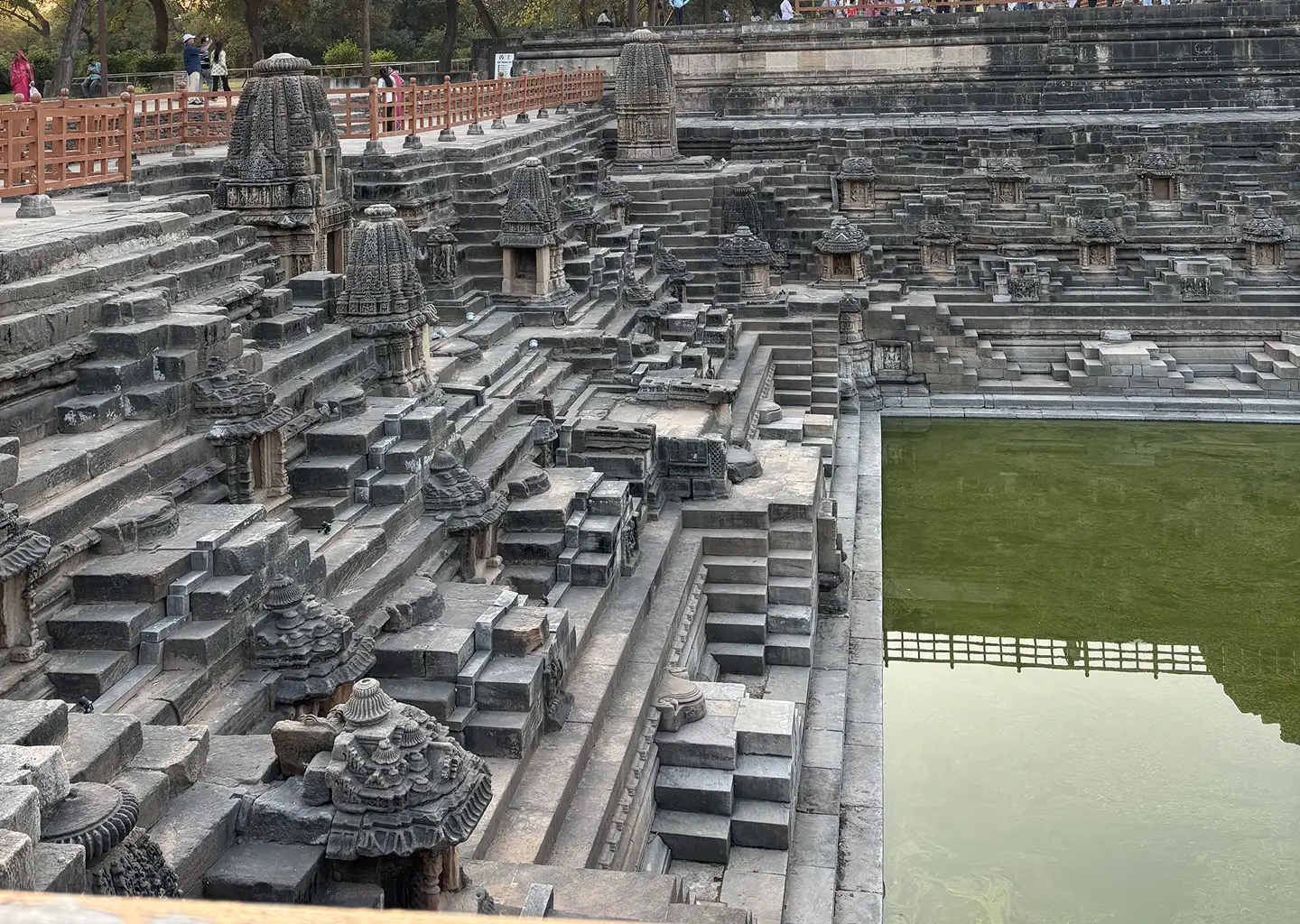
Gujarat is home to one of the greatest Sun temples of ancient India. While much of it was destroyed by the Islamic invaders, and the garbha-griha is gutted now, what remains, stuns the visitor beyond comprehension. Hindu sculpture in the north reaches its zenith in the great temples of Gujarat and Rajasthan, and the Sun Temple, Modhera is a great example. Its free standing mandapa is world famous with its pillars and ceiling displaying brilliant sculptural marvels. The temple has a step-well of its own, right in front of the temple which again is sacralized by putting up small temples at various of its nodes, once again displaying how Hindu culture refurbished nature while regaling its followers with great and transcendent art.
Palodar - Malai Mata
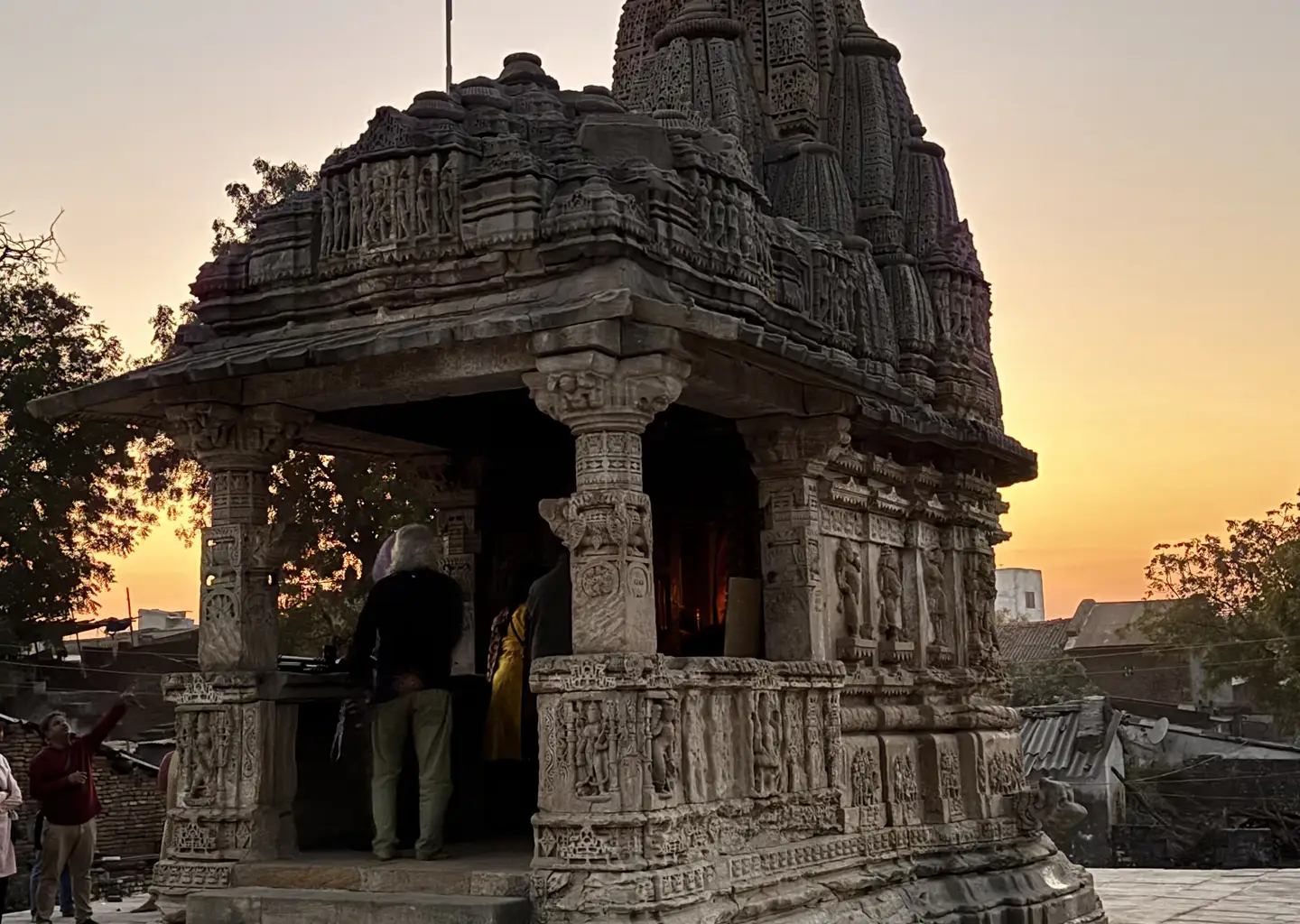
Built in the 12th century, this Solanki era temple sits in a quaint Gujarati village which has the holy trinity of an ancient temple, a wonderful lake which the village still uses, and a devout community which looks after the upkeep of the temple and the lake. The temple is built on a high platform and is panch ratha in style. It sports a shekhari style nagara shikhara and reflects and displays all aspects of a great nagara temple, in miniature. The exquisitely carved half-shikharas, the deva koshthas displaying deities and heavenly creatures, the pink hue of the ancient sandstone make it a wonderful teertha to visit. The temple is dedicated to the mother goddess.
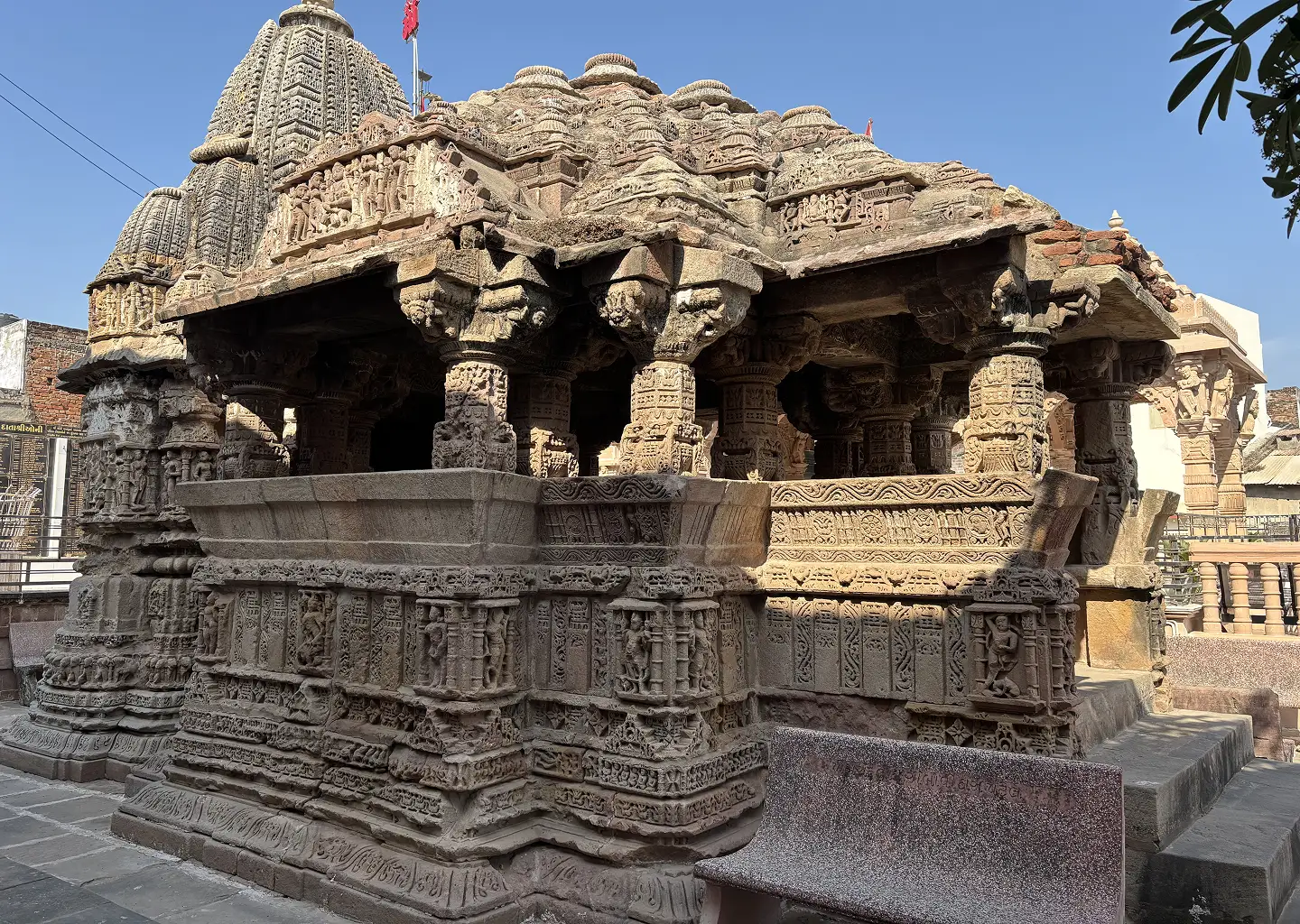
Sander - Shiva, Vishnu and Shakti Temples
These temples display the evolution of Hindu architecture and sculpture along with the social structure and eco-system of Hindu temples in India. Built by the great Chalukyas of Gujarat, the three temples are dedicated to Lord Vishnu, Lord Shiva, and the Great Goddess Shakti, displaying how Hindu society had a great harmony of different sects and sampradayas. The Vishnu temple is the smallest and oldest, built around the early tenth century. The deva kosthas display various avatars of Vishnu. The Shiva temple is larger, built later in the eleventh century, and has a panch ratha plan with a brilliant shekhari shikhara. Its mandapa is world famous with a beautiful samvarana style roof and a greatly articulated ceiling with eight madanika brackets. The deva kosthas display Ganesha, Hanuman, and various other deities. The third temple of Shakti is completely renovated and still serves as the great center of devotion, showing how goddess worship became the mainstay of Gujarat after the medieval invasions.
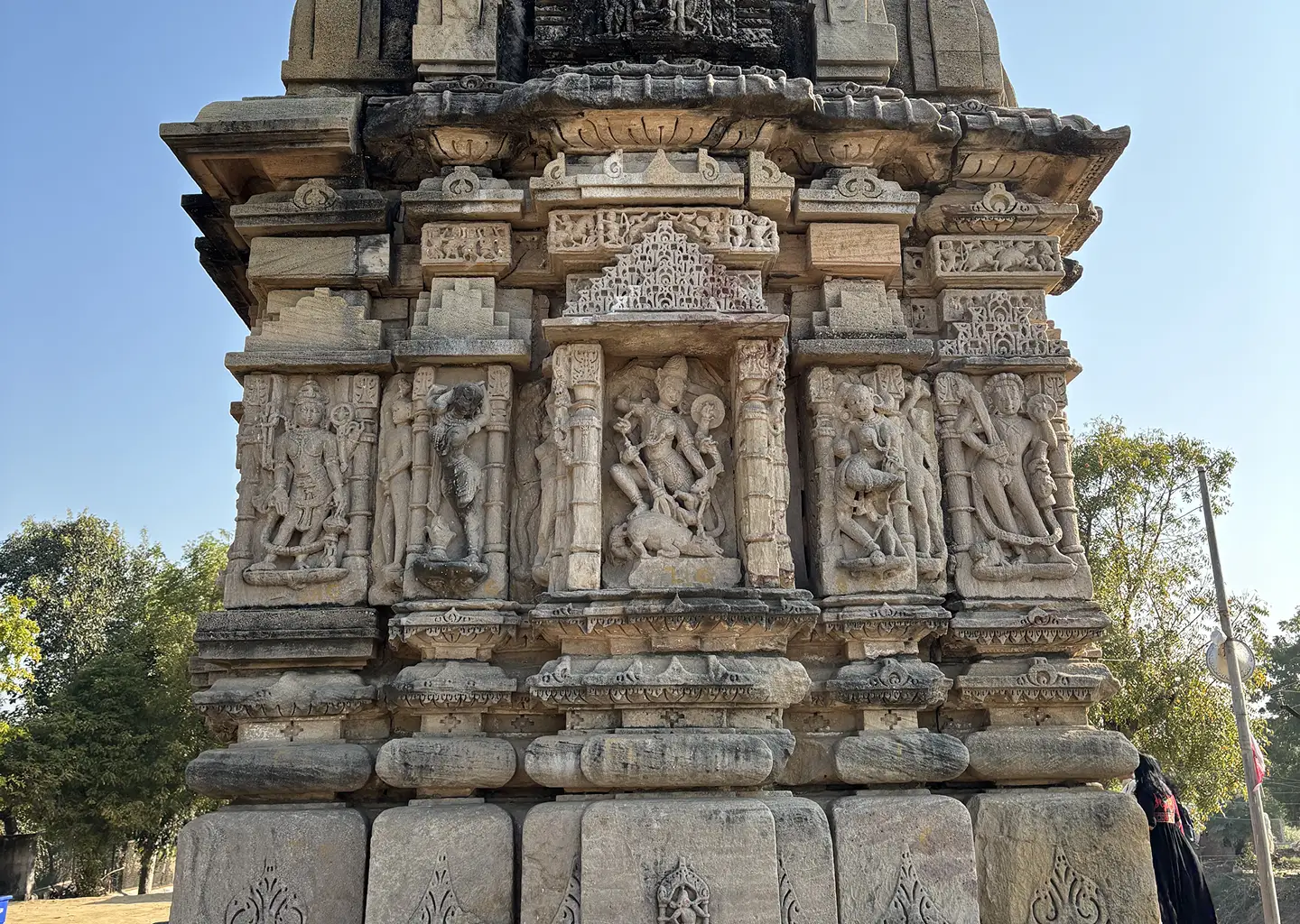
Sunak - Nilakantha Mahadeva and Harsiddhi Mata Temples
Sunak, a beautiful little village in Gujarat, has two ancient temples, one dedicated to Shiva and one to Shakti. The Shiva temple is called Nilakantha Mahadeva temple. It stands on a high platform and is panch ratha in style. It has a shekhari shikhara and the articulation of various half-shikharas clustering towards the top gives it a very beautiful profile. The mandapa has a samvarana pyramidal shikhara and the ceiling has beautiful madanika brackets. The mandapa is staggered and is open on two sides. The temple also has an articulated antarala. The deva koshthas display various forms of Shiva and Shakti. The other temple is dedicated to Shakti and is called Harsiddhi Mata or Shivai Maa temple. This temple is partially renovated and large parts of its shikhara and profile on the north side are now missing. This temple also has panch ratha style with shekhari shikhara. The mandapa is almost entirely reconstructed and the deva kosthas are misplaced but it still manages to stun as it gives the impression of a miniature replica of a great nagara temple.
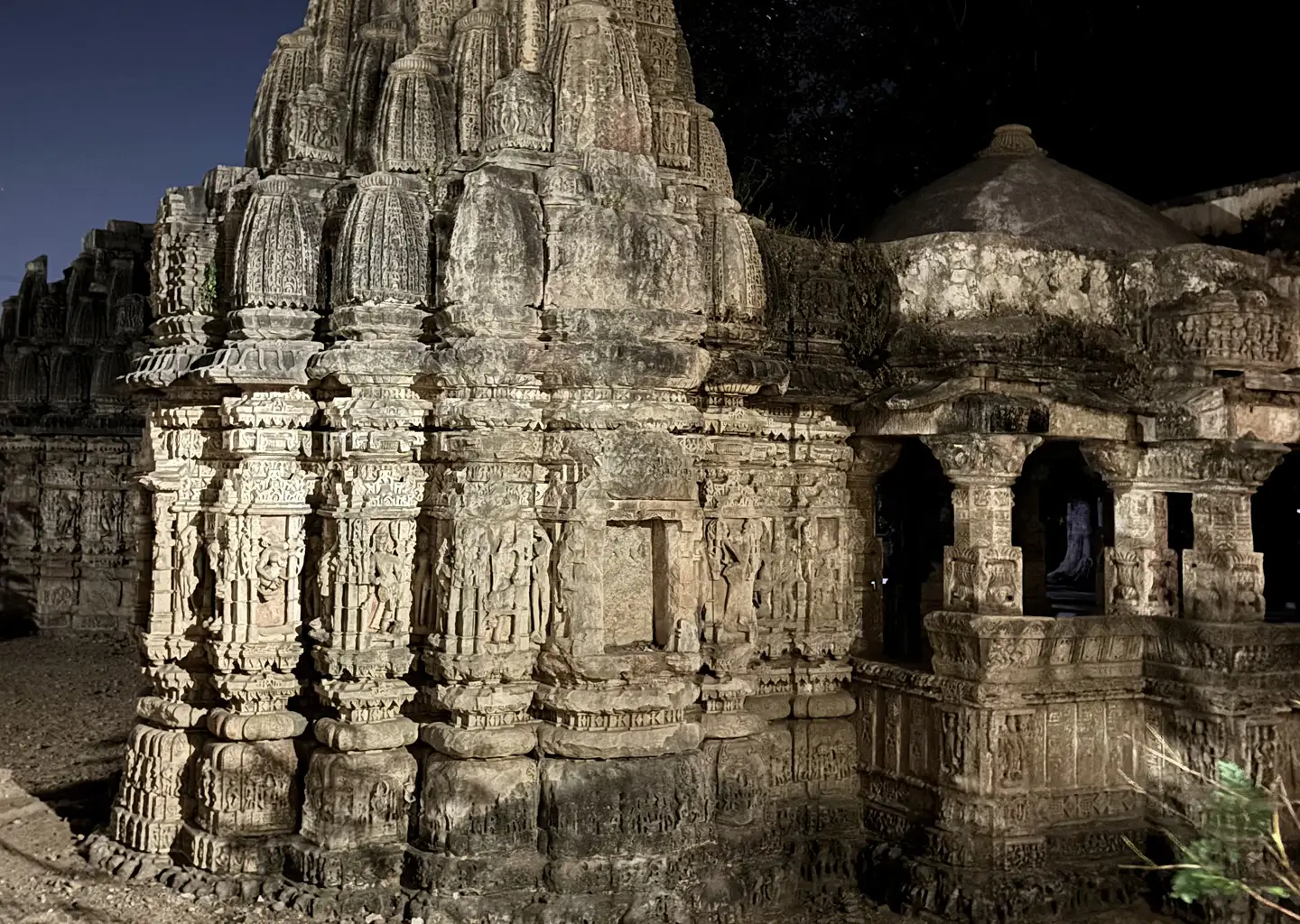
Sidhpur - Rudra Mahalaya
Sidhpur - the Rudra Mahalaya. The enormous temple was built in three stories, surrounded by eleven shrines, dedicated to each of the forms of Rudra on all its sides. The temple complex was destroyed during Islamic invasions, first by Alaudin Khalji of Delhi Sultanate and later by Ahmad Shah of Gujarat Sultanate, from the thirteenth to fourteenth centuries. The destruction of this temple was so absolute that almost nothing of it survives, except partial remains of three sub shrines, a few porches of the one of the greatest mahamandapa ever created in Bharata, and a few of the eleven grandest of kirti toranas that were ever built in Gujarat.
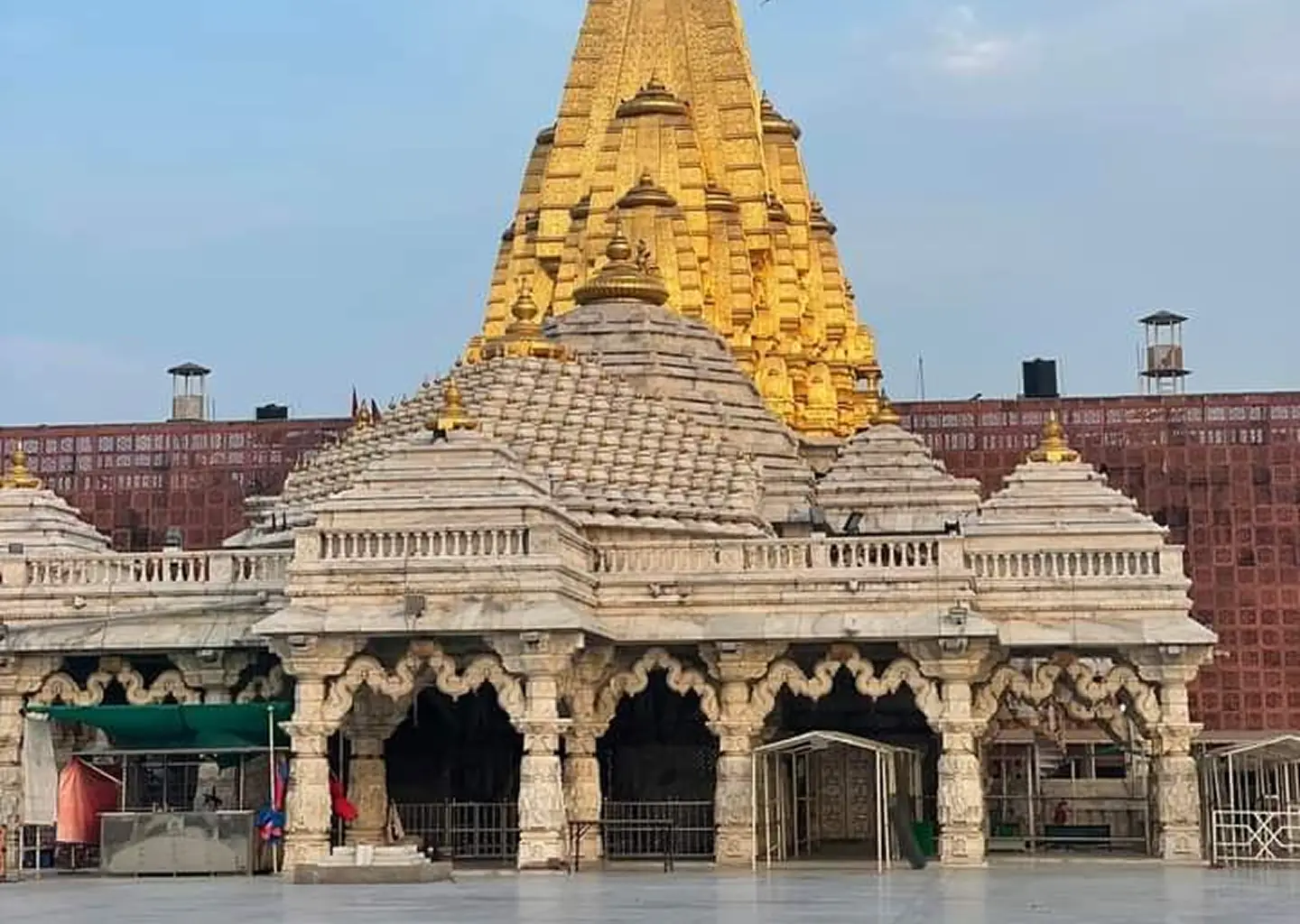
Ambaji
One of the most important Shakti Peethas is in Ambaji, nestled in the Aravali hills of Gujarat. The legend goes that the heart of Mata Sati fell at this place. The temple was destroyed many times. It is believed that the Gabbar hill is the original abode of the goddess, where even today a sacred fire is burning as the symbol of the Great Goddess, continuously for centuries. The temple that is reconstructed at the foothills worships the goddess in the form of a Shri Yantra. The entire town exists just for the temple. This beautiful Gujarat temple town is a wonderful testimony to the fact that in Bharata, temples created towns and not vice-versa.
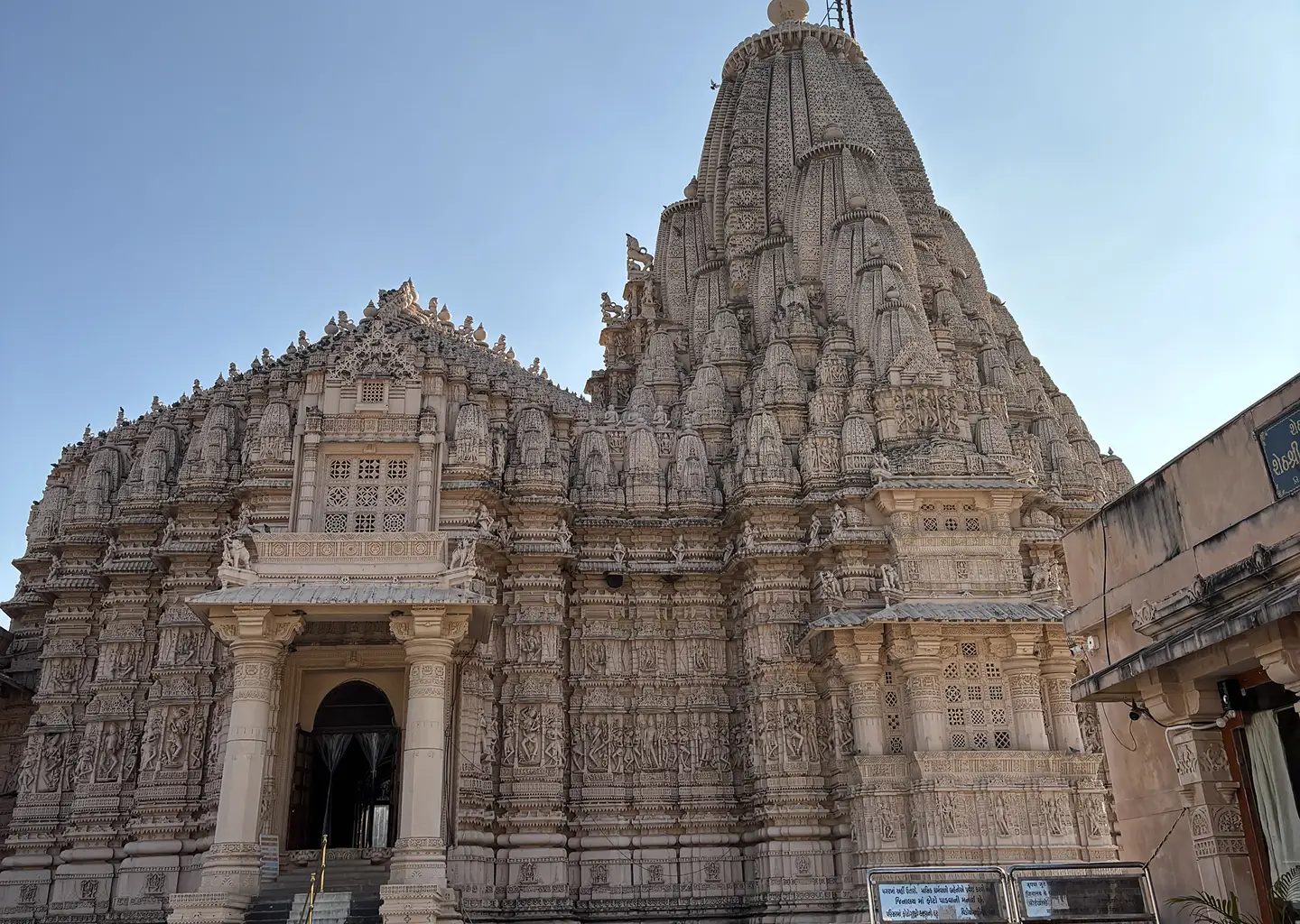
Taranga Jain Temple
The Ajitanatha temple at Taranga is one of the great Jain kshetras of Gujarat. The temple is built in a mixture of bhumija and shekhari sub-idioms of the nagara style of architecture. While the lower three layers articulate the bhumija pyramidal tiers, the shikhara above these layers reflects the shekhari idiom. The temple is dedicated to the second tirthankara of Jains, Shri Ajitanatha. The original temple was built in the twelfth century by the Chalukyan king Kumarpala but was irreparably destroyed by the Islamic invaders. It was then rebuilt in the early fifteenth century by Govinda. Since then, the temple continues worship uninterruptedly without any desecration. The place came to be called Taranga because of the worship of goddess Tara by all three communities of Hindus, Jains and Bauddhas.
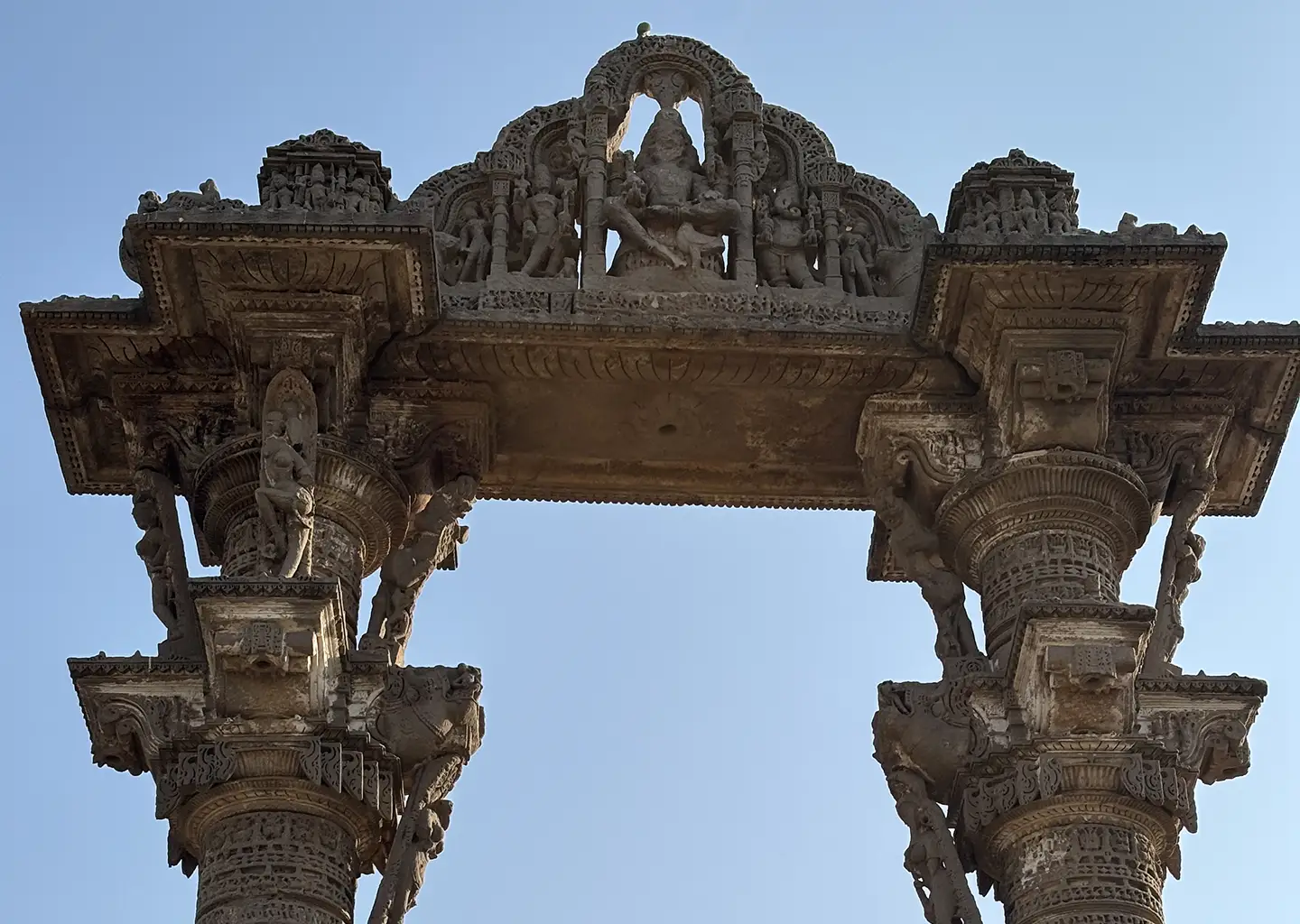
Kirti Toranas, Vadnagar
A kirti torana is a gate erected in the memory of a great military victory. Hindu and Jain kings have built many such toranas all over Bharata. The twin toranas of Vadnagar were built in the twelfth century and might have been the entrance gates to great temples which no longer exist. The temple complex was completely destroyed by the Islamic invaders. Since the toranas were considered a less important part by them, they are the only part of this temple complex that still remains standing. The toranas are built in two tiers with exquisite sculptures which are in a degraded condition today.
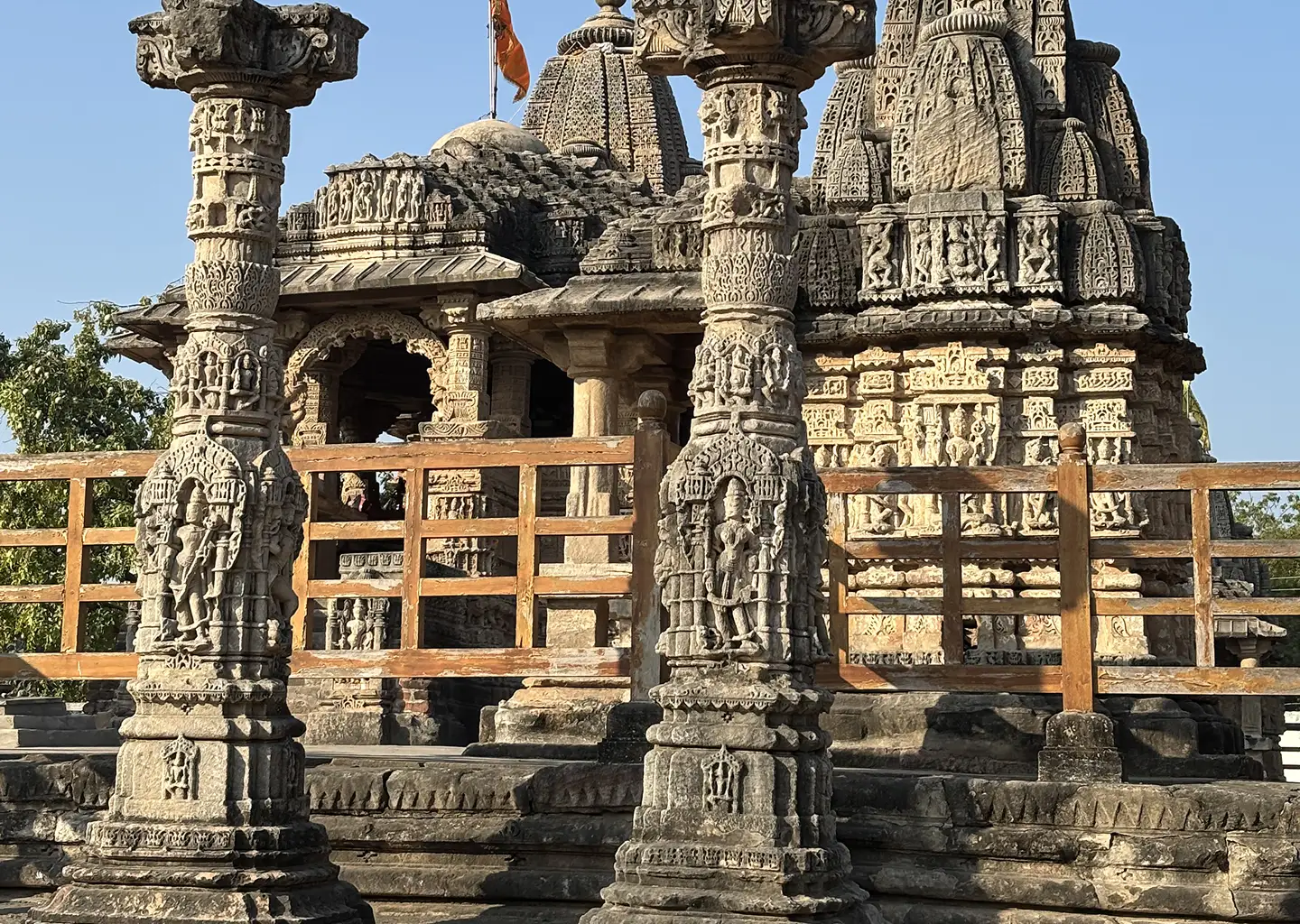
Jasmalnathji Temple, Asoda
This beautiful example of a panchayatana temple was built in the tenth century by the Chalukyas. The main temple is dedicated to Shiva and houses a Shiva Linga, while the subsidiary shrines have replaced vigrahas, which were originally dedicated to four primary deities of Vishnu, Surya, Ganpati, and Shakti. The main temple is panchayatana style with a beautifully articulated shekhari tower with urushringas, decorated with gavakshas. The mandapa has beautiful samvarana style shikhara with staggered open mandapa. The deva koshthas on three sides display various forms of Shiva, like Nataraja and Andhaksuravadha. The subsidiary shrines on four corners also have beautiful shekhari superstructures.
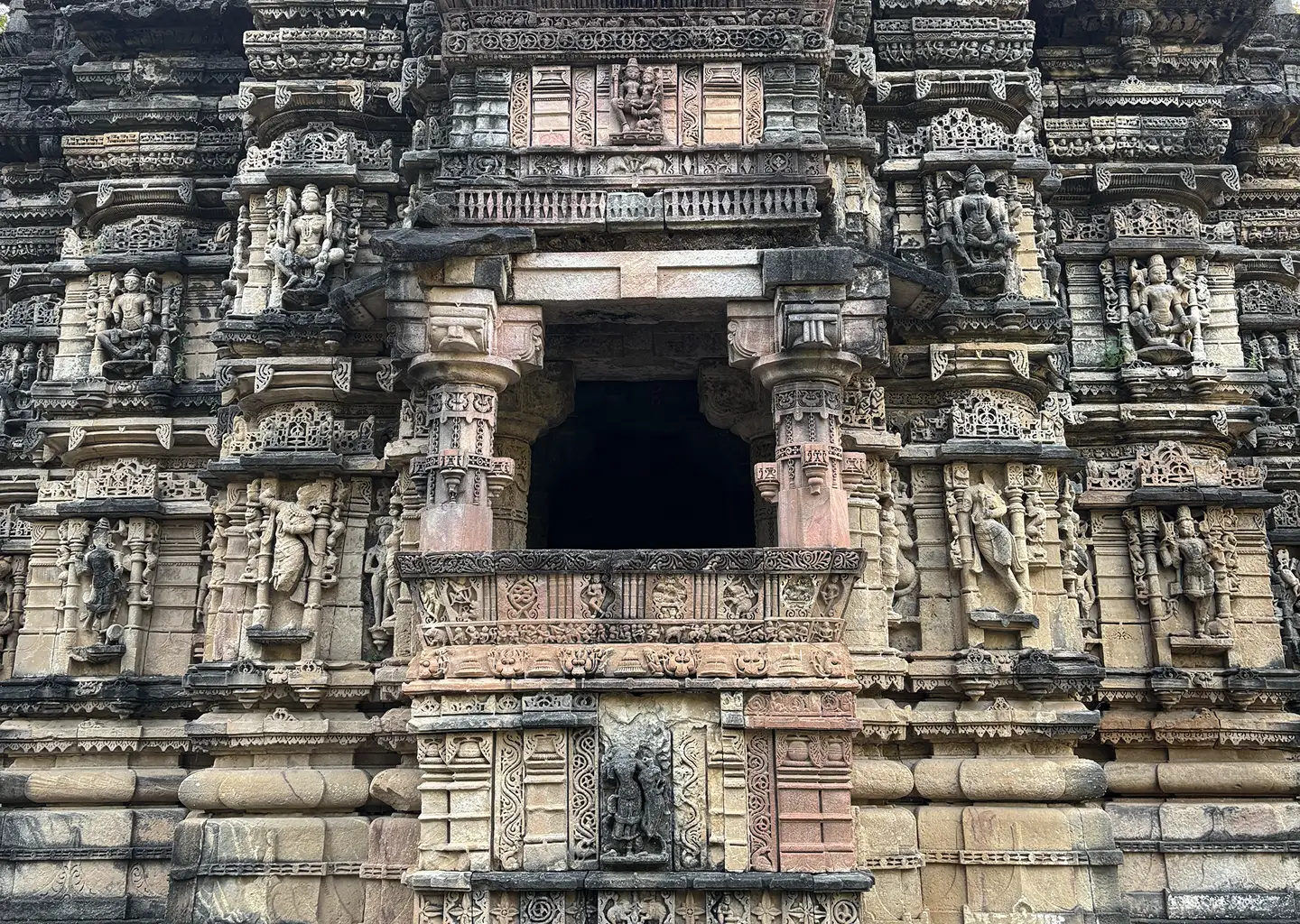
Abhapur Temples, Polo Forest
At the northern extremity of Gujarat, the land rises into the foothills of the Aravallis, encountered along the borderlands of Gujarat and Rajasthan. This area is still overgrown with virginal forests, protected eco-systems replete with ancient temples, pristine lakes and pure rivers flowing quietly through dense jungles. The Aravallis are among the oldest mountain ranges in the world, and against this backdrop were built some of the most beautiful temples of Gujarat in the late fifteenth and sixteenth centuries, such as the Sharneshwar Mahadeva Temple, the Shiva Shakti Temple, and the Jain temple complex nestled deep within the forest. This group of temples is a testimony to the co-existence of nature and culture as the deepest of forests and natural eco-systems were preserved along with the creation of great temple complexes.
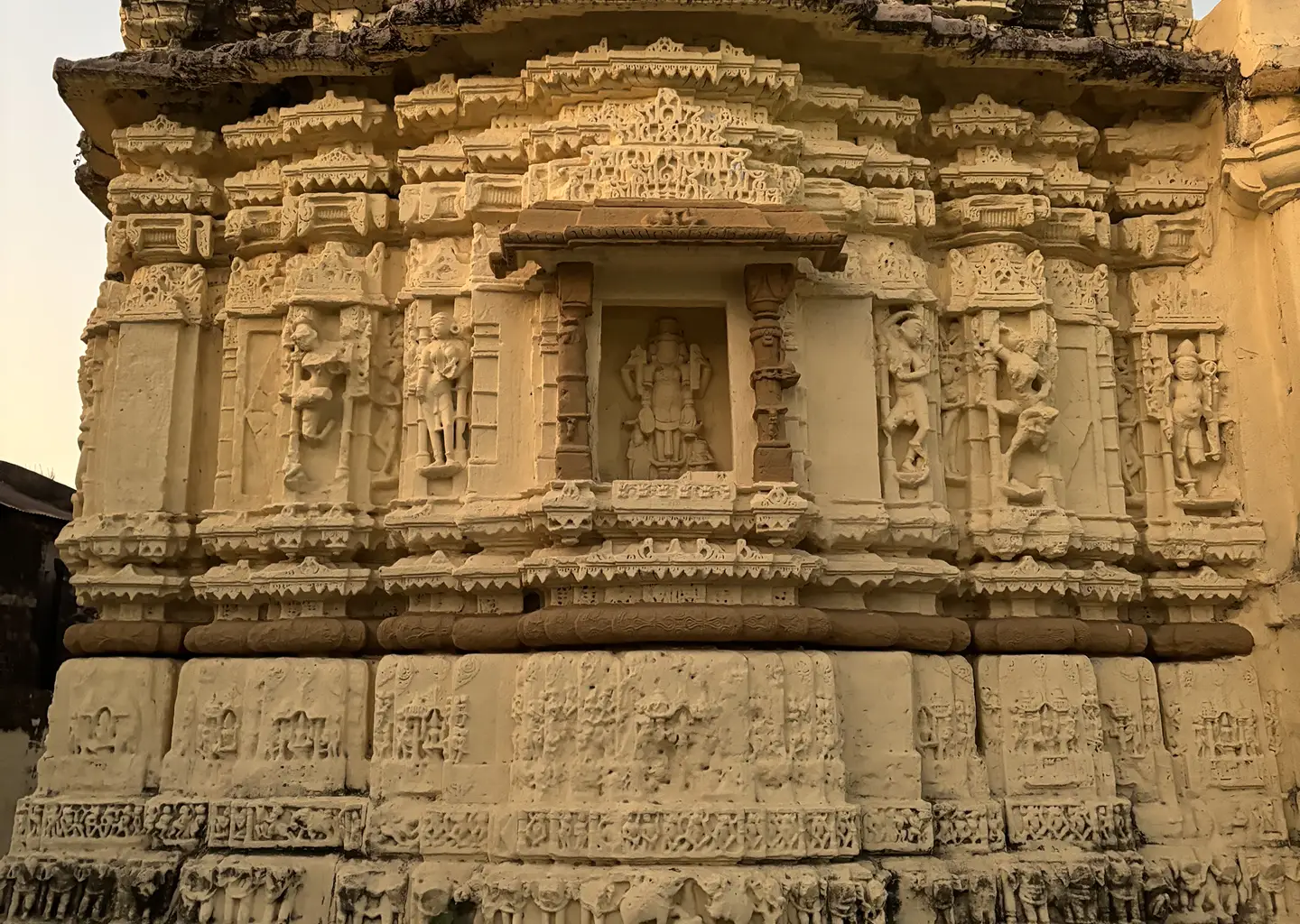
Brahma Temple, Khedbrahma
Brahma temples are very rare and while the most famous is in Pushkar, Rajasthan, there are a select few more strewn across Bharata. One of them is in Gujarat and will be a part of the itinerary in Gujarat Anveshi - the Brahma temple of Khedbrahma. This temple has unique architecture with valabhi style shikhara, indicating that the original temple, built in eleventh century, must have been dedicated to a form of Shakti, but after the destruction of the Islamic invasions of Bharata, it was transformed into a Brahma temple in the post-invasion period. This temple is now a great contemporary center of devotion, testimony to the fact that Hindus never forget their sacred kshetras even if the original sect disappears due to invasions.
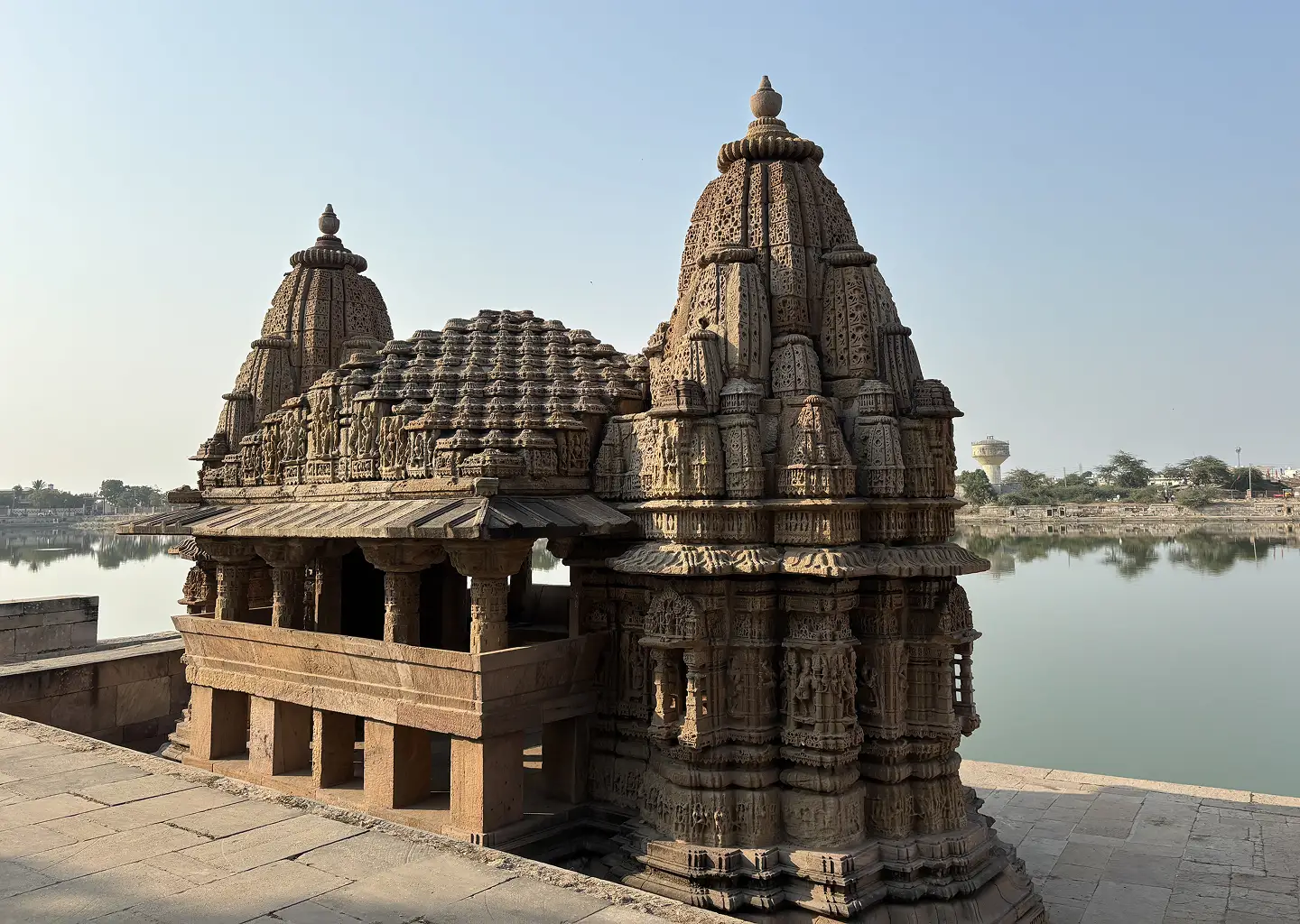
Viramgam Group of Temples, Viramgam
The small village of Viramgam, near Karnavati has a lake which is still in use. The lake is called Munsar lake, and around this lake is a unique display of the sacred universe of Hindus. It is a testimony to how Hindus sacralize everything. Like Rani Vav which converted a step-well into a sacred kshetra, similarly, here in Viramgam the circumference of the lake is converted into a sacred areas with over a hundred small temples dotting the beautiful landscapes and with two pairs of twin temples gracing the entrance of the lake. These pairs of twin temples are unique, since they represent a very rare example of a common mandapa in a shekhari nagara style of architecture, where a common samvarana mandapa in two stories connects the two great temples on either side built in shekhari style.