

RESEARCH > Hindu Models of Temple Management
Hindu Models of Temple Management
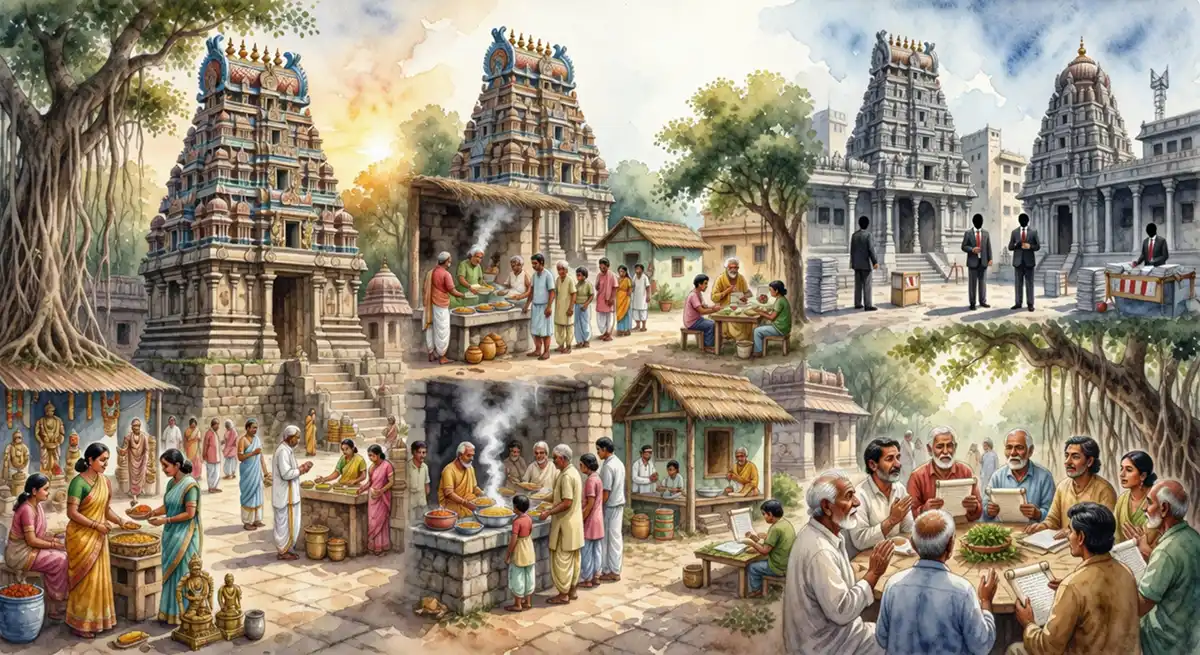
Our temples have been the center of our civilization for millennia, serving as the heartbeats of our cultural and spiritual identity. These sacred spaces stand as living examples of indigenous management and administration, meticulously crafted over centuries by devoted communities. Beyond their architectural grandeur, Hindu temples embody the essence of our collective ethos, playing multifaceted roles in our society. They serve as spiritual, religious, cultural, socio-economic, social welfare and paralegal institutions.

Yet, amidst their profound significance, the vital contributions of Hindu temples to our socio-economic fabric often go unnoticed. These sacred institutions have long served as engines of economic activity, generating employment, supporting local artisans, and stimulating trade in surrounding areas. They have also been bastions of social welfare, providing food, shelter, education, and healthcare to those in need. However, the integrity and autonomy of Hindu temples are increasingly under threat due to top-down management policies imposed by external authorities.

These policies, often devoid of cultural sensitivity and local context, undermine the intrinsic values and functioning of these sacred spaces. They impose bureaucratic hurdles, limit community participation, and erode the very essence of self-governance that has sustained our temple traditions for centuries. In response to these challenges, it is important to build cases that illuminate the efficacy of our traditional temple management systems. By studying the indigenous methods of administration and governance within temple ecosystems, we can showcase their holistic approach to societal well-being. This includes spiritual and religious functions as well as comprehensive social welfare initiatives.

Through rigorous research, documentation, and raising awareness, we can highlight the integral role of Hindu temples as pillars of community cohesion, cultural preservation, and socio-economic empowerment. By amplifying the voices of concerned Hindus and engaging in constructive dialogue with policymakers, we can pave the way for alternative models of temple governance that is conducive to our culture.
All Projects