

In the Hindu experience, deities have been a living presence in human life for as long as our civilization can remember and as far as the vision of the seers can perceive. They are neither relics of a distant past nor products of intellectual imagination. Their presence is a lived reality, experienced by generations of sages and transmitted to devotees through gurus, and institutions such as temples. At the heart of every temple stands the deity. Everything else, the architecture, rituals, and festivals, is organized around that presence. While the tradition says that the gods may be approached directly through personal sadhana and rituals, it is seldom that we encounter an individual who is capable of this. For most people, the temple serves as a sacred and consecrated centre that transcends the limitations of individual practice. A temple is therefore much more than a place of congregational worship. Hindus have darshan. Through the process of consecration, an image ceases to be a mere idol and becomes a vigraha. A living presence of the deity that can be approached through invocation. This relationship is not one-sided. Our gods speak to us too. In Goa, there exists a common tradition known as Prasad/Kaula Prashna. An ancient ritual where individuals pose questions to the deities. One may wonder if it is even possible to ask questions to a deity, not metaphorically and even get a response? But it is a living reality for the people of Goa. When faced with significant life choices, or even social disputes, many people or families engage in this ritual. It is also observed in cases where disputes arise within temples that the management cannot resolve, particularly regarding rituals, the deity is consulted through this process. The Kaula (word/declaration) is a mystical method used widely in Goan temples. Through this ritual, a binary yes/no answer is obtained through coconut, flowers, or similar material offered to the deity. The decision of the deity is final and accepted by all the parties involved. This is not an asymmetrical engagement with the deities. Often, the local deities/grama devatas communicate with the villagers in their own ways. In Goa itself, there is a temple of Shanta Durga in Fatarpa who is famously known as Magnechi Devi. Devi here does not passively await worship. She makes her wishes known. The tradition says that the Devi herself initiates the communication by appearing in dreams of devotees. She makes her ‘magni’ ( her request/ her demand) and indicates what she desires - a certain puja, an offering, a vow, a just a visit to the temple. The dream is understood as a direct instruction from the Devi. Once a devotee has received a dream that they believe to be a Magni from the Devi, they come to the temple and submit the dream to the Kaula ceremony. Devi then confirms or denies whether what she asked for has been understood correctly. This way the goddess has a direct connection with each household of the village spanning generations. These dreams are not limited to nearby villagers or just to Hindus. It is said that she even appears in the dreams of those who have visited her even once, sometimes those who have been posted to Fatorpa on service, and even non-Hindus who carry Shanta Durga in their hearts. There is another fascinating custom at the Shri Mahalasa Temple in Mardol. It is renowned for the practice of taking oaths beneath its bell. This tradition of swearing an oath in the temple’s chowk was held in such high regard by the community that even colonial authorities acknowledged its significance and incorporated it into the judicial framework. Usually, oaths were taken by placing the right palm on the sacred text of the Gita or on the heads of family members, on heated iron, on a cow’s head, on coconut, betel, arecanut, rice, on a wheel, or on the sacred thread of Brahmins. The decisive oath taken under the bell of Shri Mahalasa was deemed the most serious and was greatly feared, as it was believed to invoke the divine power of the deity. Consequently, it received formal recognition through various government decrees and orders. It is widely believed that anyone who takes a false oath in this manner will lose their sanity immediately upon leaving the temple grounds. A similar practice is prevalent at the famous Lakshmi Narayana Temple in Chamba, Himachal Pradesh. In front of the garbha-gruha stands a raised platform known as the Dharma Chabutra (Seat of Justice). This platform is out of bounds for ordinary devotees. In the event of a local dispute, the concerned parties are summoned to this platform, where a council hears the matter and delivers its verdict. The decision is then accepted by all parties involved. This helps greatly in resolving disputes at the local level, avoiding recourse to the formal legal system, keeping the divine at the centre. These are great examples of the significance that the presence of a deity or temple holds for a devotee. They become an integral part of devotees’ lives, offering guidance at every critical juncture. Such practices are observed throughout Bharatvarsha in various forms. In Himachal Pradesh and Uttarakhand, legends of posing questions to deities are everywhere. Bhuta Kola in coastal Karnataka, Bhopi in Rajasthan, Aruda in Tamil Nadu and Velichappadu in Kerala are few examples of the local oracle traditions practiced all over India. Here the deity takes possession of a devotee after intense rituals of invocation. The devotees approach the oracle one by one with their queries and take the blessings of the devata present. These rituals and traditions bind the devotees and the deity in a sacred bond where a deity becomes a living presence among them. These practices have been part of natural religions all over the world, although they were wiped out in most regions by monotheistic faiths. India is unique in that these traditions were neither looked down upon nor persecuted. Here, the central and unifying thread of the Vedic-Pauranic tradition sheltered regional customs and rituals and incorporated them into the mainstream. This is the underlying unity of Hindu culture in India - its deities, rituals, customs, and knowledge systems. It is this unity that enables an individual from one part of the country to connect with another region despite differences in language, food, and local practices.
The Divine at Hand
On how Hindu deities remain a living presence through sacred oracle traditions, divine communication, and temple justice systems across India.
Akshay Jha | 1127 words | August 9, 2026
More Like This
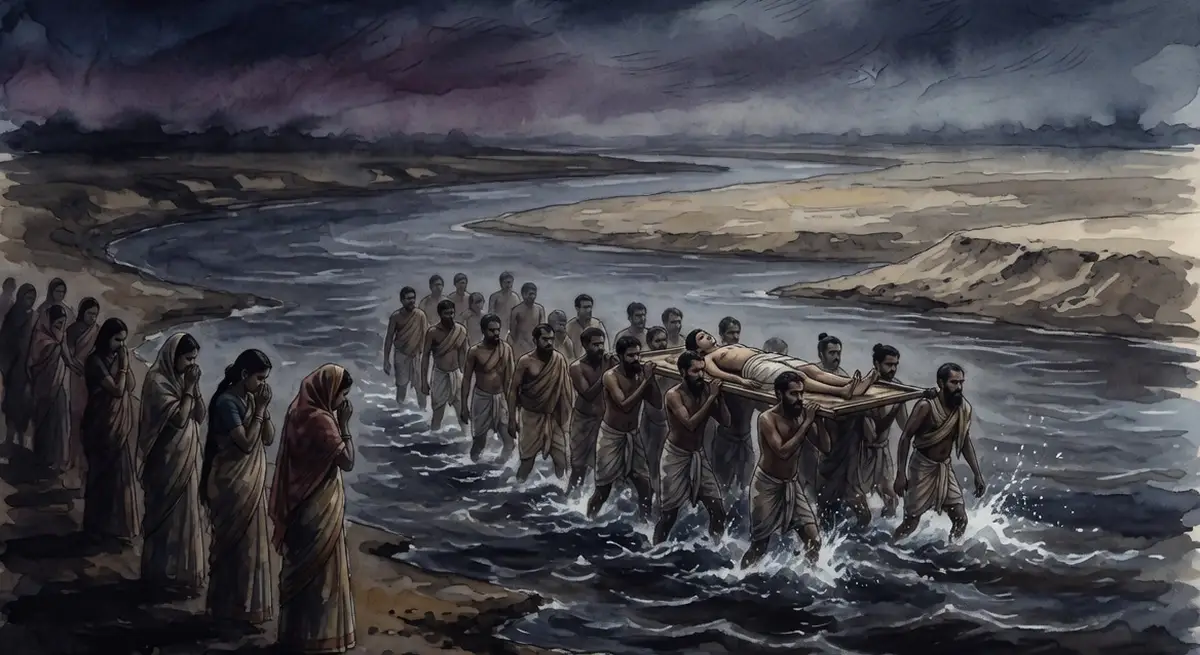
The River Cremations of Baghmara
The untold story of Meghalaya's Baghmara Hindus - persecuted, landless, and forced to risk their lives crossing the border just to secretly cremate their dead.
Pankaj Saxena | 1851 words
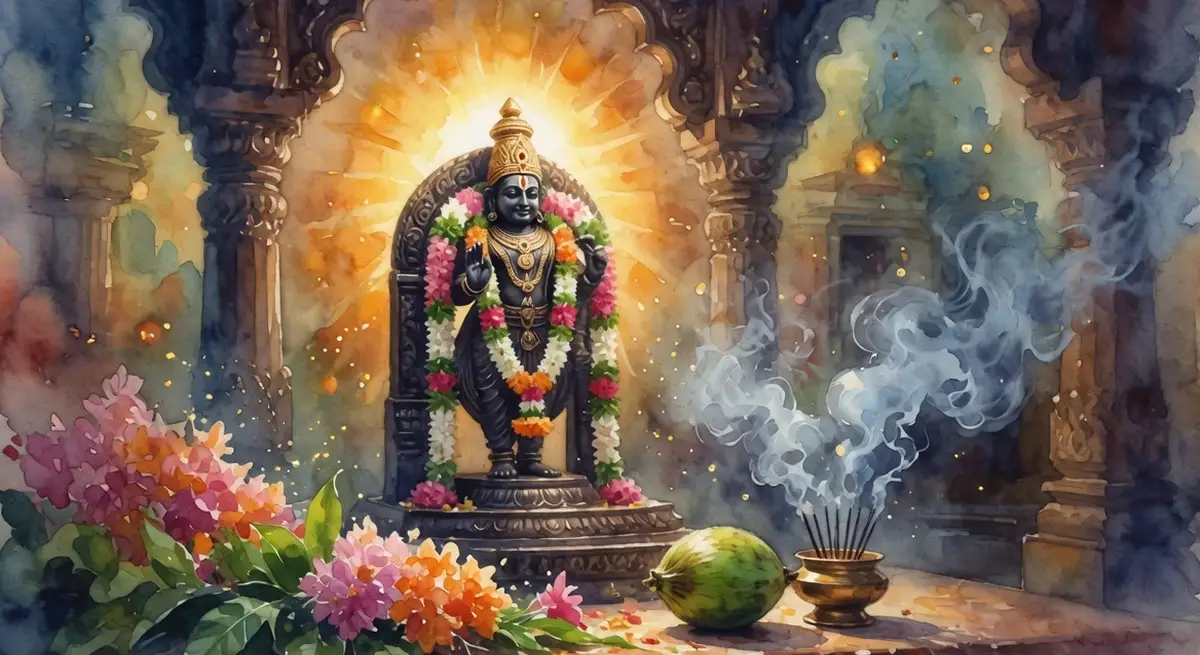
The Divine at Hand
On how Hindu deities remain a living presence through sacred oracle traditions, divine communication, and temple justice systems across India.
Akshay Jha | 1127 words
The Rishi Function
Explore how the unique category of the Rishi served as the anti-fragile epistemic infrastructure that enabled Sanatana Dharma to survive and regenerate across millennia.
Amritanshu Pandey | 3006 words
On the Hillridge Highways of Mizoram
A dispatch from the north-east, featured in our newsletter Issue 1, describes with vivid delight what happens when you travel to a place that has long inhabited your imagination.
Pankaj Saxena | 1402 words
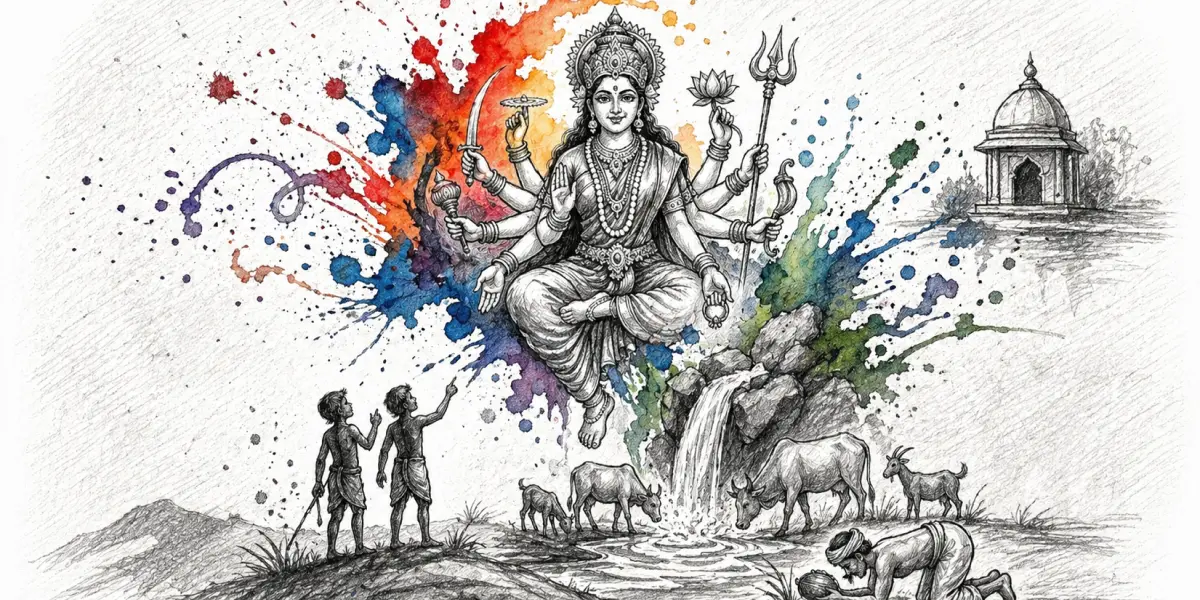
The Goddess Who Summoned a Spring
A tale from a sthala purana of a time when a Goddess expressed her desire to dwell in a spot.
Akshay Jha | 1082 words
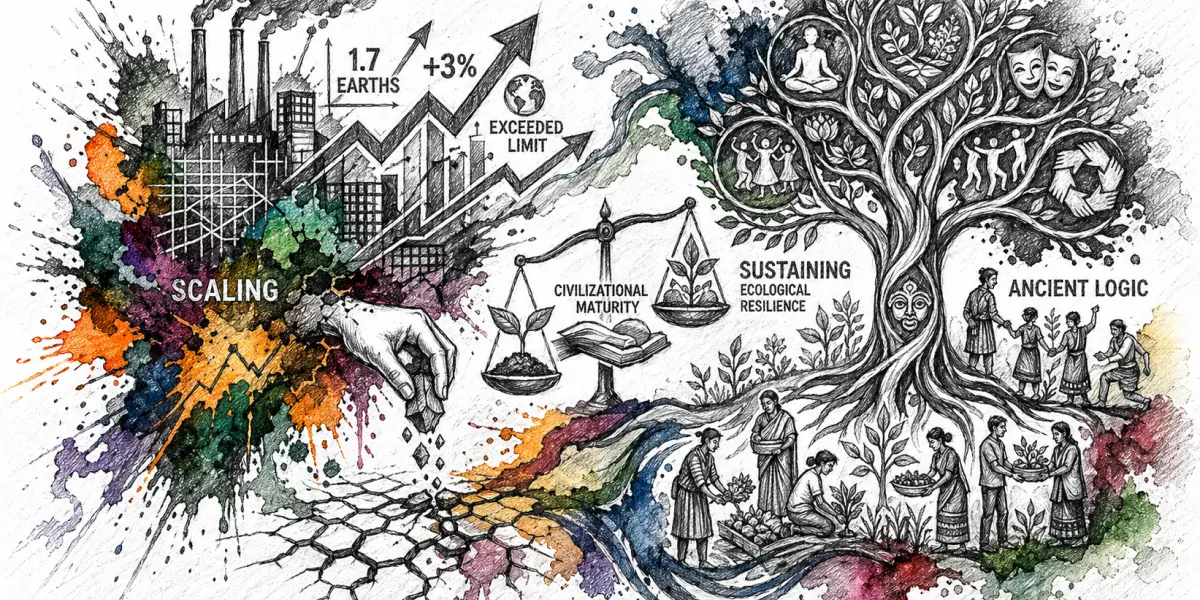
A Dharmic Lens to Civilizational Theory
A redefinition of civilization and its pursuit, rooted in a dharmic way of things.
Amritanshu Pandey | 1126 words