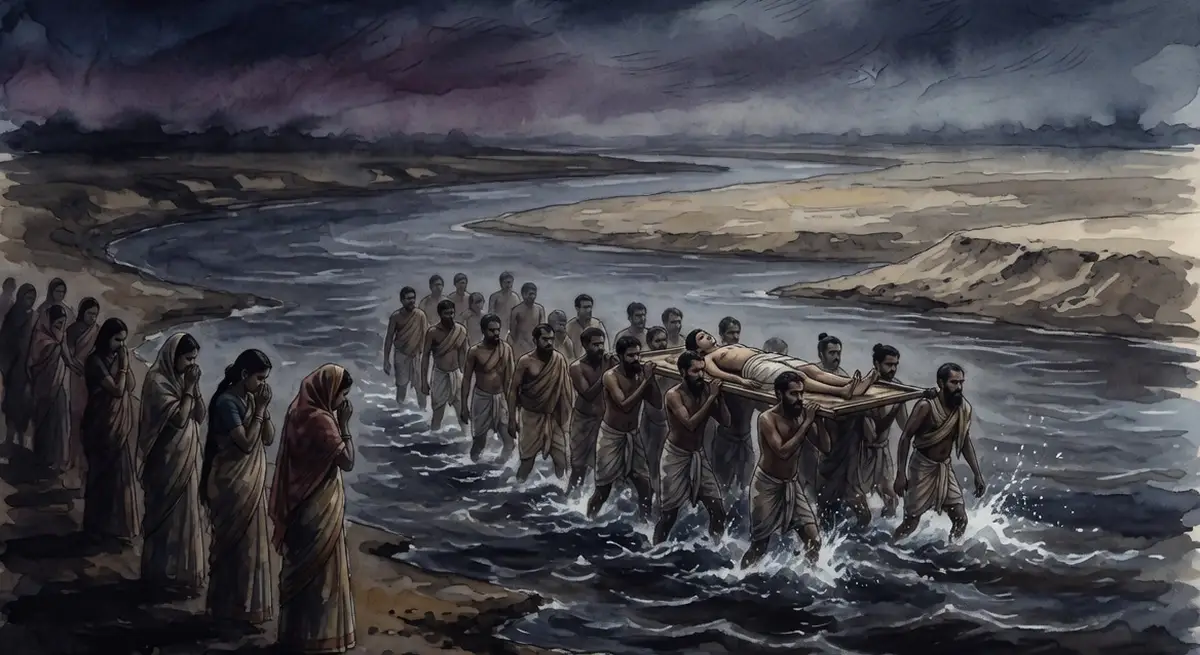
The Someshvari was running high for a winter night. There were twenty seven of them, moving quietly through the rushing water. They needed to reach the Bangladesh territory before anyone from this side of the border noticed. The water would only be knee deep usually at this time of the year, but it was an unusual night by many standards. The dead body had to be kept completely out of water, but the water that splashed around the moving party kept trying to reach the pier. The wind added to the chill, and some were heard chattering their teeth. A few women quietly watched from the shore. Their hearts crying, and their chests heavy with pain, for it was a young, untimely death. However, their lips were closed and their eyes full of fear, for they could not risk waking up the members of the majority community.
This was a constant fear in the minds of the men in the water and the women on the shore: of being discovered by the majority Christian community, in the very simple act of cremating the young boy that died an unfortunate death that day.
They were one of the most unfortunate people on earth, the Hindus of Baghmara, Meghalaya. A border town in a Christian majority state of India, Baghmara is also host to a minority Hindu community. While Christians are around 75% in the rest of the state, in South Garo Hills district, they are around 95% and Hindus are in an extreme minority. Most of these 4% are the Bengali Hindus who had come as refugees to this part of Meghalaya due to the long running genocide of Hindus of Bangladesh by the majority Muslim community. This part of Bangladesh is Mymensingh, the most notorious Bangladeshi province for the Assamese as well as the hill communities of the north-east of India. This is the birthplace of ‘Mymensinghias’, or the ‘Mia Musalmans’, as they are known in Assam. Mymensingh generated and still generates the most massive waves of Bangladeshi illegal Islamic immigrants in India, who have changed the entire demography of Assam and many other states in the north-east.
While Bangladeshi illegals in India are an issue on which everyone in the north-east unites, another tragedy unfolded on the sidelines, without anyone even noticing it: the tragedy of those Bengali Hindus on Bangladesh-Meghalaya border, who had nowhere else to go while fleeing from Islamic persecution in Bangladesh, but to Meghalaya, a tribal hill state in India. While immigrant-native issues exist in many other states of India and it is not easy for Hindu immigrants to settle anywhere in India due to the lack of any formal process, in Meghalaya the issue becomes even worse. This is because almost the entire state of Meghalaya comes under the sixth schedule of Indian constitution which means that it is reserved for the tribals or the members of the scheduled tribes. This means that for buying or selling any piece of land, the permission of local tribal chiefs has to be taken.
This was and remains the crux of the issue. For those Bengali non-tribal Hindus who fled Bangladesh to save their lives and settled in nearby Meghalaya, it is impossible to buy or sell land, even for a cremation ground, without the full co-operation of the local Garos, who are mostly Christians. Even this would not be a problem with those Garos who still follow indigenous religions, as they do not impose their religious views of others and in Arunachal Pradesh which is still a non-Christian majority tribal state in India, all methods of disposing the dead, like cremation and burial go side by side, without any problem. Even the converted Garos are quite friendly people in general but the role that the Church and its pastors play here has created the problem. The Church has convinced most of the Christians that Hindus create demons when they burn the dead and so they cannot be allowed to do so. Their reasons are not simply sadistic but quite practical, as this persecution of Hindus with no or very little state protection results in situations of religious strife and conflict in persecuted HIndus, presenting situations for the Christians to convert, and in many cases this has been admitted by the Church pastors. Many of them have called upon the Baghmara Hindus to convert to Christianity and start burying their dead, and for that they are willing to give them as much land as they want, but only if they convert to Christianity. This is the crux of the issue.
They were never allowed to cremate their dead in Meghalaya, and for more than five decades they had to cross the international border, and go to Bangladesh to cremate their dead in the dead of the night. It was not like Bangladesh also allowed them to do this, but in the first five decades after the Partition while there was no border fencing and borders remained almost completely open, these activities were possible when darkness enveloped the land. But in the past two decades border patrol became serious on both sides of the border. Fences came up and started being manned and ever since the issue of Bangladeshi infiltrators became big in India it became increasingly impossible for the Bengali Hindus of Garo Hills tokeep cremating their dead across the border, in Bangladesh.
What was a cause of celebration for most Indians, fencing, was something terrifying for the Hindus of Baghmara. They could not cross the international border to cremate their dead. They could not cremate their dead in their own country, India, for the majority Christians did not allow it. Crossing the border now became increasingly risky. Trying to cremate one dead body could mean the possible deaths of many more. Buying land in Meghalaya, even a piece of land as small as to allow one or two piers to burn, was not possible. But the dead had to be burned. The rituals had to be completed. For people keep dying. It is their nature to do so. Even if they are as unfortunate as the Hindus of Baghmara.
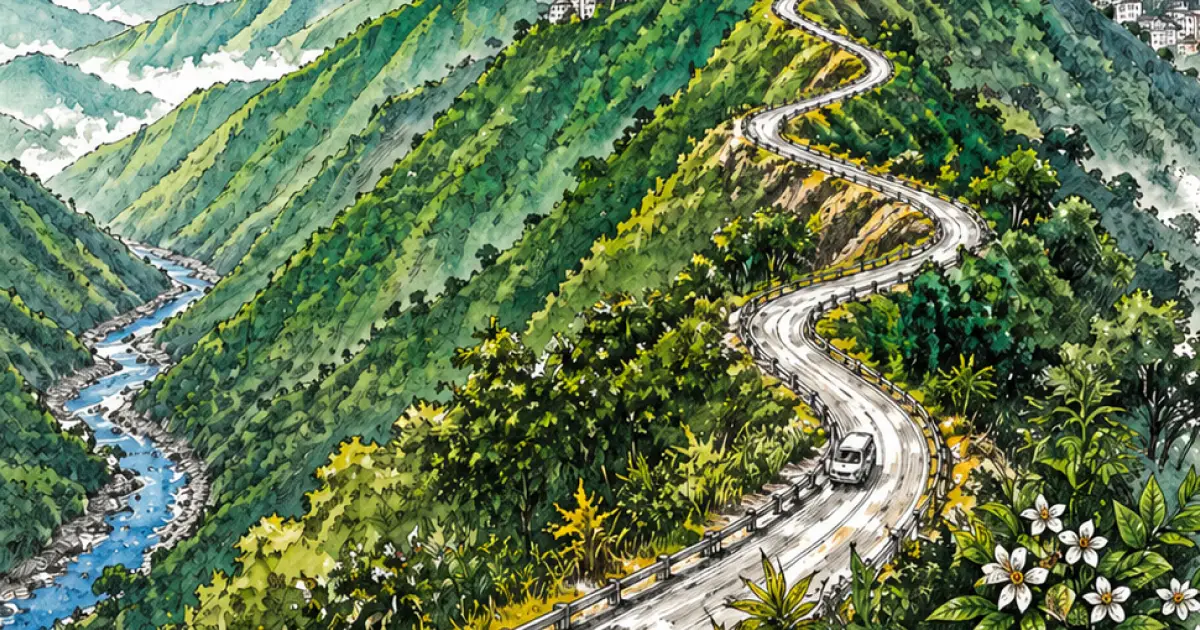
They came up with a solution which sounds so bizarre and fatuous to non-locals that it takes one to see the situation for oneself to believe it. Baghmara is situated on the banks of the Someshvari river, which is also called the Simsang by the Garos. This river originates in the hills of Meghalaya and enters the plains of Bangladesh at Baghmara. It so happens that the international border following its zigzag manner, creates a wedge of Bangladeshi territory in the middle of the Someshvari river, where there is no permanent land, but is usually full of shifting sand banks, or what are called as chars in the Brahmaputra delta. These shifting, silting sandbanks are the temporary pieces of land, technically under control of Bangladesh but virtually still border less as they are in the middle of a vast flowing river. It is on these sandbanks that the Baghmara Hindus chose to burn their Hindus. As incredulous as that sounds, this is the route that the Bengali Hindus of Baghmara had to and still have to take to cremate their dead. To wade through knee deep and sometimes waste deep water, in the dead of the night, when the wind and water are chilly even in summers. Even this they have to do it secretly as if they are discovered then the rituals can be disrupted at the very least. But the very process is so uncertain it defies imagination that this is the route that the unfortunate Hindus had to take for so many years. For while in winters and summers, there are enough sandbanks in the centre of the river, in the rainy season when the river floods, the sandbanks almost disappear. What if somebody dies during that time? What if they are discovered? What if thecurrents are too deep and it washes the folks carrying the dead away? What if the pier gets wet? What if the waterflow increases while the pier is burning and it douses the flames?
All these emotions were coursing through the mind of every one of those Hindus that night as they were going to the sandbanks in the middle of the river. They reached the middle of the river somehow. The sand was wet, as some waves of water were regularly sweeping over most parts of it. A mound of sand had to be created to ensure the fire did not get doused while the body was still half burnt. After a mound of wet sand was built, the wood was piled over it, the body was laid on it and the rituals were completed with a hurry that should make an onlooker cry. The fire had to be aided to help it burn the body quickly. And when it was done in a few hours, the party started ‘wading back to India’. But there were still worries on their minds, for sometimes these sandbanks were raided in the morning and the last ritual in the life of a Hindu, that of the asthi chayana and visarjana could not be completed. The father of the young boy that had died, suppressing all the pain in his heart, had only one thought in his mind: Maa Kali, just let the asthis of my son be found next morning. Just let me complete his last rites.
Such is the tragedy of the Baghmara Hindus and more than 99.99% of Hindus of India do not know about it. Hindus remain the most unrepresented people on earth, their stories untold, their tragedies forgotten, their genocides unspoken for, their persecution presented as aggression. But even in this deep civilizational pain there are layers upon layers, and while some layers have come to the attention of a few Hindus now, most of the layers remain hidden and forgotten. The non-tribal Hindus of Meghalaya remain a community which is a minority of a minority. They are a minority in Bangladesh. They are a minority in Meghalaya. They can’t live in Bangladesh. They can’t bury their dead in Meghalaya, or buy any land. While the world is busy celebrating the ‘rise of Hindu nationalism’ in India, the story of the persecution of Baghmara Hindus is so small a concern in the grand scheme of things that it remains almost entirely forgotten.
But it is the duty of fellow Indians to remember their tragedy, to help them come out of it and tell their story to the world, and to correct the story of civilization. This is the purpose of Bodha as well.