

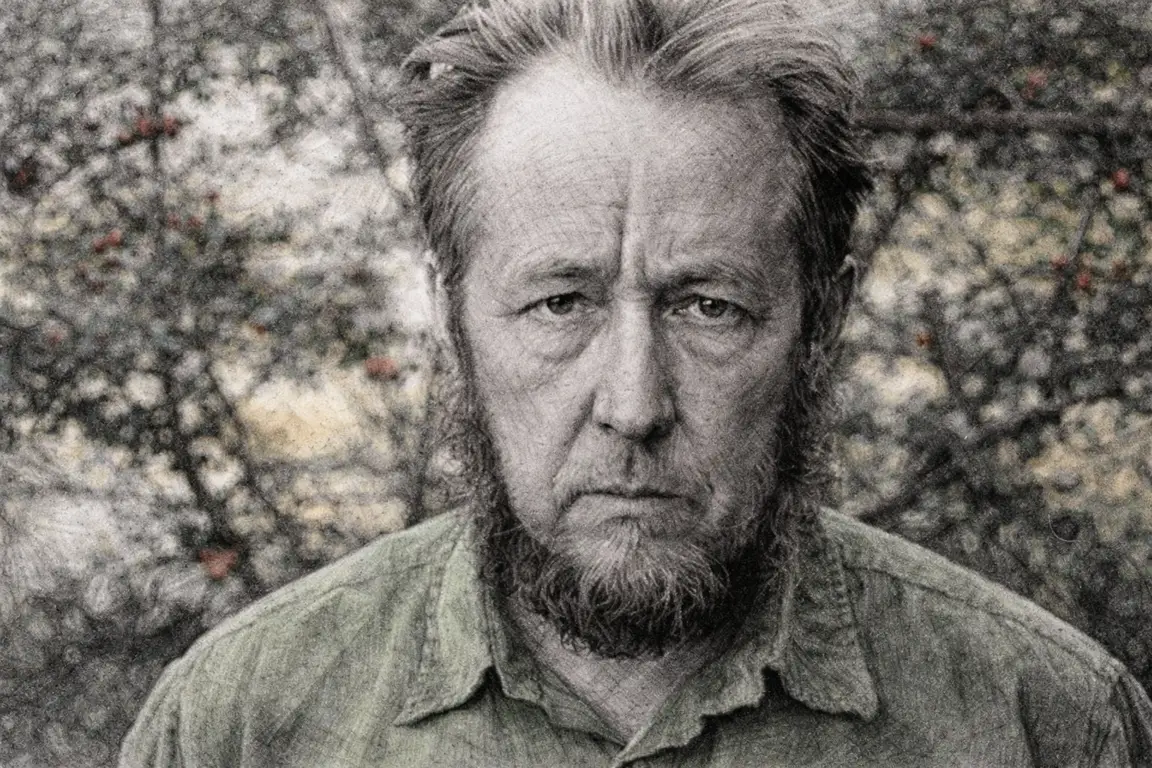
Alexander Solzhenitsyn
The man who survived the Soviet gulag and wrote its testimony - Solzhenitsyn's warning that Western atheist materialism produces the same totalitarian logic.
Great tragedy, besides much strife, results in great literature. The 20th century experiment with communism in Soviet Union resulted in one of the greatest human tragedies ever with millions of direct casualties besides much cultural and religious destruction. Alexander Solzhenitsyn, an inmate of a communist labor camp, came out of it and told its story to the entire world in heartbreakingly beautiful prose.
But that is not why he inspires us at Bodha. Solzhenitsyn then went ahead and made a larger critique of totalitarian regimes, ideologies and societies, having deep insights into what goes into the creation of one. Not only that, he also made a deep critique of the material culture of the West and its pathologies in absence of any spiritual guide.
Select Works
- One Day in the Life of Ivan Denisovich (1962) – Novella exposing Soviet labor camps.
- The First Circle (1968) – Novel of intellectuals imprisoned in a “sharashka” research prison.
- Cancer Ward (1968) – Allegorical novel on illness, morality, and Soviet society.
- The Gulag Archipelago (1973–1978) – Monumental documentary history of Soviet repression.
- August 1914 (1971) / November 1916 / March 1917 – Historical novels on Russia’s WWI crisis.
- Lenin in Zurich (1975) – Portrait of Lenin in exile before the Revolution.
- The Oak and the Calf (1975) – Memoir of literary struggle under Soviet censorship.
- Rebuilding Russia (1990) – Political essays on Russia’s post-Sov future.
- Two Hundred Years Together (2001–2002) – Controversial study of Russian-Jewish relations.