

School of Narrative Non-fiction
India is a civilization that transmits knowledge through story - this school recovers that epistemic mode and applies it to contemporary civilizational.
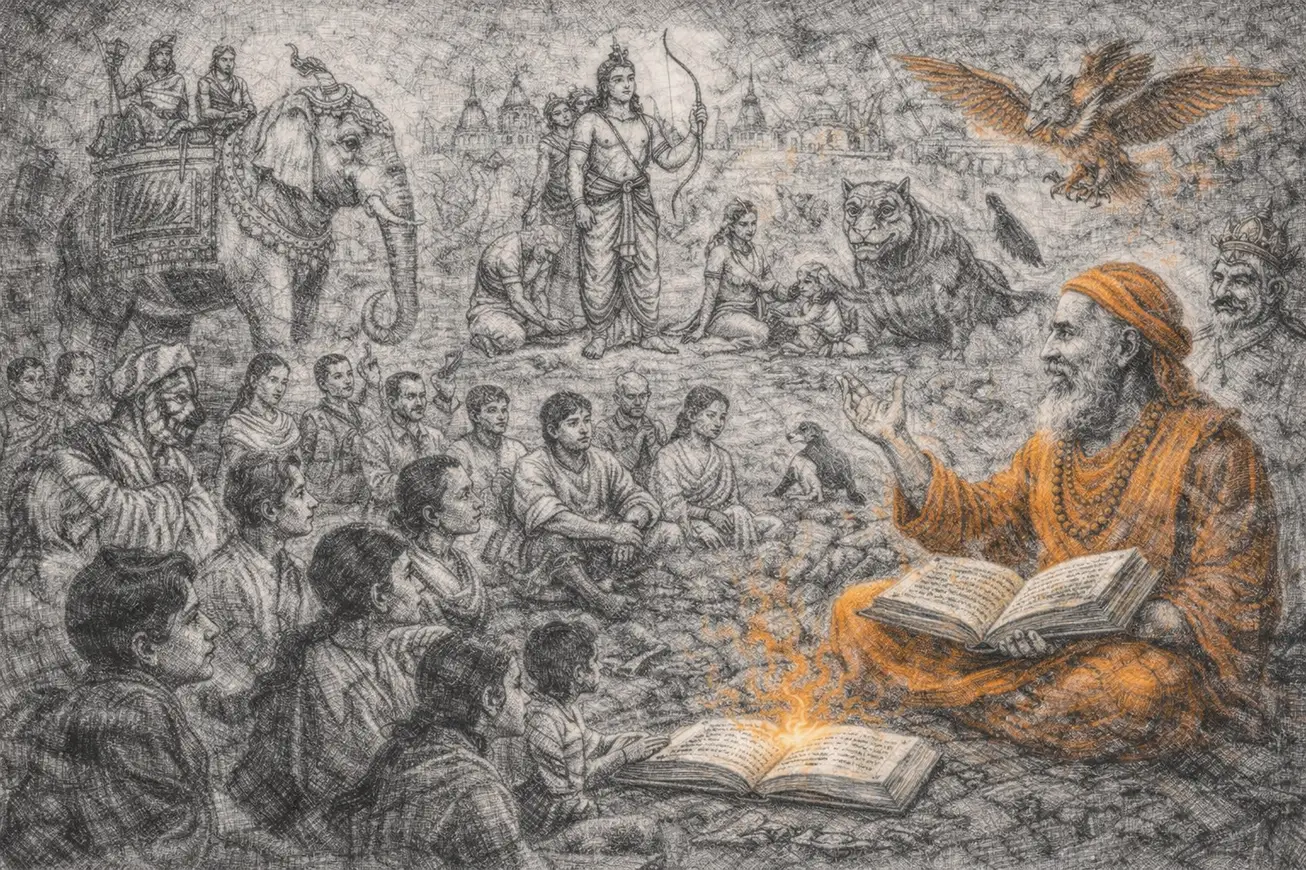
India is a story-telling civilization. Even in the most abstract texts on philosophy like the Upanishads, we have stories. And we could not stay on the Vedas and the attendant literature but expanded into Itihasas and Puranas, creating one of the greatest written gamut of literature anywhere in the world. But that did not satisfy either, and we created the world’s largest collection of wisdom stories collected under many names like Panchatantra, Kathasaritsagara, Jatakas, Hitopadesha, Shukasaptati, Vikram Betala, and many more.
This collection of wisdom stories then influenced Aesop’s Fables and other collections of stories like the Arabian Nights. But this was also not where we stopped. We created a living tradition of katha-vachana parampara where the greatest truths of our deepest texts were conveyed to the general public in the simplest of words, concepts and stories by great katha vachakas and roaming mendicants all over the world. This is how Sanatana dharma took the greatest truths to every nook and corner of the country. But in all this we did not forget one thing - while we recorded these stories in written documents, we never forgot the oral nature of our civilization and tradition. These remained stories to be told, in the most lyrical, poetical form.
It is this tradition of lyrical storytelling that we forgot during the colonial era, when the written interlude dominated by colonial consciousness made us forget that the primary medium for us to transfer culture and wisdom was oral and not the written. It resulted in an era where readable books had less knowledge and knowledgeable books were not readable. This artificial divorce of readability and knowledge is now disappearing and once again Indian authors take up to describe the real history and culture of Bharatavarsha in words that are as poetic as any other piece of literature. At Bodha, we take this very seriously. We tell stories based entirely on facts, but in a language which is lyrical and poetic, making it easier for the next generation to understand the stories that we want to tell them. In the West this school is called the school of narrative non-fiction, real events narrated in literary language. We are inspired by that and follow that in our writings.