

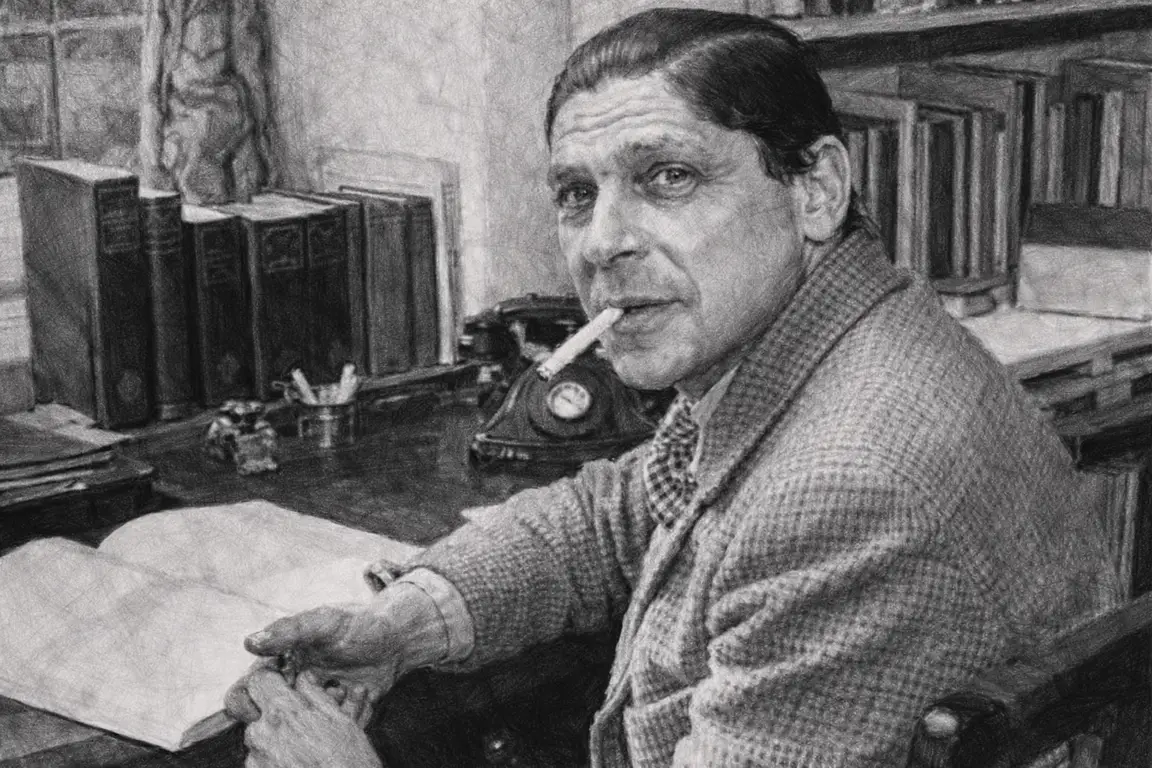
Arthur Koestler
A Communist turned anti-Communist who witnessed both fascism and Stalinism firsthand - Koestler's intellectual trajectory maps the 20th century's ideological.
One of the greatest thinkers of his age he was also known for his iconoclastic views about established academic theologies of his time. Having a swashbuckling life with a direct experience of the communists and the Nazis in battlefield, he came to reject all ideologies that propose final solutions to mankind’s problems. He also cogitated upon science and human knowledge and the process by which we stumble upon great truths and ideas. His three part psychological history of mankind gives deep insight into human history.
Select Works
- Darkness at Noon (1940) – Classic anti-totalitarian novel of a Bolshevik’s show trial.
- The Gladiators (1939) / Arrival and Departure (1943) / Thieves in the Night (1946) – Political trilogy on revolution and exile.
- The Sleepwalkers (1959) – History of cosmological thought from Copernicus to Kepler.
- The Act of Creation (1964) – Theory of creativity across art, science, and humor.
- The Ghost in the Machine (1967) – Critique of reductionist views of consciousness.
- The Thirteenth Tribe (1976) – Controversial thesis on Khazar origins of Ashkenazi Jews.
- Janus: A Summing Up (1978) – Final synthesis of Koestler’s holistic worldview.
- Autobiographies: Arrow in the Blue (1952), The Invisible Writing (1954), Stranger on the Square (1984, posthumous).